We built this page from official product pages and a few solar guides. We did not test any unit, and we list no prices, because they change often. So every figure here comes from the manufacturers or from simple math you can repeat, and we say where a page left a number open.
What a solar generator is, and what it is not
The term causes confusion. A solar generator does not generate power from fuel. It stores energy in a battery, and solar panels refill that battery. The same box can also charge from a wall outlet or a car port. Our explainer on portable power stations covers the parts in detail.
There are two ways to buy one.
- A kit. The power station and the panels come together. The Jackery Solar Generator 2000 v2 is an example, and its default bundle includes two SolarSaga 200 W panels.
- Separate parts. You buy a power station and add panels later. This gives you more choice, but you must match the connectors. Our solar panel connectors guide explains how.
However, there are two things a solar generator is not. It is not a way to run a whole house, and it is not a fix for rooftop panels in a blackout. Aurora Solar says a grid-tied rooftop system stops delivering electricity to your home when the grid goes down, to protect line workers. So a home with rooftop solar still needs a battery or a portable setup.
The four numbers that decide everything
Most spec sheets look alike, but four numbers do the work.
- Capacity, in watt-hours. It is the size of the tank. More watt-hours means more runtime.
- Output, in watts. It is the size of the pipe. It sets which appliances can run, and how many at once.
- Surge rating. A short burst above the rated output, such as when a compressor starts.
- Solar input. The most power the unit accepts from panels. Check this before you buy panels.
Also, because the solar input varies by model and the pages we collected do not always list it, we do not compare it here. Read each page before you choose panels.
How we compared these units
We started from the official product page of each model and copied capacity, output, weight, battery type and warranty into a table. When a page gave two different values, we used the spec table and said so, or we left the number open. We did not test runtimes, charging speed or noise, and we have no lab data. So treat this page as a spec comparison with sizing math, not as a review.
That choice also shapes the title. "Best" here means the model whose specs fit a given job on paper, and the right pick depends on your loads.
Models from our list
Here are seven units from our product list, from small to large.
First, a few notes on the open points. The Jackery Solar Generator 2000 v2 specs are for the power station, not the panels. The EcoFlow surge figure appears on one page only, and its weight and warranty are still to be confirmed. The Anker 6,000 W figure is a combined 120/240 V total, with 120 V outlets at 2,400 W maximum, and the EcoFlow page lists expansion from 3 to 11 kWh. The Bluetti page does not list a surge rating in the data we collected.
Warranty terms we could confirm are 3+2 years for the Jackery 2000 v2 and 1000 v2, and 5 years for the Jackery 5000 Plus, the Anker F3800 Plus and the Bluetti Elite 200 V2.
Battery chemistry in one paragraph
Most units in our list use lithium iron phosphate cells, called LiFePO4 or LFP. Goal Zero, a power station maker, says LFP batteries have a higher thermal runaway temperature threshold than NMC cells, and says its newest LFP product has a cycle count over 4,000 and keeps about 80% of its capacity after that. These are the company's own claims, not independent tests. The same post says NMC has higher energy density, so such a unit can be lighter for the same capacity. So chemistry trades weight, lifespan and safety, and you should check the page of the unit you like.
Ports and outlets
Ports tell you what you can plug in. Here is what the pages list for the larger units.
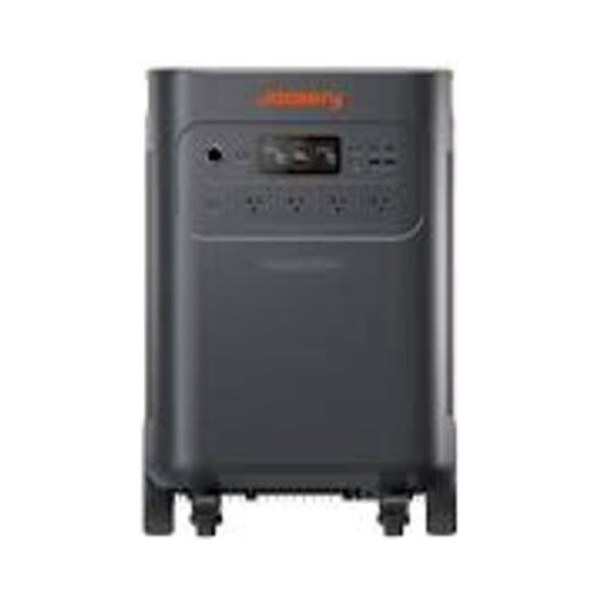
- Jackery Solar Generator 2000 v2: 3 AC 120 V outlets, two USB-C (30 W and 100 W max), one USB-A at 18 W and a 12 V car port.
- Jackery Explorer 5000 Plus: four 120 V 20 A outlets, one 120/240 V 30 A NEMA L14-30R outlet, two USB-C at 100 W, two USB-A at 18 W and a car port.
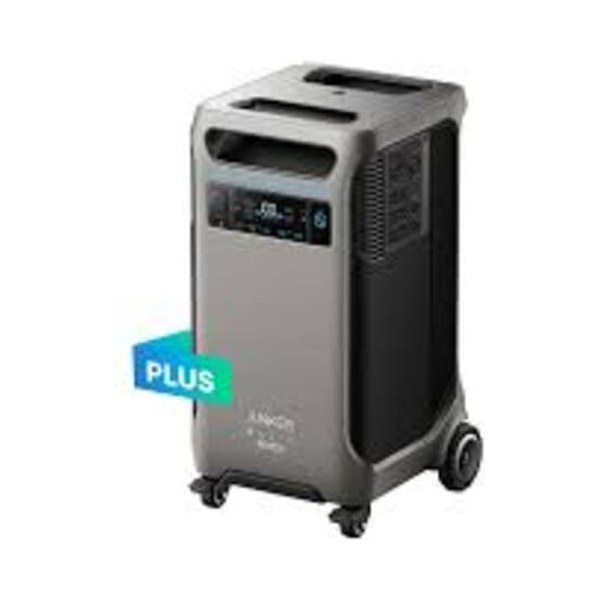
- Anker SOLIX F3800 Plus: NEMA TT-30R, L14-30R and 5-20R outlets in two groups, a USB-A at 12 W, a USB-C at 100 W and a car port. The page does not itemize the port counts.
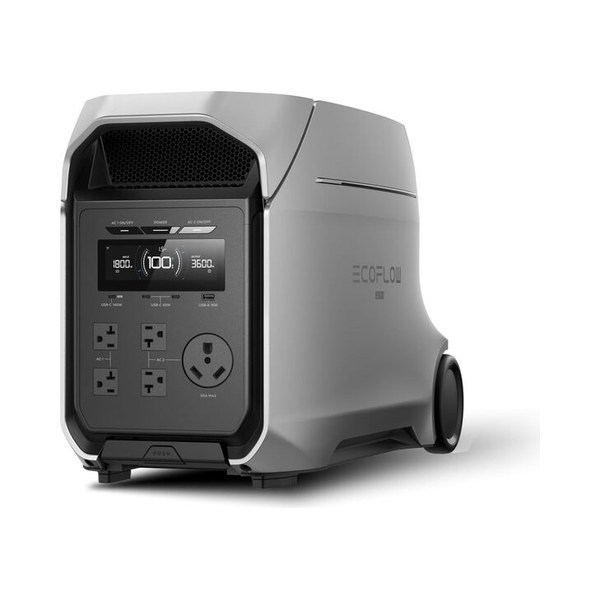
- EcoFlow DELTA 3 Ultra Plus: a TT-30R AC output at 3,600 W, an Anderson DC port at 378 W, a car outlet at 126 W (shared) and a USB-C at 140 W.
So only some units offer 120/240 V or a TT-30 outlet. If you plan to power an RV connection or a larger appliance, check the plug type before you buy. All outlets on a unit share one rated output, so your combined load must stay under it.
How to size a solar generator in three steps
Step 1: add up your daily watt-hours
List what you want to run and how long. Multiply watts by hours for each item. Here is a made-up example, so swap in your own numbers.
Our freezer wattage guide and battery backup for refrigerator guide explain how to find the real figures.
Step 2: choose a battery size
A power station loses some energy converting battery power to household AC, and we count on about 85% of rated capacity as a planning rule. That is our rule of thumb, not a manufacturer spec. Divide the usable energy by your daily use to get days of runtime with no sun at all.
Overall, the honest picture is simple. Even the largest portable unit covers about two days of this small load without sun. Panels, however, extend that.
Step 3: size the panels
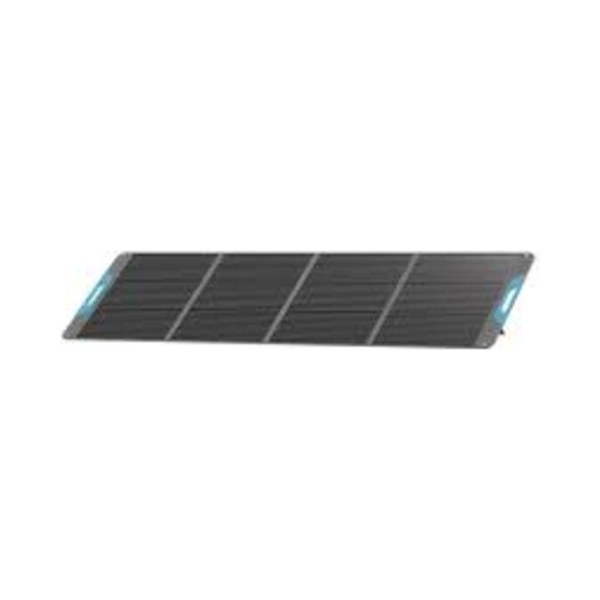
Panels never make their rated watts all day. A 200 W panel in four hours of strong sun makes at most 800 Wh. After losses, plan on about 75% of that, or 600 Wh. That is our rule of thumb as well.
Next, divide your daily use by 600. For 2,130 Wh, that is about 3.6, so plan on four 200 W panels, or 800 W in total. The Renogy E.Flex 200W N-Type Portable Solar Panel weighs 13.89 lb, so four of them add about 56 lb. Our 200 watt solar panel guide explains the method, and our solar battery backup guide shows the full worked example.
For a smaller setup, however, two Jackery panels make a lighter kit. The SolarSaga 100 Light weighs 4.5 lb and the SolarSaga 100W weighs 7.94 lb, according to Jackery's own blog pages, so confidence is lower than for a product page.
A worked example: a camping weekend
Say you carry two phones, a laptop and a light. Here are made-up numbers, so check your own devices.
The Jackery Explorer 300 v2 holds 288 Wh, or about 245 usable Wh by our rule. So it covers about one day. A single 100 W panel makes about 300 Wh on a strong sun day by our rule of thumb. That is just above the daily use, so the unit could last the weekend if the weather helps. If the weather is poor, you start the next day with less in the tank.
Which solar generator for which use
Phones, a laptop and a light
A 288 Wh unit covers it. The Jackery Explorer 300 v2 lists 300 W and weighs 8.16 lb. With one 100 W panel, which gives about 300 Wh on a good sun day by our rule, it can refill in about one day. For a trip, see our camping power station guide. If you only need a phone top-up, read our solar power bank guide first.
A refrigerator and a router for a night or two
You need about 1,000 to 2,000 Wh. The Jackery Explorer 1000 v2 holds 1,070 Wh and the Jackery Solar Generator 2000 v2 holds 2,042 Wh. Our 1,000 watt power station guide compares five units in the 1,000 Wh class.
A home outage of a day or more
You need more energy and more output. The EcoFlow, Anker and Jackery 5000 Plus units list 3,072 to 5,040 Wh. Our guide to the best home emergency generator compares every route, our solar generator for home guide shows what each can and cannot do, and our home battery backup guide compares them with an installed battery.
An RV, a van or a camper
Add panels and size the battery for your daily watt-hours. Our RV solar panels guide shows how to size panels, battery and controller.
Off-grid or a cabin
Add more panels and consider a larger or expandable battery. Our off-grid solar system guide explains the parts, and our DIY solar battery bank guide covers the risks of building your own.
An apartment or a balcony
A battery unit makes no exhaust, so it suits small spaces. Our apartment backup guide covers the limits. Some states also allow plug-in balcony solar, which works differently. Our plug-in solar guide explains the law as of October 2026.
Solar generator or gas generator?
A gas generator runs as long as you add fuel, and it must run outdoors. A solar generator is silent and has no exhaust, but it stops when the battery is empty. In long outages with heavy loads, a gas unit may fit better. In short outages, small spaces and quiet places, a solar generator fits better. Our solar vs gas generator comparison goes through both, and our guide to portable gas generators covers the other side. Many people choose both: a battery for the quiet hours and a gas unit for a long storm.
How long does charging take?
To estimate charging time, divide the battery's watt-hours by the panel's daily output. For a 1,070 Wh unit and a 200 W panel, which gives about 600 Wh a day by our rule, charging from empty takes close to two good sun days. With two panels, it takes about one. Clouds, shade, panel angle and heat change the result, and the unit's own solar input limit caps it. Plan for a slower rate than the label suggests.
Care, storage and safety
The pages we collected give no care schedule, so follow the manual of the unit you buy. In general, keep it dry and away from heat, charge it before a storm and check it from time to time if it sits unused. Because a battery unit has no exhaust, it can sit indoors in a way a gas generator cannot, but follow the maker's advice on placement. Also keep cables and panel connectors dry, since a wet or damaged connector can stop charging.
Mistakes to avoid
- Buying on capacity alone. A big battery with low output cannot start a motor.
- Counting panel watts as daily energy. A 200 W panel makes about 600 Wh a day by our rule, not 200 W all day.
- Ignoring conversion losses. Plan on about 85% of the rated capacity.
- Skipping the connector check. Panels and stations must match, and the wrong plug can stop the whole setup.
- Forgetting the surge. A compressor may need far more than its running watts.
- Expecting a whole house. A portable unit covers a short list of loads.
- Trusting one spec line. Compare the table on the page with its description.
Checklist before you buy
- Daily watt-hours. Add up your loads first.
- Capacity and output. Cover both the energy and the watts.
- Surge. Cover your largest motor.
- Solar input. Check the limit and the connector.
- Weight. A 134.5 lb unit stays in one place.
- Warranty. Read the terms, and note where a page leaves it to be confirmed.
- Real prices. Check the current retailer page, because we list none.
The bottom line
The best solar generator is the one sized to your loads. Add up your daily watt-hours, pick a unit whose usable capacity covers a day or two, check that its output covers your surge, then size the panels with the 75% rule. For small trips, a 288 Wh unit is enough. For a home outage, plan on 3,000 Wh or more, and keep a gas generator in mind for long storms.
Prices and availability change often, so check the retailer page before you decide.