A home power battery backup stores electricity so your key circuits keep running when the grid goes down. You size it by adding up the energy your must-run loads use in a day, multiplying by the days you want to cover and using the usable capacity, not the nameplate. In the worked example below, loads of about 2,130 Wh a day need roughly 2.5 kWh for one day and about 5 kWh for two days without sun. This guide explains how home batteries work, how to size one and how portable units compare.
We used a solar sizing guide, a solar industry article and official product pages. We did not test any system, and our product list has no installed home batteries, so we do not compare those by model. Every figure comes from the sources or from simple math you can repeat.
How home power battery backup works
A home battery stores energy, then releases it when you need it. Aurora Solar says a typical home battery is about 10 to 15 kWh. It also says most units keep about 10% to 20% in reserve, and conversion losses mean a 13.5 kWh battery may deliver roughly 11 to 12 kWh.
Rooftop panels alone do not help in an outage. Aurora Solar says a grid-tied system stops delivering electricity to your home and the grid when the grid goes down, to protect line workers. So a home with solar panels still needs a battery and the right inverter, or a separate portable setup. The same article says a hybrid inverter can disconnect from the utility and send solar energy to the battery and your home circuits.
Because an installed battery ties into your wiring, it needs a licensed installer and local permits. Ask your installer which circuits it can back up and for how long.
Decide what the battery is for
Solar.com lists three goals for a home battery: backing up critical loads, backing up the whole home and storing daytime solar for use at night. One battery can sometimes serve two of these, but there is a catch. If you use it every night to save on grid power, it may be partly empty when an outage starts. So decide which goal comes first.
For an outage plan, most people start with critical loads. That keeps the battery small and the cost down.
Step 1: List the loads you must keep on
Write down every device you want to power. Solar.com says typical critical loads include refrigeration, medical devices, lights, fans, TV, Wi-Fi, device charging, kitchen appliances and water heating. It also says air conditioning and electric heat are usually excluded because they use a lot of power.
For each device, hours of use times watts divided by 1,000 gives kWh per day. Here is a made-up example, so swap in your own numbers.
Our freezer wattage guide and battery backup for refrigerator guide explain how to find the real numbers.
Step 2: Pick the number of days
Multiply the daily load by the days you want to cover. Solar.com gives an example of 10 kWh a day for three days, which needs 30 kWh of usable storage. For our example, the math is simple.
Panels shorten the gap, because they refill the battery on sunny days. Solar.com also cites a Lawrence Berkeley National Laboratory study, which found that 10 kWh of storage with a small solar system can meet critical backup needs for three days in most U.S. climate zones and times of year. That is a secondhand figure, so check the original before you rely on it.
Step 3: Use usable capacity
Nameplate capacity is the most a battery can hold. Usable capacity is what you can draw without going past the maker's limit. Solar.com gives the SunPower SunVault 13 as an example: 13 kWh nameplate and 12 kWh usable, because only 92% can be discharged without affecting lifespan. Always size by the usable number.
For portable units, we use a simpler planning rule. A power station loses some energy converting battery power to household AC, so we count on about 85% of rated capacity. That is our rule of thumb, not a manufacturer spec.
Step 4: Check the power rating
Capacity tells you how long. Power tells you what can run at once. A battery that holds plenty of energy but delivers few watts cannot start a refrigerator and a pump together. Add up the running watts of everything that runs at the same time, and count the largest motor at its starting watts. Our generator sizing guide shows the method.
Portable units as a home battery
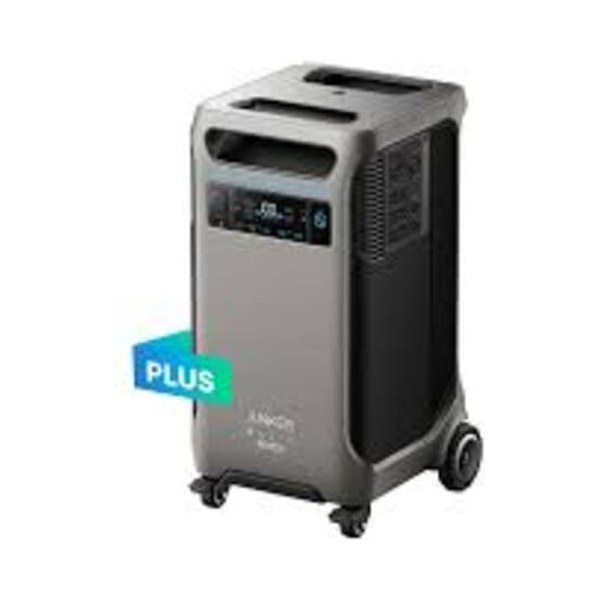
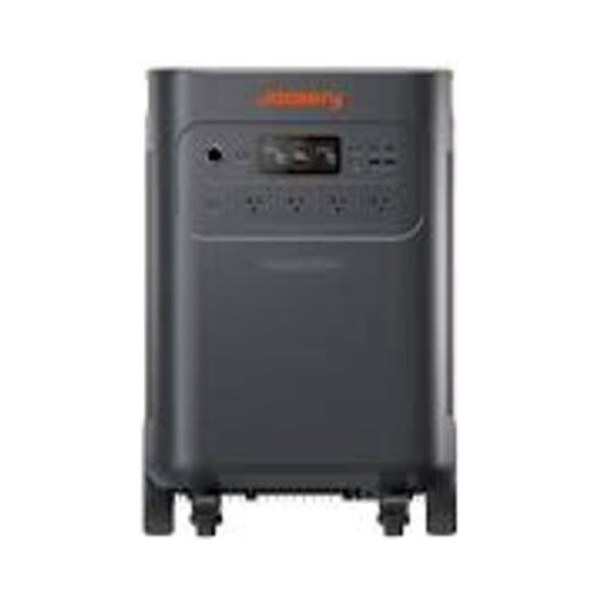
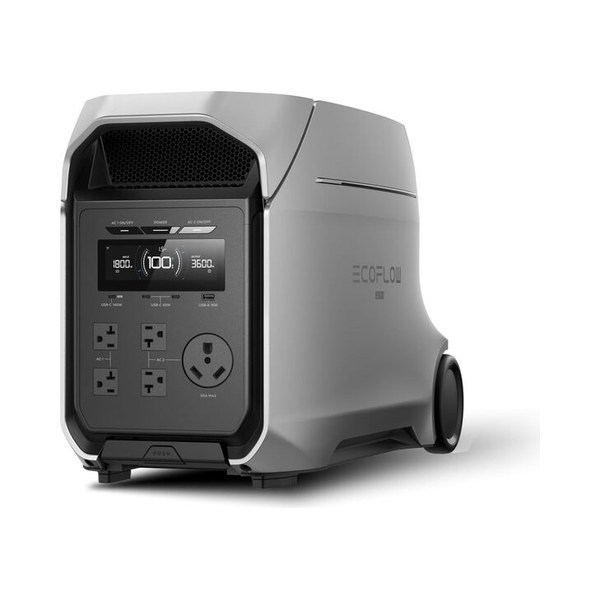
If you do not want an installed system, a large portable unit is a smaller version of the same idea. Here are three from our list.
The EcoFlow page lists expansion from 3 to 11 kWh, which brings it closer to the size of an installed battery. Its weight and warranty are still to be confirmed. The Anker 6,000 W figure is a combined total, and its 120 V outlets top out at 2,400 W. Jackery lists a 5-year warranty and Anker lists 5 years on the pages we checked.
Against our example, usable energy is about 2,611 Wh for the EcoFlow, 3,264 Wh for the Anker and 4,284 Wh for the Jackery. That is about 1.2, 1.5 and 2.0 days of 2,130 Wh. Our solar generator for home guide walks through the same table with panels.
Portable unit or installed battery?
So a portable unit suits a few must-run plugs, and an installed battery suits wider backup. Which is better depends on your loads and your home.
Pairing a battery with solar panels
Panels refill a battery. A 200 W panel in four hours of strong sun makes at most 800 Wh, and after losses we plan on about 75%, or 600 Wh. That is our rule of thumb. For 2,130 Wh a day, you would need about four 200 W panels, or 800 W in total. Our solar battery backup guide goes through the sizing in more detail.
Without panels, a battery only delivers what it stored before the outage. Plan on that.
What to check before you choose
- Usable capacity. Size by it, not by the nameplate.
- Power rating. Cover your running and starting watts.
- Which circuits it backs up. Ask your installer to confirm.
- Reserve. Aurora Solar says many units keep 10% to 20% in reserve.
- Solar input. Check whether panels can charge it during an outage.
- Warranty. Read the terms, and note that some pages leave the term to be confirmed.
- Weight and location. Plan where it will sit.
Common mistakes
- Sizing by nameplate. You get less than the label says.
- Counting on panels alone. A grid-tied system stops during an outage.
- Leaving out the surge. Motors need more watts to start.
- Forgetting the daily use. If the battery is partly empty, backup time shrinks.
- Skipping the installer. Home wiring needs a licensed professional.
The bottom line
A home power battery backup works best when you size it for a short list of must-run loads, use usable capacity and decide how many days you want to cover. For about 2,130 Wh a day, expect to need around 2.5 kWh for a day and 5 kWh for two. A portable unit reaches about four days only with the full 11 kWh EcoFlow expansion, by our math, while an installed battery of 10 to 15 kWh can go further. Add up your loads first, then compare each home power battery backup option against that number.