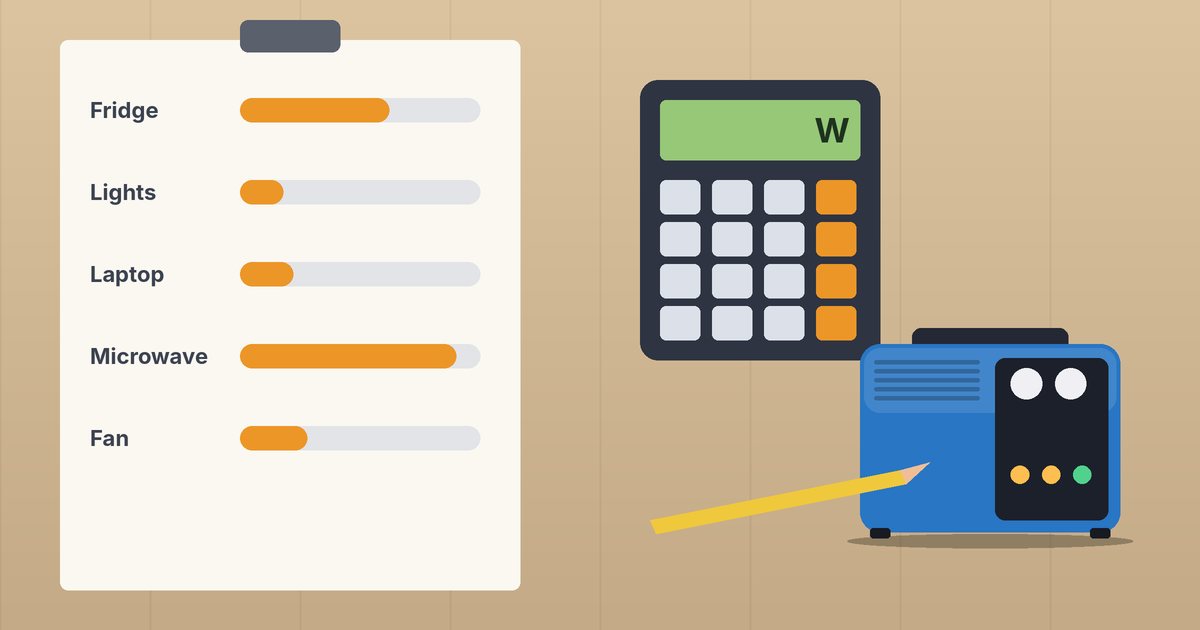
This generator sizing guide gives you a repeatable method: list every appliance, add the running watts, find the biggest startup surge and leave about 20% of headroom. The result tells you what size generator or power station to look for. In the worked example below, a refrigerator, a few lights and a laptop need about 770 running watts and about 1,970 watts at peak, which points to a unit rated near 1,800 W running and 2,200 W peak. Your own list will differ, so follow the steps with your labels in hand.
We used official spec sheets for the example models. We did not test any unit, so every figure comes from the manufacturers or from simple math you can repeat.
Step 1: List what you want to run
Write down every appliance you want on at the same time. Think about an outage or a trip. For a home, that is often a refrigerator, a freezer, lights, a router and phone chargers, so start there. For a campsite, it may be a light, a fan and a laptop.
However, do not list things that never run together. A microwave and a space heater, for example, may not need to run at once. Your list is about the worst moment, not the whole day.
Step 2: Find the watts on each label
Look for a label on the back or inside of each appliance, or check the manual. It lists volts and amps, and sometimes watts. If watts are missing, multiply volts by amps. For example, 5 amps at 120 volts is 600 watts. That is an example only.
Two numbers matter for each appliance: the running watts and, for motors, the starting watts. First, a motor pulls a short burst when it starts. Refrigerators, freezers, pumps and air conditioners all have one. The label or manual sometimes lists it. If not, assume the surge is several times the running watts and leave room.
Step 3: Add the running watts
Add up the running watts of everything on your list. That is your base load. Here is a made-up example, so swap in your own numbers.
Step 4: Find the peak
Next, find the largest startup surge. Count that motor at its surge watts instead of its running watts. Do not add every surge, because motors rarely start at the same instant.
In our example, the fridge surges to 1,800 W. So the peak is 770 − 600 + 1,800 = 1,970 W. Check two numbers on the generator: the running rating must cover 770 W, and the peak rating must cover 1,970 W.
Step 5: Leave headroom in your generator sizing guide
Because an engine that runs flat out all day runs louder, headroom helps. A common rule of thumb is to leave about 20% of headroom. Divide your running total by 0.8. For 770 W, that is about 960 W. This is our rule of thumb, not a manufacturer spec.
Apply it to the peak as well when you can. In our example, 1,970 W is the real need, so a unit with a 2,200 W peak fits with a thin margin.
Running watts vs starting watts, in short
- Running watts: what an appliance, or a generator, supplies continuously.
- Starting watts: a brief surge for starting a motor. Also called surge or peak watts.
- Peak rating on a generator: the most it can deliver for a moment, such as when a compressor starts.
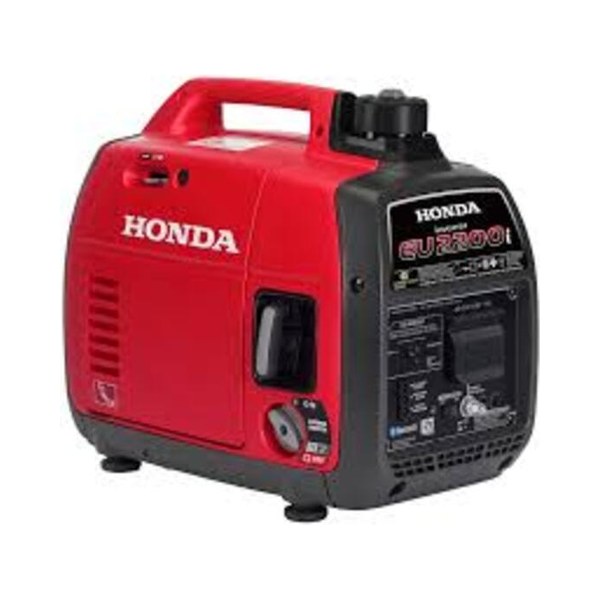
A generator labeled "2,200 watts" may supply only 1,800 W continuously. The Honda EU2200i lists 1,800 W running and 2,200 W peak, so the name is not the running rating.
What 300 watts can run
Small loads are where many people start, so here is a look at 300 watts. A device or power station rated for 300 W suits phones, a laptop, a light and a small fan. It does not suit a refrigerator compressor with a big surge or a heater.
The Jackery Explorer 300 v2 lists 300 W of output, a 600 W surge and a capacity of 288 Wh. That is enough for small electronics. Its own page says the rated output is 300 W, so it cannot run larger appliances.
For runtime, a power station loses some energy converting battery power to household AC. We count on about 85% of rated capacity as a planning rule. So 288 Wh gives about 245 usable Wh. A 60 W laptop, as an example, runs about four hours.
Match your numbers to a size
Use your running and peak totals to pick a class. These are the models we used as examples.
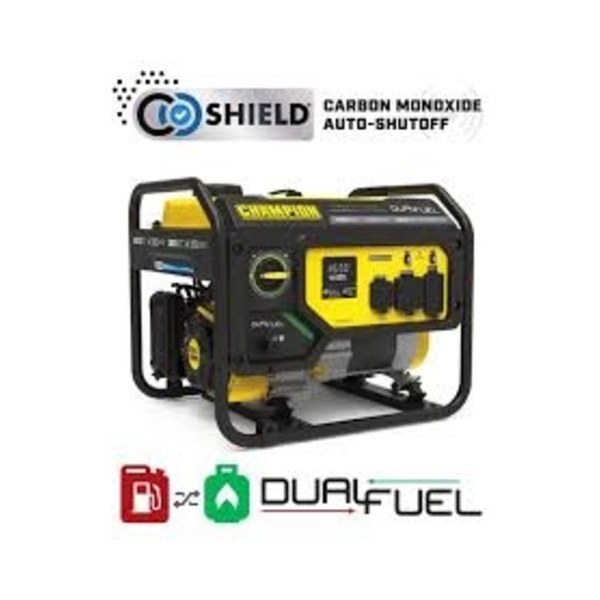
Those ranges apply the 20% headroom rule to each running rating. For example, 80% of 1,800 W is 1,440 W, so we round to about 1,400 W. The Champion drops to 3,150 W running on propane, so size for the lower number if you use propane.
A generator sizing guide worksheet
Copy this into a note and fill it in with your labels.
- Appliance 1: running watts ___, starting watts ___
- Appliance 2: running watts ___, starting watts ___
- Appliance 3: running watts ___, starting watts ___
- Total running watts: ___ (add every running figure)
- Largest starting watts: ___ (the one biggest surge)
- Peak: total running − that motor's running watts + its starting watts
- Minimum running rating: total running ÷ 0.8
Then look for a generator whose running and peak ratings both exceed those two results.
Sizing a power station by watt-hours
A power station needs one more step, because runtime is limited. Multiply your load in watts by the hours you want, then divide by about 0.85. For example, 100 W for 10 hours is 1,000 Wh, and 1,000 divided by 0.85 is about 1,176 Wh.
Against our product list, the Jackery Explorer 1000 v2 at 1,070 Wh falls just short of that. The Jackery Explorer 1000 Plus, at 1,264 Wh, covers it. So check capacity as well as output. The 85% figure is our rule of thumb, not a manufacturer spec.
Power station or generator?
A generator runs as long as you add fuel, so it suits long outages and heavy loads. A power station has no exhaust and makes no engine noise, so it suits short outages and small spaces. Our explainer on portable power stations covers the battery side, and our solar vs gas generator comparison compares the two.
Check runtime too
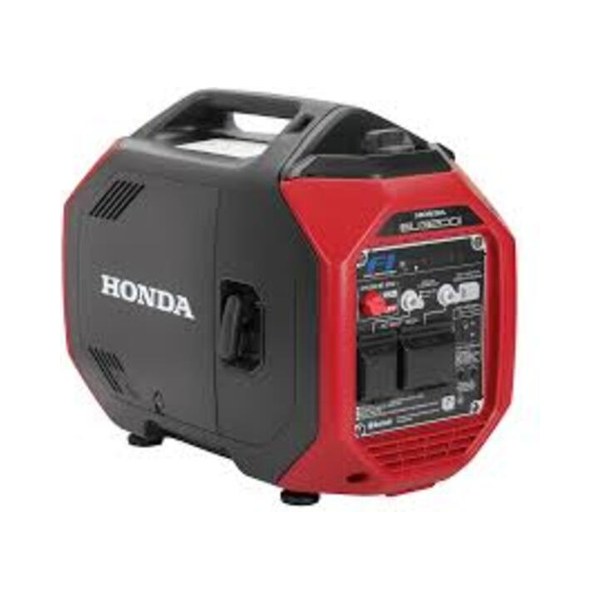
Size is not only about watts. Runtime depends on the load. Honda lists the EU2200i at 3.2 hours at rated load and 8.1 hours at a quarter load. The EU3200i lists 3.3 hours and 8.6 hours. A heavier load shortens runtime a lot. So check the load behind any runtime number.
Safety comes first
Carbon monoxide is the main risk with any gas generator. The U.S. Consumer Product Safety Commission says to use portable generators outside only, at least 20 feet from doors, windows and vents. It also says never to use one inside a home or garage, even with doors and windows open. Install battery-operated carbon monoxide alarms in your home.
A quick example for a campsite
Say you camp with a 60 W laptop, a 10 W light and two phone chargers at 20 W each. That is 110 W running. A small power station handles it, and a generator would be too big. Because the load is tiny, a 300 W unit has plenty of headroom. For one evening of four hours, the energy is about 440 Wh, so a 300 Wh unit would need a recharge. That is why runtime matters as much as size.
Common sizing mistakes
- Trusting the name. Check the running watts, not the number in the model name.
- Adding every surge. Count only the largest one.
- Skipping the headroom. An engine at its limit runs hot and loud.
- Forgetting propane. Output drops on propane for dual fuel units.
- Ignoring runtime. Watts tell you what runs, not for how long.
The bottom line
This generator sizing guide comes down to five steps: list, label, add, find the peak and leave headroom. Do the math with your own labels, then pick a unit whose running and peak ratings both cover your totals. For the same method applied to bigger units, see our guides to the 2000 watt generator and the 3000 watt generator.