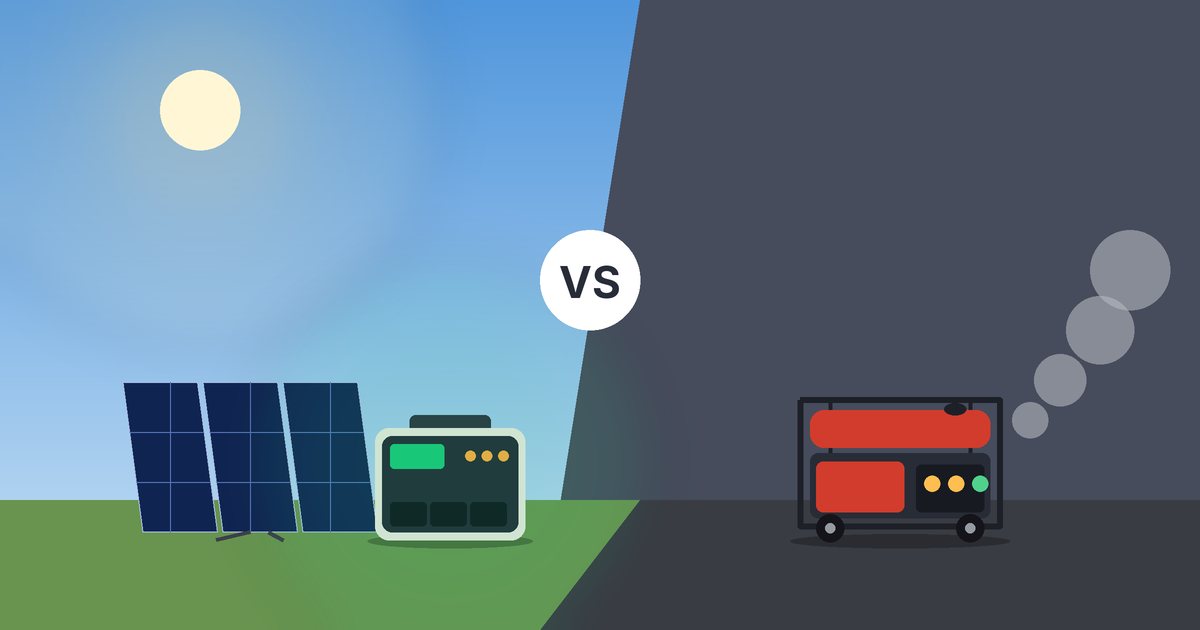
In the solar vs gas generator choice, a solar generator is quiet, makes no exhaust and refills from the sun, but it holds a fixed amount of energy and delivers limited power. A gas generator is louder, needs fuel and must run outdoors, but it keeps going as long as you add fuel and handles bigger loads. Pick solar for short outages, light loads and quiet spots. Pick gas for heavy loads or long outages. In the worked example below, a 2,042 Wh solar kit runs a 3,000 W load for about 35 minutes, while a 3,900 W gas unit runs it until the tank is empty.
We compared official spec pages for four models, two of each type. We did not test them, so every figure comes from the manufacturers or from simple math you can repeat.
Solar vs gas generator at a glance
| Solar generator | Gas generator | |
|---|---|---|
| Energy source | Battery, refilled by panels or wall | Gasoline, sometimes propane |
| Exhaust | None | Carbon monoxide, outdoors only |
| Noise | No engine noise | Engine noise |
| Runtime | Limited by battery size | Limited by fuel you add |
| Refilling | Sunlight, slow | Pour in fuel, fast |
Weight does not split cleanly between the two types, as the specs below show.
What the spec sheets say
| Model | Type | Output | Energy or runtime | Weight |
|---|---|---|---|---|
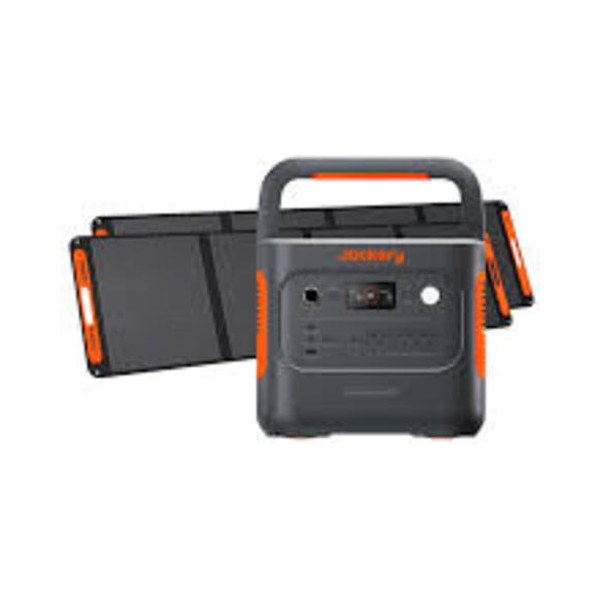
| Jackery Solar Generator 2000 v2 | Solar kit | 2,200 W (4,400 W surge) | 2,042 Wh | 39.5 lb |
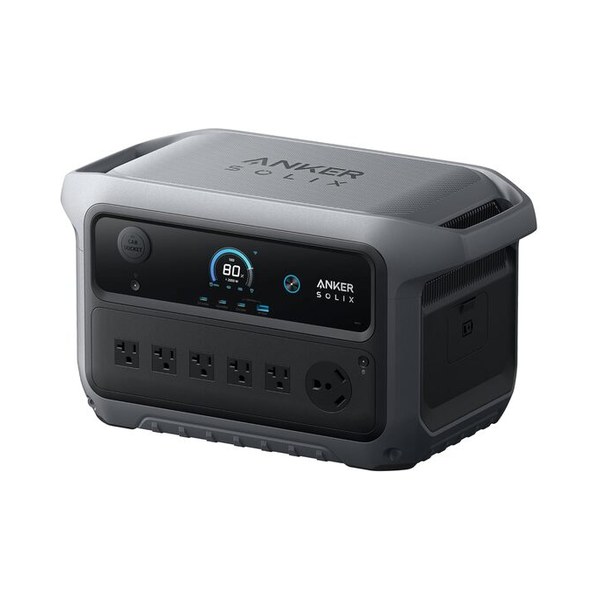
| Anker SOLIX C2000 Gen 2 | Power station | 2,400 W (4,000 W surge) | 2,048 Wh | 41.7 lb |
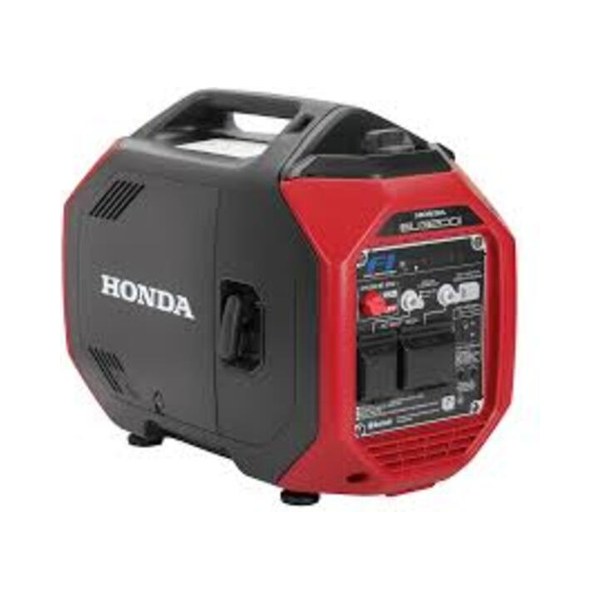
| Honda EU3200i | Gas inverter | 2,600 W (3,200 W peak) | 3.3 h rated; 8.6 h at 1/4 load | 59.1 lb |
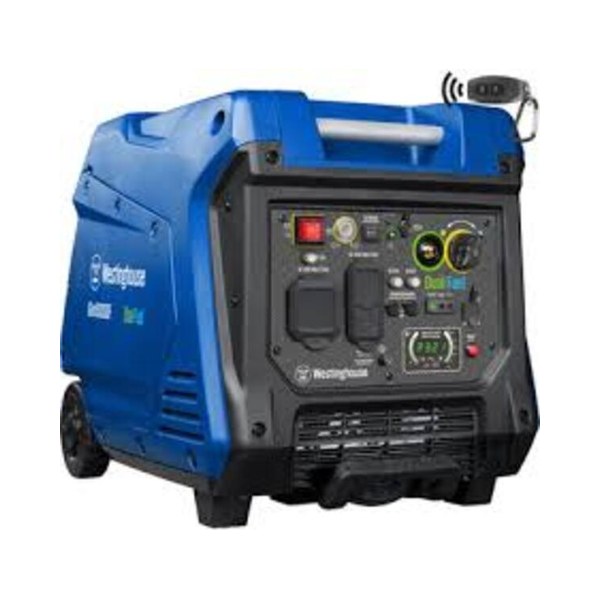
| Westinghouse iGen5000DF | Dual-fuel inverter | 3,900 W (5,000 W peak) | 18 h at 25% load on gasoline | 104.7 lb |
The Jackery specs describe the power station only. Its default bundle adds two SolarSaga 200 W panels. The Anker page is a marketing page, not a product page. Honda's weight is dry, so add fuel.
Solar vs gas generator: a light load
Say you want to keep a fridge, a router and a few lights on. We use example numbers: 46 W for the fridge, 10 W for the router and 20 W for the lights, or 76 W in total. That is about 1,824 Wh a day.
A power station loses some energy converting battery power to household AC, and we count on about 85% of rated capacity as a planning rule. For the Jackery 2,042 Wh, that is about 1,735 usable Wh, which covers about 23 hours.
Now add the sun. Two 200 W panels make about 1,200 Wh on a good day by our planning rule. That is 600 Wh per panel. The load uses 1,824 Wh, so the battery drains by about 624 Wh a day, and it lasts about 2.8 days before it runs out. A third day of sun would help, but clouds can cancel it.
A gas generator can run this load too, but it is a poor match. Honda lists 8.6 hours at a quarter load for the EU3200i, and 76 W is far below that, so a tank would last longer. Even so, you would run an engine around the clock to supply a very small load.
Solar vs gas generator: a heavy load
Now say your list adds up to 3,000 W. This is an example, such as a few big appliances at once.
- Jackery kit: 1,735 usable Wh divided by 3,000 W is about 0.58 hours, or 35 minutes. Its 2,200 W rating also falls short of 3,000 W, so it cannot carry that load.
- Anker C2000 Gen 2: the 2,400 W rating falls short as well.
- Honda EU3200i: the 2,600 W rating falls short too.
- Westinghouse iGen5000DF: 3,900 W on gasoline covers it. It lists 3,500 W on propane, which also covers it, with less room.
So a heavy load rules out all three smaller units. The bigger gas generator is the only one here that can carry it for hours. If you plan for heavy loads, size for the load first and then pick the type.
Where solar wins
Quiet and exhaust-free power is the clear advantage. A battery has no engine, so there is no exhaust and no engine noise. That matters for campgrounds with generator limits, for apartments and for nights when a neighbor is close.
Refilling from the sun also costs nothing after you buy the panels. The tradeoff is speed. A panel adds hundreds of watt-hours a day. A gas can adds far more in seconds.
Where gas wins
Gas wins on total power and on long runtime. The iGen5000DF runs for 18 hours at 25% load on gasoline, and you can keep going by adding fuel. It also delivers 3,900 W, which the smaller battery units cannot. Refueling takes minutes, not days of sunshine.
The tradeoffs are noise, exhaust and care. The U.S. Consumer Product Safety Commission says to use portable generators outside only, at least 20 feet from doors, windows and vents. It also says never to use one inside a home or garage, even with doors and windows open. The Westinghouse spec table lists no CO sensor, while Honda lists a CO-MINDER shutdown.
Where you can use each
Place often decides the question. A gas generator must run outside, at least 20 feet from doors, windows and vents, so an apartment balcony rarely works. A power station has no exhaust, so it suits a small home, and you should follow the maker's manual for placement. Campgrounds are a similar case, because many limit generators during quiet hours.
Noise
A battery has no engine, so the only sound is a small fan at most. We did not find a noise figure on the power station pages, so we cannot give you a number. Gas units list one. Honda lists 58 dB(A) for the EU3200i at rated load, and Westinghouse lists 52 dBA for the iGen5000DF without stating the load. Because the tests differ, treat those as a rough ranking.
Weight and moving
The two types do not split cleanly on weight. The Jackery power station weighs 39.5 lb, and the Anker weighs 41.7 lb. The Honda EU3200i weighs 59.1 lb dry, and the Westinghouse iGen5000DF weighs 104.7 lb. However, the Westinghouse also delivers 3,900 W, far more than either battery unit. So compare weight against the power you need, not in isolation.
A three-day outage
Say a storm cuts power for three days, and you run the light 76 W load. That is about 5,472 Wh over 72 hours. The Jackery kit starts with about 1,735 usable Wh and adds about 1,200 Wh a day from two panels on good days, so about 5,335 Wh over three days. That nearly covers it, but only if the sun shows up each day. A gas generator would cover it if you have enough fuel and run it outdoors.
Solar panel vs generator: do you need both parts?
A solar panel alone cannot run an appliance after dark. It needs a battery, which is what a power station adds. A generator needs no panel. So when you compare a solar panel vs generator, you are really comparing a panel plus a battery against an engine plus fuel.
What does each one cost to run?
We list no prices because they change often. Instead, here is how to compare. For gas, check the fuel use and the local fuel price, and add up the cost for the hours you expect to run. For solar, the energy is free once you own the panels, but the battery wears over its life. Compare the up-front price of each unit and your expected use over a few years.
Can you use both?
Yes. Some owners keep a battery for quiet, light loads and a gas generator for heavy loads or long outages. That setup covers both cases, though it costs more and needs more storage space. Our inverter vs conventional generator comparison explains the gas side in more detail.
How to decide
- List your loads. Add the running watts and find the biggest surge.
- Pick the outage length. A night favors a battery. Several days favors gas or a big solar setup.
- Think about the place. Apartments and campgrounds often rule out gas. Our apartment backup guide explains why.
- Plan for weight. Compare the real weights above, not the type.
The bottom line
Choose a solar generator for quiet, clean power and light loads over a few hours or a couple of days of sun. Choose a gas generator for heavy loads or outages that last longer than a battery can cover. Size for your loads first, and run any gas unit outdoors, away from doors and windows.