An inverter generator is usually quieter and gentler on electronics than a conventional generator. A conventional generator usually delivers more total power for the money. Pick the inverter if you run laptops, camp or live close to neighbors. Pick the conventional unit if you need to power heavy loads and noise is not a concern.
We compared official spec sheets for four models, two of each type, to show where the real differences lie. We did not run them ourselves, so every figure comes from the manufacturers.
What is an inverter generator?
Both types burn fuel to spin an engine. But the difference sits in the electronics.
A conventional generator ties the engine's speed directly to the electrical output. The engine runs at a fixed speed to keep the power steady, no matter how little you plug in. An inverter generator converts the raw output into stable electricity through a small electronic module. The engine can then slow down when the load is light.
Think of a faucet. A conventional generator keeps the tap wide open all the time. An inverter generator opens it only as far as you need.
How an inverter generator works
- The engine spins an alternator and makes raw electricity.
- A circuit turns that raw output into direct current.
- A second circuit turns it back into clean alternating current at the right frequency.
Because the electronics set the output, the engine does not have to hold one fixed speed. It slows down at light loads and speeds up when you plug in more.
Side-by-side comparison
| Inverter generator | Conventional generator | |
|---|---|---|
| Engine speed | Changes with the load | Fixed |
| Noise | Lower | Higher |
| Electrical output | Steady, suited to electronics | Can vary more |
| Cost per watt | Higher | Lower |
Treat the last two rows as general patterns, not rules. Prices change, so check current listings.
What the spec sheets say
Here is how four real models line up, using the manufacturers' own numbers.
| Model | Type | Running / peak | Noise | Weight |
|---|---|---|---|---|
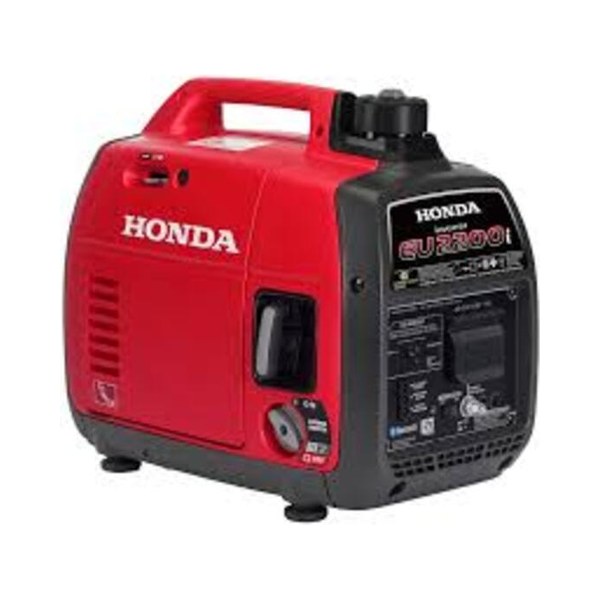
| Honda EU2200i | Inverter | 1,800 / 2,200 W | 57 dB(A) at rated load | 47.4 lb |
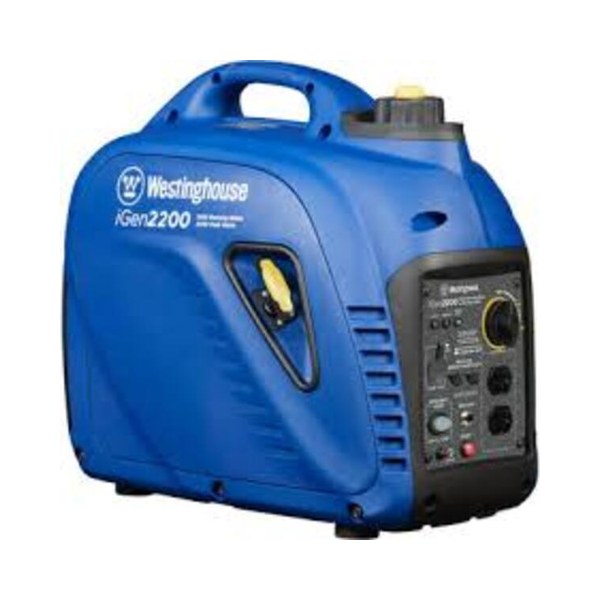
| Westinghouse iGen2200 | Inverter | 1,800 / 2,200 W | 52 dBA (load not stated) | 46.3 lb |
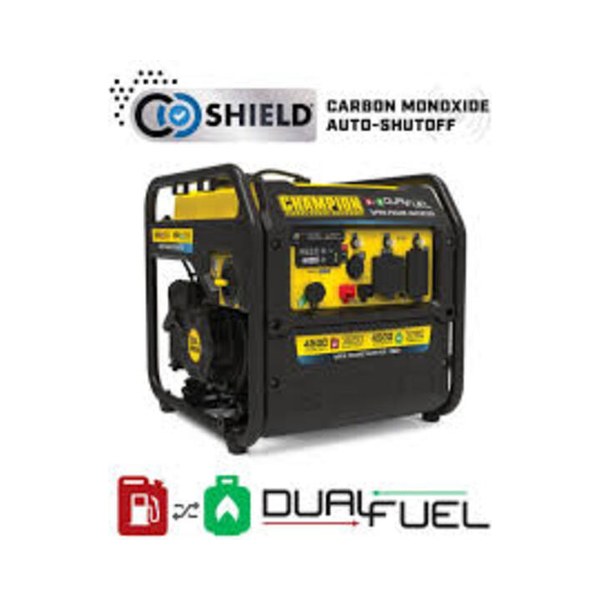
| Champion 201321 | Open-frame inverter | 3,650 / 4,500 W | 64 dB(A) | 92.6 lb |
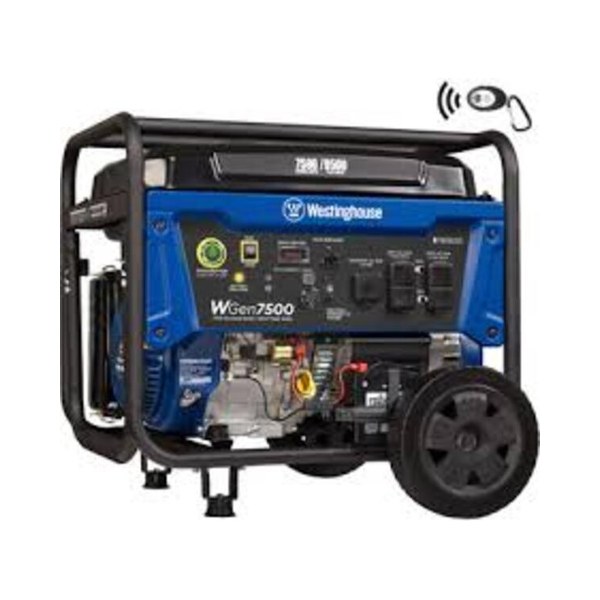
| Westinghouse WGen7500 | Conventional | 7,500 / 9,500 W | 72 dBA (load not stated) | 196 lb |
Two cautions apply to the noise column. First, each maker tests under different conditions, so the numbers are a rough ranking and not an exact match. Second, the open-frame Champion is an inverter, yet it is louder than the enclosed Honda and Westinghouse units. Enclosure matters as much as the inverter itself.
Weight per watt: not the difference you might expect
People often assume an inverter generator is lighter for its power. The spec sheets say otherwise. The Honda EU2200i makes 1,800 W from 47.4 lb, about 38 W per pound. The Westinghouse iGen2200 makes about 39 W per pound. The Champion 201321 lands at about 39 W per pound, and the conventional WGen7500 at about 38.
So the small inverter models are easy to carry because they make little power, not because the design is lighter. The real advantages are noise, fuel use at light loads and power quality.
Where inverter generators win
First, noise. Honda lists the EU2200i at 57 dB(A) at rated load and 48 dB(A) at a quarter load, so the drop at light loads is real. A campsite or a quiet street is where you notice it.
Fuel use comes next. Because the engine slows down at light loads, the tank lasts longer. Honda lists about 3.2 hours at rated load and 8.1 hours at a quarter load for the EU2200i. Westinghouse lists 12 hours at 25% load for the iGen2200.
Finally, power quality matters for electronics. If you charge laptops, run a TV or power a CPAP, the steadier output matters.
Where conventional generators win
Total output is the clear advantage. The Westinghouse WGen7500 runs 7,500 W running with a 9,500 W peak, which is far more than the 1,800 W of the small inverter models. That is enough to cover a well pump or power tools.
They also tend to cost less per watt of output. However, the tradeoff shows up in weight and noise. The WGen7500 weighs 196 lb and lists 72 dBA. You will not carry it to a campsite, and neighbors will hear it.
Fuel and runtime
Runtime depends on tank size as much as on generator type. Honda lists the EU2200i at 3.2 hours at rated load and 8.1 hours at a quarter load. Westinghouse lists 12 hours at 25% load for the iGen2200 and 11 hours at 25% load for the WGen7500. The manufacturers test at different loads, so compare the same load when you can.
The pattern holds for both types: a lighter load stretches a tank much further than a heavy one. An inverter's advantage is that its engine slows down to match the load, while many conventional engines keep a steadier speed.
The middle ground: open-frame inverters
An open-frame inverter like the Champion 201321 sits between the two. It gives 3,650 W running, dual fuel flexibility and inverter power. It lists 64 dB(A), louder than a closed-frame model, and weighs 92.6 lb. If you need more watts than a small inverter offers but still want cleaner power, it is worth a look.
How to decide
- List what you will run. Electronics and quiet use point to an inverter. Tools and pumps point to conventional.
- Add up the watts. Our guide to what a 3,000 watt generator can run shows the method, including surge needs for motors.
- Compare runtime at a quarter load, not just tank size. That is how most people use a generator.
- Think about where you will run it. The safety section below applies to both types, and a lighter unit is easier to place.
If you are weighing fuel types as well, our solar vs gas generator comparison covers the other big choice. For gas models in detail, see our portable gas generators guide.
Outlets: a quiet difference
Outlets decide what you can plug in, so check them before you compare watts. The Honda EU2200i lists a single 20 A duplex receptacle. That works for a laptop and a lamp, but it limits you if you want to run several loads at once. The Champion 201321 lists a 30 A RV outlet and a 20 A duplex receptacle. The Westinghouse WGen7500 lists two GFCI duplex outlets and a 120/240 V L14-30R outlet, which suits a transfer switch or heavier gear.
So a bigger generator brings more outlet choices, and the plug type matters as much as the wattage. If you plan to connect a generator to a home, ask an electrician about a proper transfer setup first, because the right connection depends on your wiring.
How to read a generator spec sheet
Spec sheets use a few terms that trip people up.
- Running watts versus peak watts. Running watts are what the generator delivers all day. Peak watts, also called surge, last for a moment, such as when a motor starts. The EU2200i lists 1,800 W running and 2,200 W peak.
- Noise ratings. Check the load and the distance. Champion lists its 7,500 W model at 74 dB(A) from 23 feet, while other brands do not state the distance or the load, so the numbers do not line up.
- Runtime. Look for the load behind the figure. Hours at a quarter load say little about hours at full load.
- Safety features. Check for a carbon monoxide shutoff. The Westinghouse iGen2200 and WGen7500 pages we reviewed list no CO sensor in their spec tables.
Which one for which job
- Camping or tailgating: an inverter model. You hear the difference in a campground, and a small unit is easy to carry.
- Powering a fridge and electronics during an outage: an inverter model for the steadier output, unless you need more than its rated watts.
- Job sites with heavy tools or a well pump: a conventional generator. It delivers more watts, such as the WGen7500's 7,500 W running.
- An RV: check the outlet. The Champion 201321 lists a 30 A RV outlet, while the small inverter models do not.
Safety applies to both
The U.S. Consumer Product Safety Commission says to use portable generators outside only, at least 20 feet from doors, windows and vents. It also advises battery-operated or plug-in carbon monoxide alarms with battery backup in your home. Never run either type in a garage, shed or crawlspace.
The bottom line
Choose an inverter generator for quiet, clean power and light loads. Choose a conventional generator for high output at a lower price per watt, when noise and weight do not matter. Whichever you pick, size it to your loads and run it outdoors.