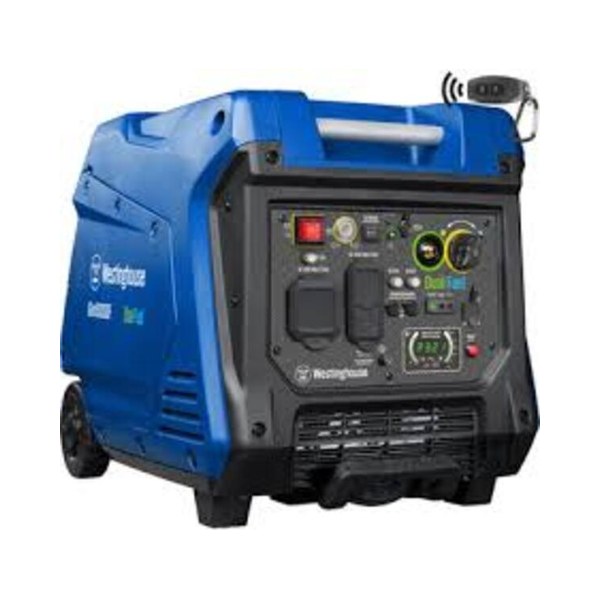
What can a 3000 watt generator run? Usually a refrigerator, lights, a router, a TV and one or two heavier items such as a microwave, as long as you do not start them all at once. The "3000" is often a rounded peak rating, and the number that matters is the running rating, which can sit near 2,800 W. This guide shows how to add up your loads, what the four models we compared can handle and where a 3,000 watt unit runs out of room.
We compared official spec sheets for this guide. We did not test any generator ourselves, so every figure comes from the manufacturers or from simple math you can repeat.
What "3000 watt" really means
A generator has two ratings. Running watts are what it can supply all day. Peak watts, also called starting or surge watts, are a short burst for starting motors.
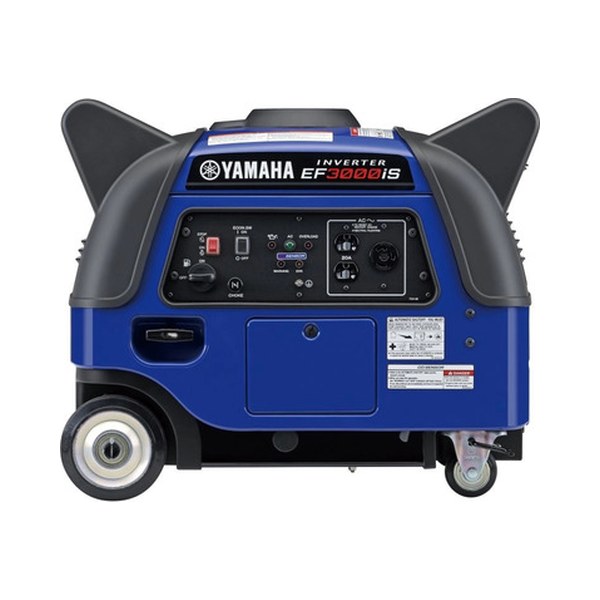
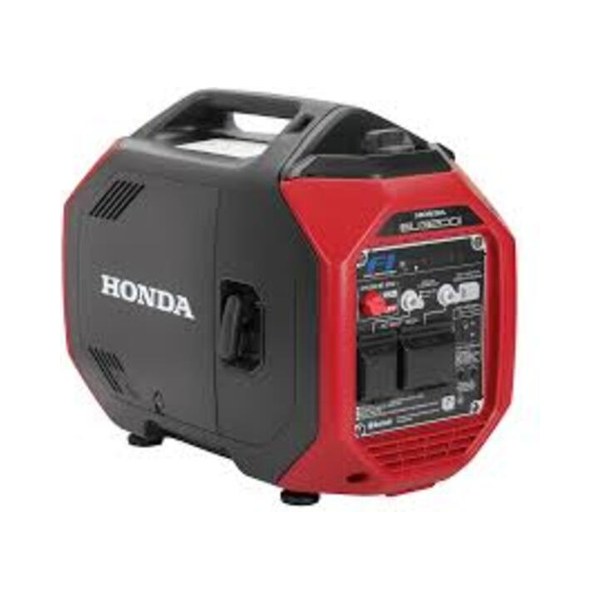
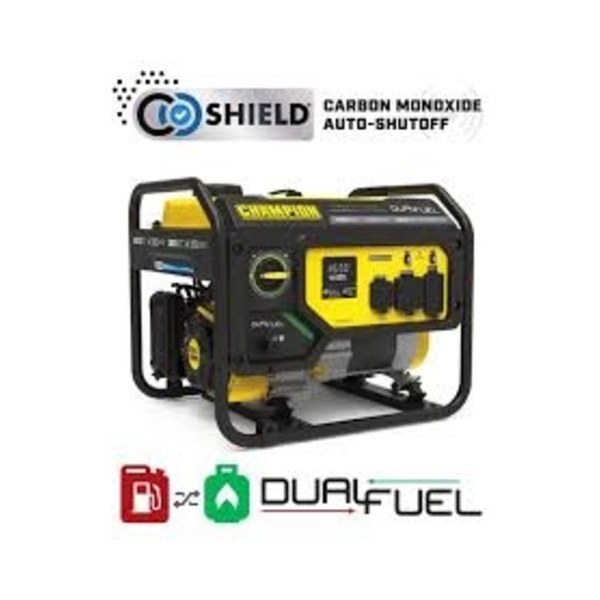
The Yamaha EF3000iS lists 2,800 W running and 3,000 W peak. So a "3000 watt" label can mean 2,800 W you can actually count on. Other models in the same class differ. The Honda EU3200i lists 2,600 W running and 3,200 W peak. The Champion 201213 lists 3,500 W running and 4,000 W peak on gasoline. So always read the running figure.
How to add up what a 3000 watt generator can run
Follow three steps.
- List what will run together. Write down each appliance and its running watts from the label.
- Add the running watts. The total must stay under the generator's running rating, with about 20% of headroom as a common rule of thumb.
- Check the peak. Find the biggest startup surge among your motors, such as a refrigerator compressor. Count that motor at its surge watts instead of its running watts. Motors rarely start at the same instant, so you do not add every surge.
Our 2000 watt generator guide walks through the same method with a smaller unit.
A worked example
Here is a made-up list, so swap in your own numbers from the nameplates.
The running total of 1,860 W fits under every model in our list. For the peak, count the fridge at 1,800 W instead of 600 W. That gives 1,860 − 600 + 1,800 = 3,060 W.
Now compare. The Yamaha's 3,000 W peak falls just short of 3,060 W, so it could trip if the fridge starts while the microwave runs. The Honda EU3200i, at 3,200 W peak, covers it. The Champion's 4,000 W peak covers it easily.
Adding a space heater
Now add a 1,000 W space heater, an example. The running total becomes 2,860 W. That is above the Yamaha's 2,800 W running rating, and above the Honda's 2,600 W. The Champion's 3,500 W covers it on gasoline. The peak becomes 3,860 W.
Here is the catch. On propane, the Champion lists 3,150 W running and 3,600 W starting. So 3,860 W exceeds its propane peak. The same list works on gasoline and fails on propane. That is why the fuel matters when you size a dual fuel unit.
What can a 3000 watt generator run at home?
In general, a unit in this class handles a mix of key household loads. Check your own labels, because wattages vary a lot between models.
- Yes, usually: a refrigerator, a freezer, lights, a TV, a router, laptops, phone chargers and a fan.
- Often, one at a time: a microwave, a coffee maker, a space heater or a window air conditioner.
- Rarely or never: central air, an electric dryer, an electric water heater and an electric range.
However, the last group draws thousands of watts each. If you need those, look at a bigger generator. Our 8000 watt generator guide covers that class.
Four 3000 watt class models we compared
All details come from the manufacturers' spec pages.
Each maker tests noise differently, so treat that column as a rough ranking.
- Honda EU3200i lists a CO-MINDER shutdown. It has a 30 A locking outlet and a 20 A duplex. It runs about 3.3 hours at rated load, or 8.6 hours at a quarter load.
- Yamaha EF3000iS lists 18.6 hours at a quarter load. Its page gives two weights, 136 lb and 156 lb, for the two versions. It does not list outlets.
- Champion 201213 is dual fuel with a CO Shield shutoff. It has a TT-30R RV outlet, a locking outlet and a duplex. At 68 dBA, it is much louder than the inverter models.
- Westinghouse iGen5000DF is a dual fuel inverter. It lists 3,900 W on gasoline and 3,500 W on propane. The spec table lists no CO sensor.
Prices and availability change often, so check the retailer page before you decide.
What about a 3000 watt solar generator?
A 3000 watt solar generator is a battery power station with solar panels. Our product list has no unit rated at exactly 3,000 W. The Anker SOLIX C2000 Gen 2 lists 2,400 W, and the Jackery Explorer 2000 v2 lists 2,200 W. Larger units exist, such as the Jackery Explorer 5000 Plus at 7,200 W, but a battery runs out of energy fast at high power. At 3,000 W, a 2,000 Wh battery would last well under an hour, even if it could deliver that output. Our solar vs gas generator comparison shows the math.
Tips to get more from a 3000 watt generator
You can stretch a unit this size with habits, not just equipment.
- Start big loads one at a time. Let the fridge compressor settle before you start the microwave.
- Stagger heavy items. Run the microwave, then the coffee maker, not both.
- Turn off what you do not use. Lights and TVs add up.
- Run loads in the right order. Start the biggest motor first, while the total is low.
These steps keep the peak low, so a smaller unit can handle the same list. However, they cost you convenience, so decide how much you want to juggle.
Common mistakes with a 3000 watt generator
- Trusting the name. The running rating can sit near 2,800 W.
- Counting every surge. Add only the largest one.
- Forgetting propane. Output drops on propane for dual fuel units.
- Running it indoors. Never do this, even with doors open.
Runtime and fuel
Runtime depends on the load, so compare at the same load. Our worked example uses 1,860 W, which is about 72% of the Honda's rated output. So expect something close to its 3.3 hours at rated load, not the 8.6 hours at a quarter load. Plan to refuel, and store spare fuel safely away from the generator.
Noise and neighbors
A generator in this class runs close to your home, so noise matters. The Honda lists 58 dB(A) at rated load, and the Champion lists 68 dBA from 23 feet. Because the makers test differently, the gap may be a bit different in real life. Even so, the Champion is the louder machine by its own numbers. If you live close to neighbors, the inverter models are a better fit, though they cost more per watt.
Safety comes first
Carbon monoxide is the main risk. The U.S. Consumer Product Safety Commission says to use portable generators outside only, at least 20 feet from doors, windows and vents. It also says never to use one inside a home or garage, even with doors and windows open. Install battery-operated carbon monoxide alarms in your home.
When to step up to a bigger unit
Move up if your running total sits above about 80% of the rating, or if you need big motors or 240 V loads. Moving up costs weight and noise. The Champion weighs 108 lb and lists 68 dBA, while the Honda weighs 59.1 lb. So choose the smallest unit that covers your list.
The bottom line
A 3000 watt generator runs a refrigerator, lights and electronics, plus one or two heavier items if you start them one at a time. Read the running watts, not the name. Add up your loads, check the peak, and check the propane figure if you use it. Keep the generator outside, away from doors and windows.