We built this page from official product pages and safety guidance. We did not test any generator, and we list no prices, because they change often. So every figure comes from the manufacturers or from simple math you can repeat, and we say where a page left a number open.
Three types of portable generator
The labels overlap, so start with the basics.
- Conventional generators run the engine at a steady speed. They tend to give the most power for the least money and are the loudest. Our genset vs inverter comparison covers the difference.
- Inverter generators make raw power, then an electronic circuit turns it into steady household power. The engine can slow down at light loads. Our inverter vs conventional generator guide goes through the tradeoffs.
- Dual fuel generators run on gasoline or propane. They can be conventional or inverter models. Output drops on propane, which matters when you size one.
A fourth option is not a generator at all. A battery unit stores energy and has no engine. See our guide to the best portable power stations and our guide to the best solar generators for that route.
Nine models compared
Here are nine units from our product list, sorted by running watts.
Here are the open points on the pages.
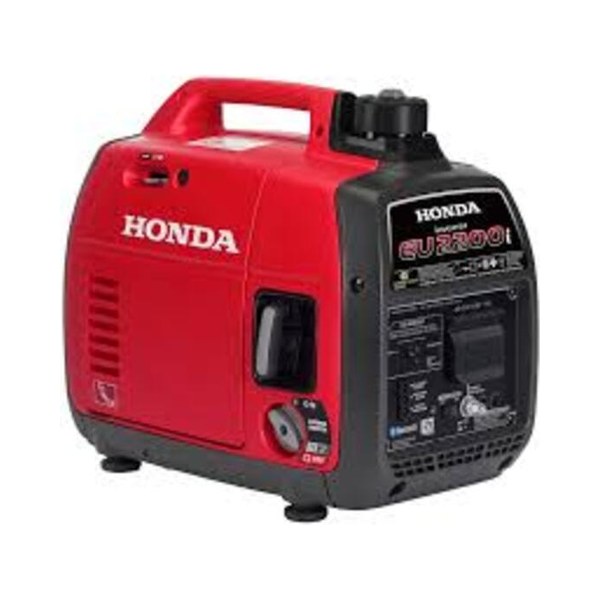
- Honda: the spec blocks do not state the fuel type, and the weights are dry weights. The EU2200i lists a maximum output of 2,200 W with no separate starting figure.
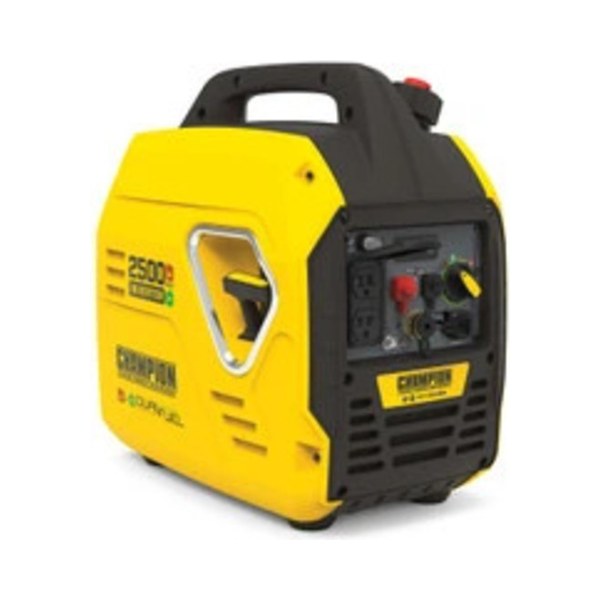
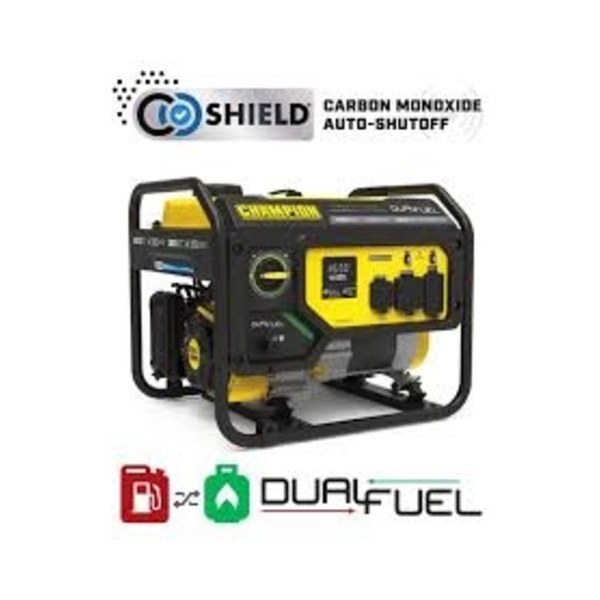
- Champion 100899: starting watts of 2,500 on gasoline and propane.
- Champion 201213: 3,500 W on gasoline and 3,150 W on propane, with starting watts of 4,000 W and 3,600 W.
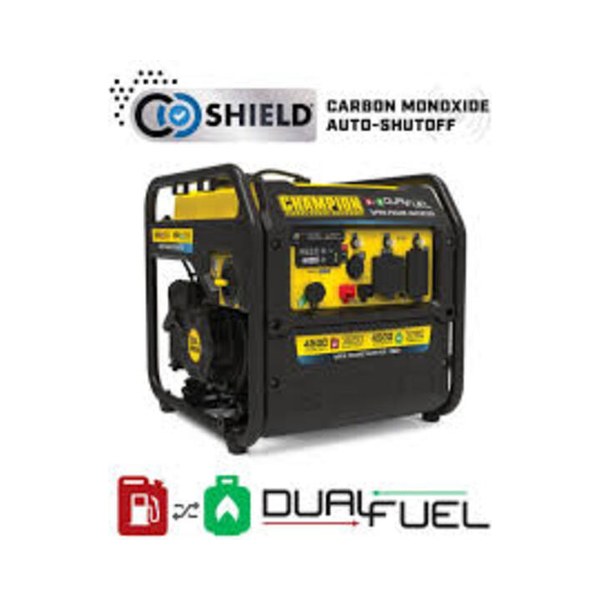
- Champion 201321: 3,650 W on gasoline and 3,285 W on propane, with 4,500 W starting on both.
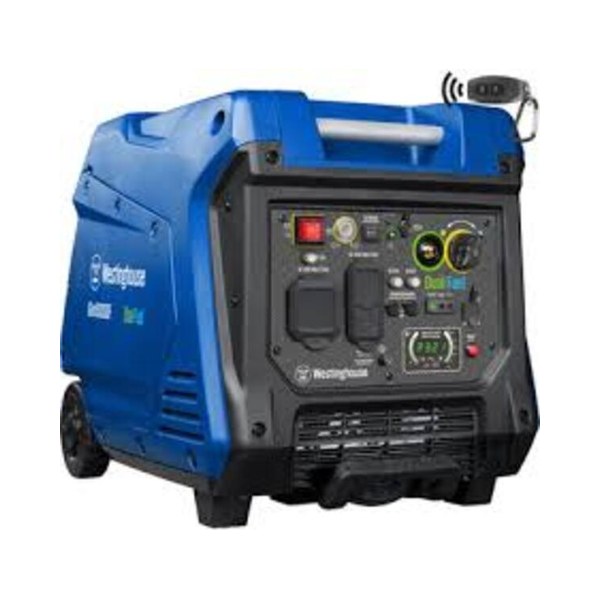
- Westinghouse iGen5000DF: 3,900 W on gasoline and 3,500 W on propane.
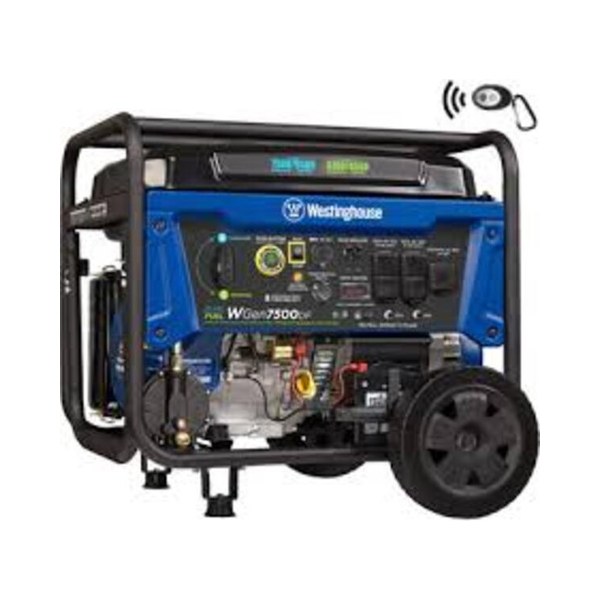
- Westinghouse WGen7500DF: 7,500 W on gasoline and 6,750 W on propane.
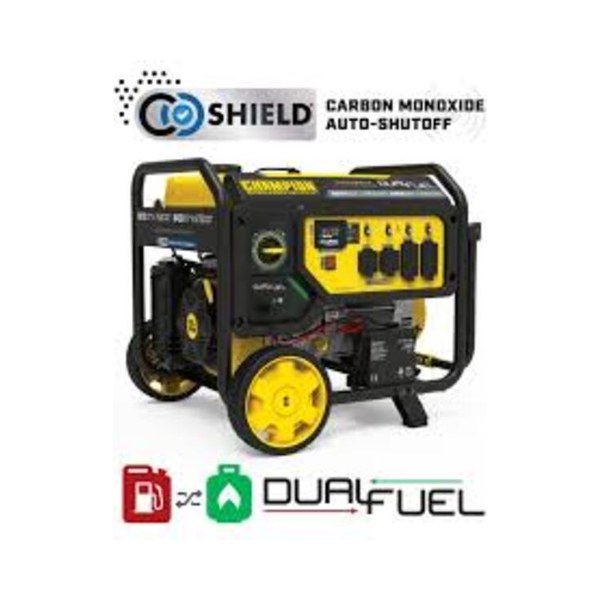
- Champion 201281: 7,500 W on gasoline and 6,750 W on propane, with 9,375 W and 8,400 W starting.
So output drops by about 10% on propane in every dual fuel model we checked. Size for the lower number if you plan to use propane.
How to size a portable generator
Sizing takes four steps. Our generator sizing guide explains each one with a worksheet.
- List what you want to run at the same time.
- Add the running watts. Use the label, or multiply volts by amps.
- Find the peak. Swap the largest motor's running watts for its starting watts.
- Leave headroom. About 20% is a common rule of thumb, not a manufacturer spec.
Here is a made-up example, so swap in your own numbers.
The peak is 2,500 − 800 + 2,400 = 4,100 W, because the sump pump's surge replaces its running figure. Against our nine models, the Honda EU3200i falls short on the peak, and the Champion 201213 sits just under it at 4,000 W. The Champion 201321, the iGen5000DF and every larger unit cover it. On propane, the 201321 runs 3,285 W and still covers the 2,500 W running load, and its 4,500 W starting figure covers the peak.
Which size for which use
Under 2,000 W: small loads
The Honda EU2200i and the Champion 100899 suit camping, tailgating and a few small appliances. The Champion is the lightest at 39 lb. Our small generators guide compares the class, and our 2000 watt generator guide shows what that size can run.
About 3,000 to 4,000 W: a fridge and a few more
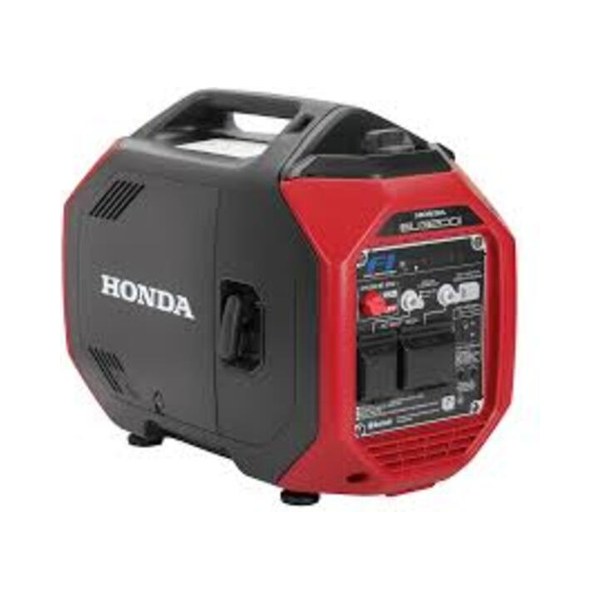
The Honda EU3200i, the Champion 201213, the Champion 201321 and the iGen5000DF fit here. Our guide to what a 3000 watt generator can run lists typical loads, and our food truck generator guide shows how sizing works for a business.
5,000 to 7,500 W: larger home loads
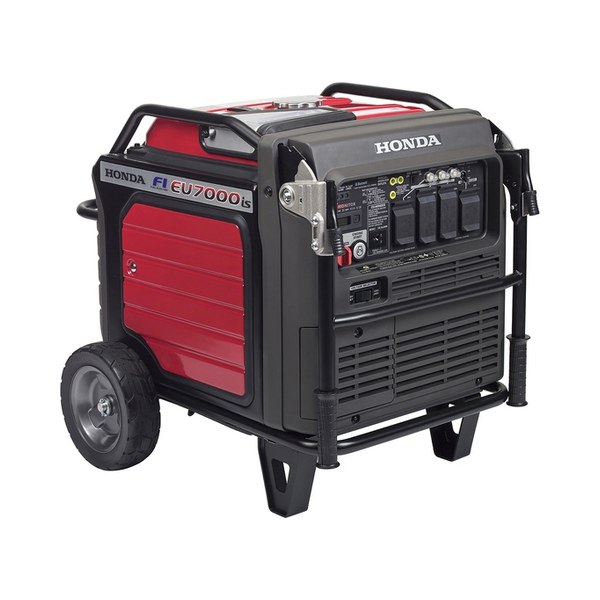
The Honda EU7000iS, the WGen7500DF and the Champion 201281 fit here. They are heavy, at 201 to 263.2 lb, so plan for wheels and storage space. Our 8000 watt generator guide covers the top of this range, and our portable generator for home backup guide shows how to connect one at home.
A worked example: a winter outage
Say a storm cuts power for two days. You want the refrigerator, the freezer, the sump pump, a furnace blower and a few small items. Those are the loads in our table, so the running total is 2,500 W and the peak is 4,100 W.
Start the generator first, with nothing plugged in. Then add loads one at a time, starting with the biggest motor. That way the generator never faces two surges at once, which is also why we count only the largest starting figure. Next, plug in the refrigerator, then the pump and the furnace blower, and leave the small items for last.
On propane, the Champion 201321 still delivers 3,285 W running, so it covers the 2,500 W load. The Champion 201213 delivers 3,500 W on gasoline and 3,150 W on propane, so it covers the running total. However, its starting figure is 4,000 W on gasoline and 3,600 W on propane, and both fall under the 4,100 W peak. So it is a tight fit for this list. Staggering the starts helps, but we would size up. That is why we say to size for the lower propane figure and to check the peak as well.
Fuel is the second question. The pages list runtimes at set loads, but not fuel use per hour, so we cannot give you a gallon count. Check the tank size and the runtime on the page for the load you expect, then keep a spare can of fuel in an approved container, outside living areas.
Runtime on a tank
Runtime depends on the load, and each maker lists a different test point. Compare them with care.
Because the loads differ, a bigger number does not always mean a better unit. The pattern is clear, though. A Honda unit at a quarter load runs about two and a half times longer per tank than at rated load, as its own figures show.
Noise
Noise matters at home, where neighbors and family hear it all night. The pages list these figures.
The makers test in different ways, so treat the gaps as a hint. Even so, the inverter models list the lowest numbers, and the large conventional units list the highest.
Where to put it
Place the generator on a flat, dry spot at least 20 feet from doors, windows and vents, with the exhaust pointing away from the house. Keep it away from neighbors' windows too. The Missouri PSC says a generator should not run in rain or snow, so a portable shelter or an overhang that leaves the exhaust in open air is the usual answer. Never run it under a closed canopy or in a shed with the door shut.
Carbon monoxide: the main risk
Carbon monoxide is the main danger with any gas generator. The U.S. Consumer Product Safety Commission says to use portable generators outside only, at least 20 feet from doors, windows and vents. It also says never to use one in a home or garage, even with doors and windows open. The Missouri Public Service Commission adds that a generator should not run in rain or snow, so use a shed, an overhang or a portable shelter with the exhaust outdoors.
Install battery-operated carbon monoxide alarms in your home. Some models list a built-in shutdown. The Honda models list CO-MINDER, and the Champion 201213, 201321 and 201281 list CO Shield. The Westinghouse iGen5000DF and WGen7500DF list no CO sensor in their spec tables, so an alarm matters even more. A shutdown helps, but it does not replace placing the unit outside.
Connecting it to your home
This is the most important part of any home setup. The Missouri PSC says not to connect your generator directly to your home's wiring, because it can backfeed onto utility lines and endanger line workers. The safe option is a transfer switch installed by a licensed electrical contractor. FLASH adds one more rule: never plug a generator into a wall outlet.
Without a transfer switch, plug appliances directly into the generator with a heavy-duty, outdoor-rated extension cord. The Missouri PSC says not to use frayed or defective cords.
Fuel and maintenance
Dual fuel gives you a choice during an outage, when gas stations may be closed or have long lines. The cost is lower output on propane. Gasoline is easy to find but goes stale. The Missouri PSC advises fresh gasoline and a stabilizer if the generator will sit for long periods. Refuel only after the generator is off and has cooled, and never add gasoline to a running unit. The same source suggests starting the generator at least once a month and letting it run for a few minutes. Store fuel in an approved can, outside living areas.
How to read a spec page
Spec pages can hide small conflicts. The WGen7500 page, for example, mentions a runtime of up to 16 hours in its meta description, while its spec table says 11 hours at 25% load, and we use the table. The iGen5000DF page URL says "igen4500df" while the page shown is the iGen5000DF. The Yamaha EF4500iSE page lists a weight that looks implausible for the model, so we kept it out of our table. When numbers do not add up, ask the seller to confirm before you buy.
Warranty terms we could confirm
Read the full terms before you buy, because pages may add conditions that we do not repeat.
Portable generator or power station?
A generator runs as long as you add fuel, so it suits long outages and heavy loads. A power station has no exhaust and makes no engine noise, so it suits short outages and small spaces. Our solar vs gas generator comparison goes through both, and our guide to portable gas generators covers the gas side in detail. Our electric generator guide explains the two meanings of that term. For a house, our guide to the best home emergency generator compares every route, and for a van or a camper, see our RV solar panels guide.
Choosing by situation
- Camping or tailgating: a small inverter unit, for low noise and low weight.
- A home with a fridge and a pump: about 3,900 W or more, with a transfer switch.
- A job site or a workshop: a conventional unit, where noise and weight matter less.
- An apartment or a balcony: a battery unit, because an engine must stay outdoors and far from windows.
- A long outage with heavy loads: a dual fuel unit, so you have two fuel options.
Mistakes to avoid
- Sizing on running watts alone. The largest motor's surge sets the peak.
- Running it in the garage. The CPSC says never to, even with the door open.
- Plugging it into a wall outlet. This can backfeed the grid.
- Forgetting propane. Output drops by about 10% in the dual fuel models we checked.
- Trusting the name. Check the running watts, not the number in the model name.
- Skipping the monthly test. The Missouri PSC suggests running it at least once a month.
- Buying a unit you cannot move. The EU7000iS weighs 263.2 lb.
Checklist before you buy
- Running and peak watts. Match them to your loads, with headroom.
- Fuel. Check propane output if you plan to use it.
- Outlets. Match the plugs to your cords or transfer switch.
- Weight and noise. Plan for wheels and a flat spot.
- Runtime. Compare hours at the same load.
- CO protection. Check for a shutdown, and buy alarms for your home.
- Current price. Check the retailer page, because we list none.
The bottom line
The best portable generator fits your loads, runs outdoors and connects through a transfer switch or direct cords. Add up your running and peak watts first, size for the propane figure if you plan to use propane and buy carbon monoxide alarms before you buy the generator. For short outages and small spaces, a battery unit may fit better.
Prices and availability change often, so check the retailer page before you decide.