Small generators trade raw power for low weight and low noise. The five models we compared run from 1,800 W to 2,600 W, weigh 39 to 59 lb and list noise from 52 to 65 dBA. Before you pick one, check three things: how the maker measured noise, what the unit weighs per watt and whether it lists a carbon monoxide shutoff. This guide shows how to compare those numbers on the official spec pages.
We did not test any generator ourselves, so every figure comes from the manufacturers or from simple math you can repeat.
Small generators compared
| Model | Running / peak | Weight | Noise | Runtime |
|---|---|---|---|---|
| Champion 100899 | 1,850 / 2,500 W (gasoline) | 39 lb | 53 dBA from 23 ft | 11.5 h gasoline, 34 h propane at 1/4 load |
| Westinghouse iGen2200 | 1,800 / 2,200 W | 46.3 lb | 52 dBA (load not stated) | 12 h at 25% load |
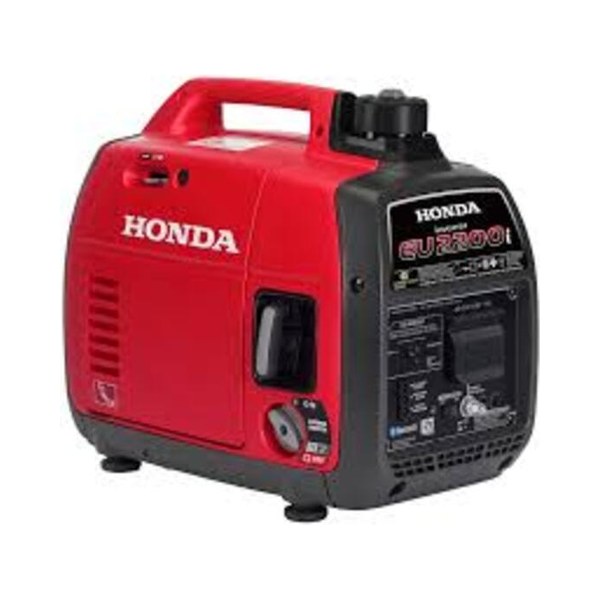
| Honda EU2200i | 1,800 / 2,200 W | 47.4 lb | 57 dB(A) rated; 48 dB(A) at 1/4 load | 3.2 h rated; 8.1 h at 1/4 load |
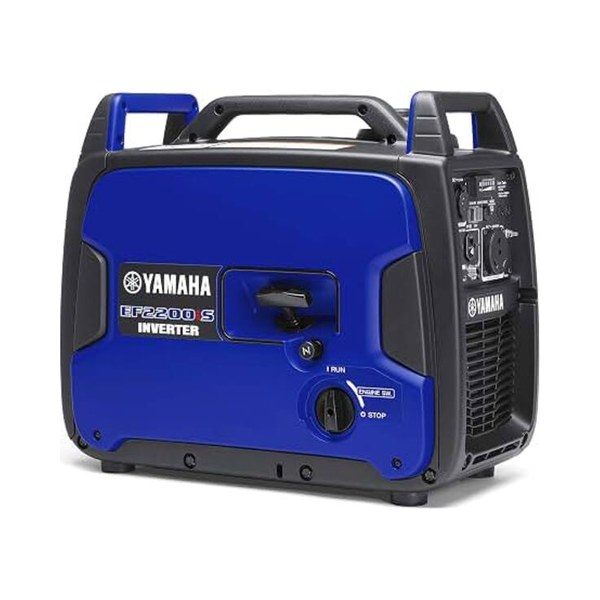
| Yamaha EF2200iS | 1,800 / 2,200 W | 55.2 lb | 57 to 65 dBA | 10.5 h at 1/4 load |
| Honda EU3200i | 2,600 / 3,200 W | 59.1 lb | 58 dB(A) rated; 54 dB(A) at 1/4 load | 3.3 h rated; 8.6 h at 1/4 load |
Because the weights are dry weights, add fuel. The Yamaha page is titled 2021 and may not be the current model-year page.
Check how the noise was measured
Noise is the main reason people buy quiet generators, so read the number carefully. However, each maker tests under different conditions.
- Honda gives two numbers, one at rated load and one at a quarter load. You can see the drop at light loads.
- Champion gives 53 dBA from 23 feet, so you know the distance.
- Westinghouse gives 52 dBA without a load or a distance.
- Yamaha gives a range, 57 dBA at a quarter load to 65 dBA at rated load.
Because the tests differ, a gap of a few decibels tells you little, so use the numbers as a hint. Treat the figures as a rough ranking. Also, the Yamaha range shows that a generator gets louder as the load rises, so a small unit under a light load is the quiet case.
Weight per watt
A small generator you cannot carry is not much use. However, the spec sheets do not list weight per watt, so we worked it out. Here is the running watts divided by the weight, using the dry weights above:
- Champion 100899: about 47 W per lb on gasoline.
- Honda EU3200i: about 44 W per lb.
- Westinghouse iGen2200: about 39 W per lb.
- Honda EU2200i: about 38 W per lb.
- Yamaha EF2200iS: about 33 W per lb.
So the Champion gives the most power per pound among these, though its running rating drops to 1,665 W on propane. The Yamaha gives the least, but its weight comes from a page that may be out of date.
Check the carbon monoxide shutoff
Carbon monoxide is the main risk with any gas generator. The Honda EU2200i and EU3200i list a CO-MINDER automatic shutdown. The Westinghouse iGen2200 spec table lists no CO sensor. Meanwhile, the Champion 100899 page does not mention one, and the Yamaha page does not list CO protection. So a shutoff helps, but it does not replace safe placement.
The U.S. Consumer Product Safety Commission says to use portable generators outside only, at least 20 feet from doors, windows and vents. It also says never to run one inside a home or garage, even with doors and windows open.
Outlets matter on a small generator
First, a small generator may have only one outlet. The Honda EU2200i, for instance, lists a single 20 A duplex receptacle. The Honda EU3200i lists a 30 A locking outlet and a 20 A duplex. The Westinghouse iGen2200 lists one duplex and two USB ports in its spec table, while its feature list says two 120 V outlets, so confirm the count. Then check the plug type that your gear uses before you buy.
Compare runtime at the same load
Runtime numbers use different loads, so line them up before you compare. Honda lists the EU2200i at 3.2 hours at rated load and 8.1 hours at a quarter load. For the EU3200i, the figures are 3.3 hours and 8.6 hours. Westinghouse lists 12 hours at 25% load for the iGen2200, and Yamaha lists 10.5 hours at a quarter load for the EF2200iS. Champion lists 11.5 hours on gasoline and 34 hours on propane at a quarter load for the 100899.
So the Champion on propane has the longest listed runtime, but only at light loads. Also, runtime shrinks fast as the load rises. For a long outage, plan to refuel.
Warranty terms
Because warranties differ, read each one. Honda lists 3 years for residential use and 12 months for commercial use. Yamaha lists a 3-year limited warranty. Westinghouse lists 3 years limited for residential use and 1 year for commercial use. Champion lists 3 years limited with free lifetime tech support. Terms can depend on how you use the unit.
What small generators can run
For example, at 1,800 W running, a small generator can power a fridge, lights and a laptop together. However, it will not run a well pump or central air. Our 2000 watt generator guide shows a worked example of how to add up loads. For a bigger sizing example, see our food truck generator guide.
Small generator or power station?
A power station has no engine and no exhaust, which suits apartments and campgrounds with generator limits. A small generator keeps running as long as you add fuel. Our solar vs gas generator comparison shows how the two fit different needs.
Mistakes to avoid
- Trusting a noise number alone. Check the load and the distance.
- Ignoring dry weight. Fuel adds to what you carry.
- Skipping outlets. One outlet may not be enough.
- Running it near a window. Keep it outside, away from openings.
How to choose
- Add up your loads. Pick the smallest unit that covers them, because 20% headroom keeps the engine from running flat out.
- Compare noise fairly. If a maker gives no load or distance, treat the number with care.
- Check weight and fuel. Dry weight excludes fuel.
- Look for CO protection. Prefer a model that lists a shutoff.
- Plan the runtime. Compare hours at the same load.
The bottom line
The best small generators are the ones that match your loads and your back. Compare noise at the same load, divide watts by weight and check for a CO shutoff. For a fridge and electronics at home or at camp, a 1,800 W inverter model is a sensible starting point, and a 2,600 W model gives more room.