Portable gas generators run on gasoline, and many also run on propane. A gasoline generator keeps running as long as you add fuel, while a battery runs out. They also make carbon monoxide, so they must run outdoors. This guide explains the fuel options, shows how output changes on propane and lists what to check before you choose. We have no spec data for diesel models, so we do not compare them here.
We compared official spec pages for this guide. We did not test any generator ourselves, so every figure comes from the manufacturers or from simple math you can repeat.
How portable gas generators work
A gas engine spins an alternator, and the alternator makes electricity. The engine runs on gasoline, and some models can also burn propane. A conventional model holds the engine at a fixed speed. An inverter model, like the Honda EU3200i, changes engine speed with the load. Our inverter vs conventional comparison explains the difference.
Gasoline, propane or dual fuel
Dual fuel models give you a choice, but the choice has a cost. Output drops on propane. The manufacturers list these figures:
| Model | Gasoline running | Propane running |
|---|---|---|
| Champion 201213 | 3,500 W | 3,150 W |
| Westinghouse iGen5000DF | 3,900 W | 3,500 W |
Both lose roughly 10% of their running watts on propane. So size your generator for the lower number if you plan to run propane. For example, a 3,300 W load fits under 3,500 W on gasoline, but not under 3,150 W on propane.
Fuel storage also differs. Propane keeps in a tank. Gasoline is easy to find. The FLASH safety guide says to store fuel in an approved safety can, outside living areas and away from fuel-burning appliances.
What about diesel?
Some people search for a portable diesel electric generator. Our product list has no diesel models, so we cannot give you verified specs. If you are looking at one, read the maker's spec page for running watts, noise and weight, and check the same safety points below.
Portable gas generators we compared
| Model | Running / peak | Fuel | Weight | Noise |
|---|---|---|---|---|
| Honda EU3200i | 2,600 / 3,200 W | Not stated | 59.1 lb | 58 dB(A) at rated load |
| Champion 201213 | 3,500 / 4,000 W | Dual fuel | 108 lb | 68 dBA from 23 ft |
| Westinghouse iGen5000DF | 3,900 / 5,000 W | Dual fuel | 104.7 lb | 52 dBA (load not stated) |
| Westinghouse WGen7500 | 7,500 / 9,500 W | Gasoline | 196 lb | 72 dBA (load not stated) |
Each maker tests noise differently, so treat the last column as a rough ranking. Honda's weight is dry, and Honda's page does not state a fuel type.
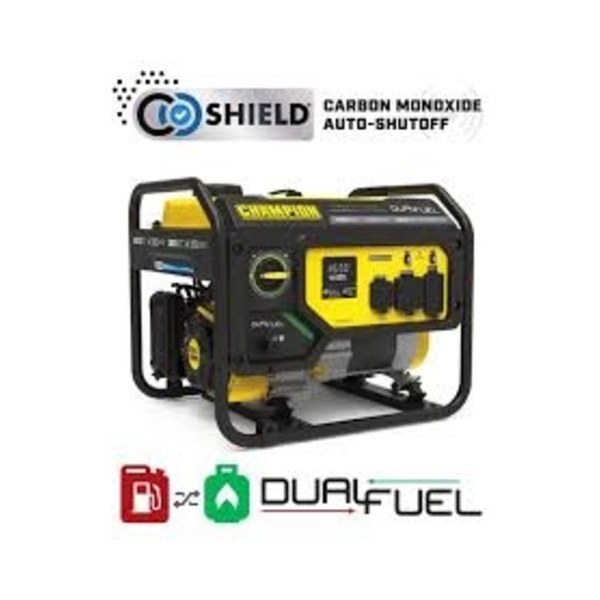
- Champion 201213 is a conventional unit with a CO Shield shutoff. It lists a TT-30R RV outlet, a locking outlet and a duplex outlet. At 68 dBA, it is much louder than inverter models.
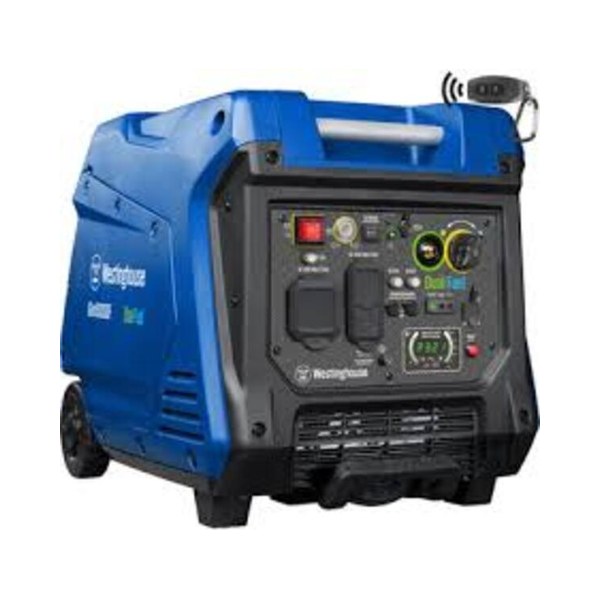
- Westinghouse iGen5000DF is an inverter model with dual fuel. It runs 18 hours on gasoline or 22 hours on propane at 25% load. No CO sensor appears in its spec table.
- Westinghouse WGen7500 is a gasoline-only unit with a 120/240 V outlet. It lists no CO sensor, and it weighs 196 lb.
- Honda EU3200i lists a CO-MINDER shutdown and runs about 3.3 hours at rated load or 8.6 hours at a quarter load.
Prices and availability change often, so check the retailer page before you decide.
How to size a gas generator
Add up the running watts of everything that will run together. Then find the biggest startup surge among your motors, and count that motor at its surge watts instead of its running watts. Check two numbers: the running rating must cover your total, and the peak rating must cover your peak. Leave about 20% of headroom as a common rule of thumb. Our 2000 watt generator guide shows a worked example.
Fuel and runtime
Runtime depends on load. The Honda EU3200i lists 3.3 hours at rated load, and 8.6 hours at a quarter load. The Westinghouse iGen5000DF lists 18 hours on gasoline at 25% load. A heavier load burns fuel much faster, so compare the same load when you can. Plan refuels around your real load, and keep spare fuel stored safely.
Which size for which job?
Here is a rough match between size and use, based on the models above.
- About 2,600 W (Honda EU3200i): a fridge, lights and small tools. It runs about 3.3 hours at rated load.
- About 3,500 W (Champion 201213): more loads at once, with a 30 A RV outlet. It drops to 3,150 W on propane.
- About 3,900 W (Westinghouse iGen5000DF): a bigger list of loads, with inverter power.
- About 7,500 W (Westinghouse WGen7500): a house with a 120/240 V outlet. Our 8000 watt generator guide covers this class.
Add up your loads before you pick, because the name on the box is only a guide.
Mistakes to avoid
- Ignoring the propane number. Output drops by about 10% on the dual fuel models we checked.
- Refueling a hot engine. Turn it off and let it cool first.
- Storing fuel indoors. Keep it in an approved can, outside living areas.
- Skipping the CO alarm. Install one in your home.
Gas generator or battery?
A gas generator suits long outages and heavy loads. A battery suits short outages and quiet spots. Our solar vs gas generator comparison goes through both in detail.
Safety first
Carbon monoxide is the main risk. The U.S. Consumer Product Safety Commission says to use portable generators outside only, at least 20 feet from doors, windows and vents. It also says never to use one inside a home or garage, even with doors and windows open. Install battery-operated carbon monoxide alarms in your home.
The FLASH guide adds more rules. Turn the generator off and let it cool before you refuel. Keep it dry. Never plug it into a wall outlet, because that backfeeds power into the grid and endangers utility workers. For home circuits, ask a licensed electrician about a transfer switch.
Check the outlets for your cords
Outlets decide what you can plug in. The Champion 201213 lists a 30 A RV outlet, a 30 A locking outlet and a 20 A duplex. The Westinghouse iGen5000DF lists a duplex, two USB ports and a TT-30R outlet, though its description says two 20 A outlets, which conflicts with the table. So confirm the plug type before you buy.
What to check before you buy
- Running watts on your fuel. Check the propane figure if you plan to use propane.
- Outlets. Match them to your cords or transfer switch.
- Noise and weight. Louder conventional units can bother neighbors.
- CO protection. Look for a shutoff, and note which models list none.
- Warranty. Champion lists 3 years with lifetime tech support. Westinghouse and Honda list 3 years residential.
The bottom line
Portable gas generators give high power and long runtime for the size, but they need fuel, outdoor space and care. Pick the fuel you can store and refill, size the unit for the lower propane number if you use propane, and keep the exhaust away from your home.