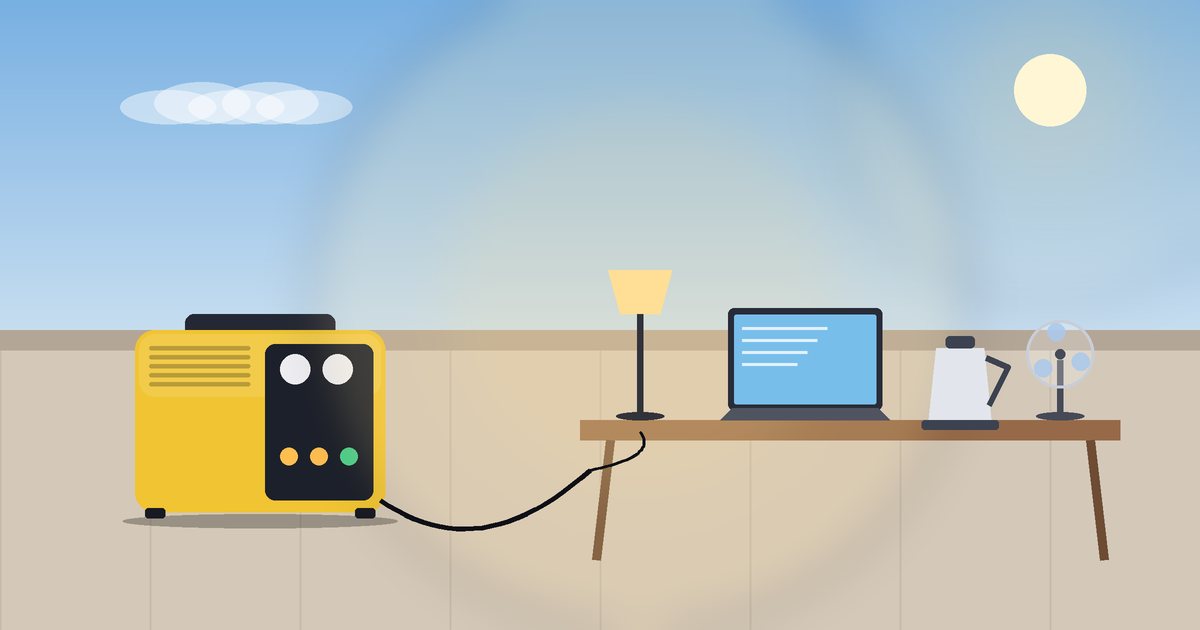
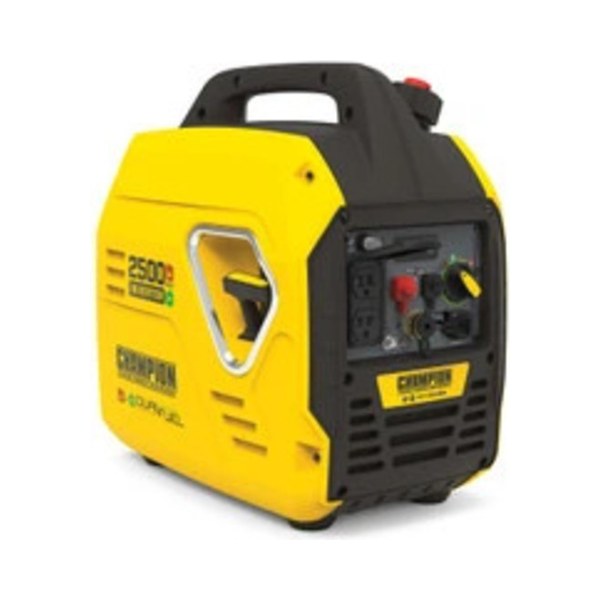
A 2000w generator can run a few small appliances at once, such as a refrigerator, a few lights, a laptop and a router. It cannot run a whole house, and it struggles with big motors or heating appliances. The key is to add up running watts and then check the startup surge. Most "2000 watt" models in our list are rated near 1,800 W running and 2,200 W peak. This guide shows how to size your loads, and how four models compare on noise, weight and runtime.
We compared official spec sheets for this guide. We did not test any generator ourselves, so every figure comes from the manufacturers or from simple math you can repeat.
What "2000 watt" really means
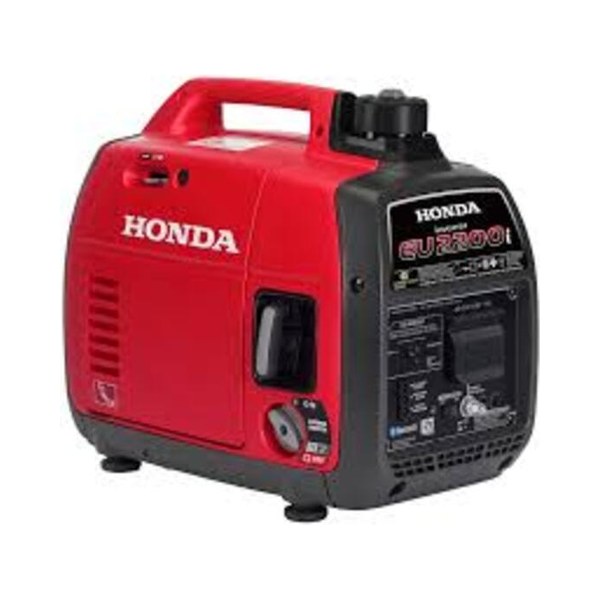
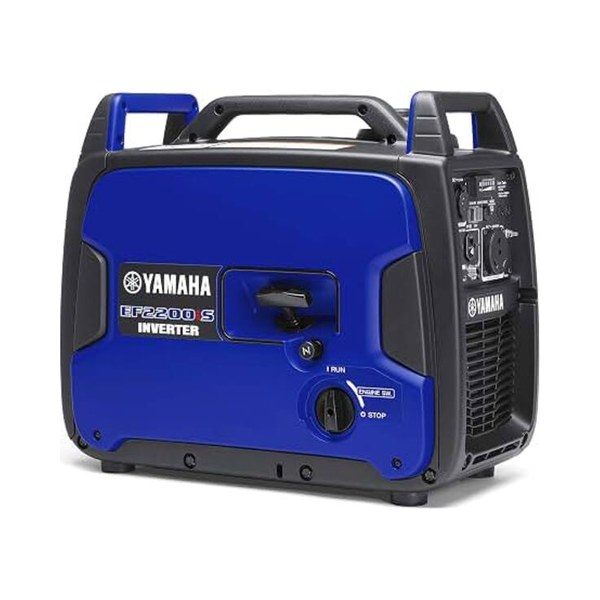
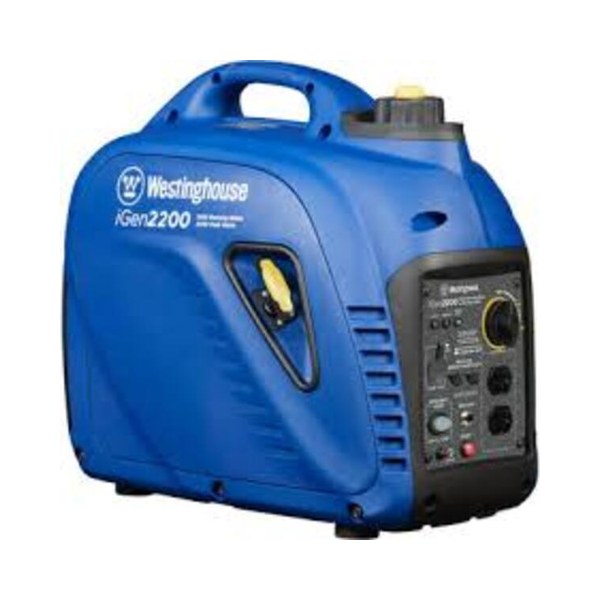
The label on a 2000 watt generator is a rounded name, not a promise of 2,000 watts all day. The Honda EU2200i, the Yamaha EF2200iS and the Westinghouse iGen2200 all list 1,800 W running and 2,200 W peak. The Champion 100899, sold as a 2,500 W model, lists 1,850 W running on gasoline and 1,665 W on propane, with 2,500 W starting.
So the number that matters is the running rating. A load that stays above it will trip the generator or shut it down. The peak rating covers only a short burst.
Running watts and starting watts
Every appliance has two numbers. Running watts are what it draws while it works. Starting watts are the extra burst a motor needs to start, such as the compressor in a refrigerator.
Add the running watts of everything that will run together. Then find the largest startup surge among your motors and swap that motor's running watts for its surge watts. Motors rarely start at the same instant, so you do not add every surge. The result is your peak. Check two ratings: the running watts must cover your total, and the peak rating must cover your peak.
A common rule of thumb is to leave about 20% of headroom, so the engine does not run flat out all day.
A worked example for a 2000w generator
Here is a made-up list, so swap in your own numbers from the nameplates.
First, the running total is 770 W, well under 1,800 W. Next, for the peak, count the fridge at its 1,800 W surge instead of 600 W. That gives 770 − 600 + 1,800 = 1,970 W. A 2,200 W peak rating covers that, with a thin margin.
Adding a microwave
Now add a 1,000 W microwave. The running total climbs to 1,770 W, which barely fits under 1,800 W. However, if the fridge starts while the microwave runs, the peak becomes 1,770 − 600 + 1,800 = 2,970 W, which is above 2,200 W. So the microwave should run only when the fridge compressor is off, or the generator may trip. That is why adding loads one at a time matters.
The 2000 watt generator models we compared
All details come from the manufacturers' spec pages.
Each maker tests under different conditions, so treat the noise column as a rough ranking and not an exact match. Runtime figures also use different loads. Compare the same load when you can.
A few details stand out.
- Honda EU2200i lists a CO-MINDER automatic shutdown. It has one 20 A duplex outlet, and it runs about 3.2 hours at rated load.
- Yamaha EF2200iS has a 3-year limited warranty. The page we checked does not list its outlets or CO protection, and it may not be the current model-year page.
- Westinghouse iGen2200 lists no CO sensor in its spec table. Its outlet count differs between the spec table and the feature list.
- Champion 100899 runs on gasoline or propane, so it gives you fuel choice. Its CO shutoff is not mentioned on the page we checked, and its output drops on propane.
Prices and availability change often, so check the retailer page before you decide.
Plan your fuel and runtime
Runtime depends on the load, so check which load the maker used. Honda lists the EU2200i at 3.2 hours at rated load and 8.1 hours at a quarter load. Westinghouse lists 12 hours at 25% load for the iGen2200.
Now compare that to our example. The 770 W list uses about 43% of a 1,800 W rating. That sits between a quarter load and full load, so the real runtime lands between the two Honda figures. Plan on refueling during a long outage, and keep spare fuel stored safely away from the generator.
Inverter or conventional at this size?
All four models above are inverter generators. The engine slows down at light loads, which saves fuel and lowers noise. Conventional generators at this size are less common, and they tend to be louder. Our inverter vs conventional comparison lists the tradeoffs in detail.
What a 2000 watt solar generator is
People also search for a 2000 watt solar generator. That is a different product. It is a power station with a battery, paired with solar panels, and it has no engine. The Jackery Explorer 2000 v2, for example, lists 2,042 Wh and 2,200 W output.
The tradeoff is runtime. A battery holds a fixed amount of energy. A gas generator keeps going as long as you add fuel. For a fridge, lights and a laptop over several days, a gas unit may fit better. For short outages, quiet and no fumes, a battery may win. Our apartment backup guide explains why batteries suit small homes.
Safety comes first
Carbon monoxide is the main risk. The U.S. Consumer Product Safety Commission says to use portable generators outside only, and to keep them at least 20 feet from doors, windows and vents that could let carbon monoxide indoors. It also says never to use one inside a home or garage, even with doors and windows open, and to install battery-operated carbon monoxide alarms in your home.
Quiet matters more than you expect
A small generator often runs close to people, at a campsite, a tailgate or a driveway. Because noise ratings differ by test, look at how each maker states them. Honda gives 57 dB(A) at rated load and 48 dB(A) at a quarter load, so you can see the drop. Champion gives 53 dBA from 23 feet, which tells you the distance. Westinghouse gives 52 dBA without a load, so you cannot compare it fairly. When two numbers use different tests, treat the gap as a hint, not a verdict.
Mistakes that trip a small generator
- Trusting the name. A "2000 watt" label may mean 1,800 W running.
- Starting everything at once. Turn on big loads one at a time.
- Forgetting the surge. A fridge compressor can pull several times its running watts for a moment.
- Skipping the alarm. Install a battery-operated carbon monoxide alarm in your home before you need it.
Which size should you choose?
- List what you will run. Write down every appliance and its running and starting watts.
- Add the running watts. Stay under about 80% of the generator's running rating when you can.
- Check the peak. Count your biggest motor at its starting watts.
- Think about noise and weight. A 39 to 55 lb unit is easy to carry, while larger units are not.
- Choose the fuel. Gasoline is easy to find. Propane stores well.
If your loads are bigger, look at a larger unit. Our inverter vs conventional generator comparison explains the tradeoffs, and our food truck generator guide shows a bigger sizing example.
The bottom line
A 2000w generator suits a refrigerator, lights and small electronics, but not a house. Add up running watts, check the startup surge and leave headroom. Pick an inverter model if noise matters, and always run it outdoors, away from doors and windows. The models above are starting points drawn from official specs, not test results.