A gas generator for apartment living is rarely a good idea, and often it is not allowed. A portable generator makes carbon monoxide, and safety guidance says to run it outdoors, away from doors, windows and vents. Most apartments have no spot that meets that rule. A battery-based portable power station is the practical alternative, because it has no engine and makes no exhaust. This guide explains the limits and shows what a battery can run.
We compared official spec sheets for this guide. We did not test any unit ourselves, so every figure comes from the manufacturers, from the cited safety sources or from simple math you can repeat.
Why a generator for apartment living is a problem
The U.S. Consumer Product Safety Commission is clear. It says to use portable generators outside only, and to keep them at least 20 feet from doors, windows and vents that could let carbon monoxide indoors. It also says never to use one inside a home or garage, even with doors and windows open.
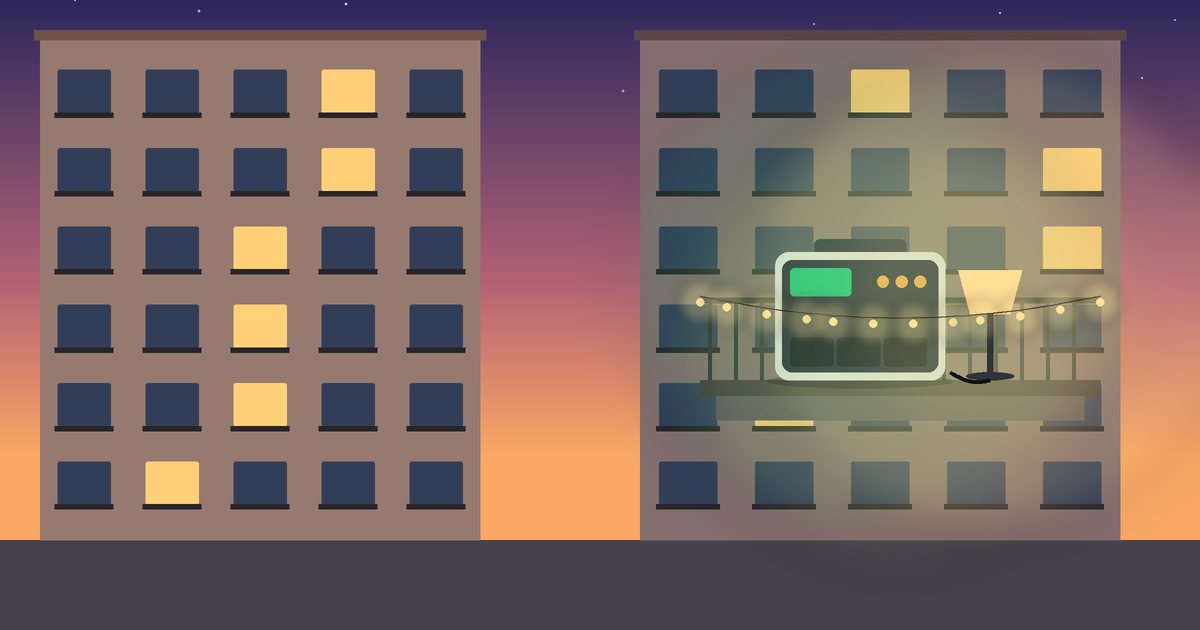
Now picture a balcony. It sits next to your own door and window, and often near a neighbor's. A generator there puts exhaust close to several openings. That is our reading of the 20-foot rule, so ask your fire department if you are unsure.
Rules may add another layer. Leases and local fire codes may also limit fuel storage and generators on balconies and in shared spaces. Check your lease and ask your landlord or building manager before you buy one.
Do apartments have generators?
Some buildings do. A building may run a fixed generator that powers hallway lights, elevators or fire systems. That is a different thing from the portable generators for apartments that people buy online. A building's generator usually does not power your outlets, so do not assume your unit has backup power. Ask your building manager what, if anything, stays on during an outage.
What a portable power station for apartment use can do
A portable power station stores energy in a battery and sends it out through outlets. Because it has no engine, it makes no exhaust. Always read the manual for placement and ventilation rules, but the carbon monoxide risk of a gas engine does not apply to a battery.
The tradeoff is energy. A battery holds a fixed amount and then it is empty. So the question for a small home is not "can it run everything" but "what do I need to keep running, and for how long." Our battery backup for a refrigerator guide shows the math in detail.
Here is how three models from our product list compare on paper:
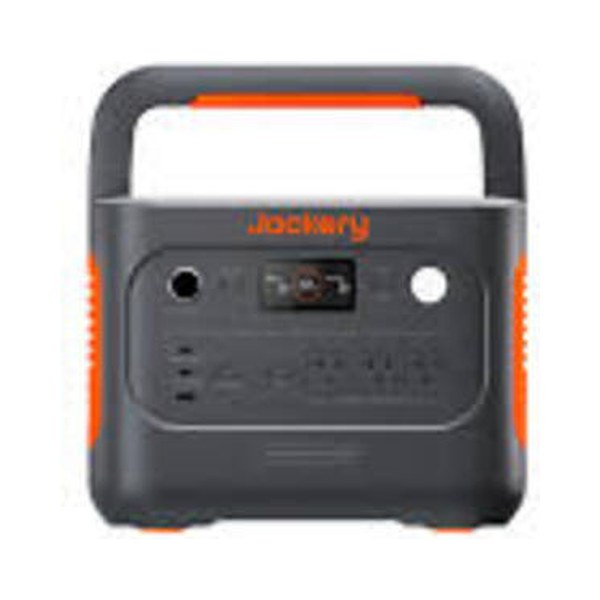
- Jackery Explorer 1000 v2: 1,070 Wh, 1,500 W rated, 3,000 W surge, 23.8 lb. Three AC outlets.
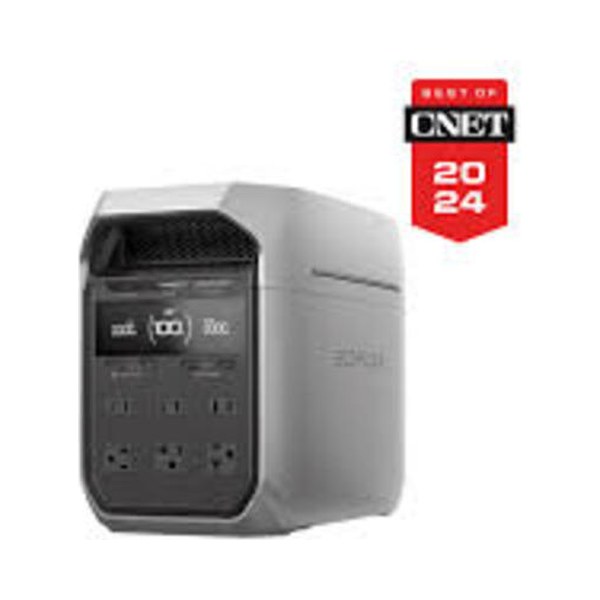
- EcoFlow DELTA 3 Plus: 1,024 Wh, 1,800 W rated, 3,600 W surge, 27.6 lb. Six AC outlets.
- Anker SOLIX C1000 Gen 2: 1,024 Wh, 2,000 W rated, 3,000 W surge, 24.9 lb. Three AC outlets. The page leaves its battery chemistry and warranty to be confirmed.
All three weigh under 28 lb, so you can carry them by hand. Prices and availability change often, so check the retailer page before you decide.
A sample apartment backup plan
Here is a made-up plan, so swap in your own numbers. Say you want to keep a refrigerator, a Wi-Fi router and a few lights on during an outage. The fridge averages about 46 W, the router about 10 W and the lights about 20 W. That adds up to 76 W.
A power station loses some energy converting battery power to household AC. We count on about 85% of rated capacity as a planning rule, which is our rule of thumb and not a manufacturer figure. For the Jackery Explorer 1000 v2, 1,070 Wh times 0.85 gives about 910 usable Wh. Divide by 76 W and you get roughly 12 hours. The two 1,024 Wh models give about 11 hours.
Real runs come out shorter. For example, opening the fridge often or charging phones adds to the load. We would cut the result by about a quarter. So a 1,000 Wh unit covers a night, but it will not carry you through a multi-day outage on its own.
Keep the battery charged
A power station only helps if it holds a charge when the lights go out. Charge it from a wall outlet before a storm or a heat wave arrives, and read the manual for how the maker advises storing it. Then keep it somewhere you can reach quickly, so you are not searching for it in the dark.
Do not run a heater or an air conditioner
Heating and cooling pull far more power than the items above. As a result, they drain a 1,000 Wh battery in a short time. Our guide to portable AC watts explains why. Use a battery for the fridge, communication and light, and treat cooling as something a larger system has to handle.
Can a small inverter generator work for an apartment?
Some people ask about a small unit like the Honda EU2200i. It lists 1,800 W running and 2,200 W peak, weighs 47.4 lb and runs at 57 dB(A) at rated load. It also lists a CO-MINDER automatic shutdown. That is a good safety feature, but it does not change where you can use the generator. The engine still makes exhaust and has to run outdoors, 20 feet from openings.
So a unit like this fits a house with a yard or a driveway better than a second-floor apartment. If you have a ground-floor patio far from windows, local rules and your lease still apply. For more on how these units work, see our inverter generator guide.
Add solar to refill the battery
An apartment can still charge a power station from the wall between outages. During a long outage, a folding solar panel can refill part of the battery if you have a sunny balcony or window. A 200 W panel makes at most about 800 Wh in four hours of strong sun, and after losses about 600 Wh. That is an example, since sun, angle and season change the result. A window or railing may block much of the light.
How to pick for a small home
- List what you must keep on. Start with the fridge, a router and a phone charger.
- Add the watts. Use average watts for the fridge and full watts for the rest.
- Pick a size. About 1,000 Wh covers a night. Bigger batteries last longer and weigh more.
- Check the weight. You may have to carry it up stairs.
- Follow the manual. Check the manufacturer's placement and ventilation rules, and keep the unit dry.
The bottom line
A gas generator for apartment use runs into safety rules and building rules, so most renters should skip it. A portable power station gives quiet, exhaust-free backup for a fridge, a router and a few lights for roughly a night. Size it to the few things that must stay on, and check your lease first.