We built this page from official product pages, safety guidance and two solar industry articles. We did not test any unit, and we list no prices, because they change often. So every figure comes from the sources or from simple math you can repeat.
How long do outages last?
Outage length decides the route. Solar.com, citing U.S. Energy Information Administration data, says the average outage lasted more than 7 hours in 2021, up from 3.5 hours in 2013, and it notes 28 outages of 10 hours or more in the first nine months of 2023. These are secondhand figures, so check the original source for your area. They still show the pattern, though: most outages last hours, and some last days.
So, ask two questions before you buy.
- How long do you need to cover? A night, a day or several days.
- What must stay on? A fridge, a pump, medical gear that uses a plug, a furnace blower or only lights and a router.
Choosing the best home emergency generator: four routes
Many homes combine two routes, however. For example, a battery unit covers the quiet hours, and a gas unit covers a long storm.
Step 1: add up your loads
Write down every device you want to run at the same time. Add the running watts, and count the largest motor at its starting watts. Our generator sizing guide explains the method. Here is a made-up example, so swap in your own numbers.
The peak is 2,500 − 800 + 2,400 = 4,100 W, because the sump pump's surge replaces its running figure. Then leave about 20% of headroom, which is a common rule of thumb, not a manufacturer spec. Our freezer wattage guide and battery backup for refrigerator guide explain how to find the real figures for your appliances.
Route 1: portable gas and dual fuel generators for the best home emergency generator
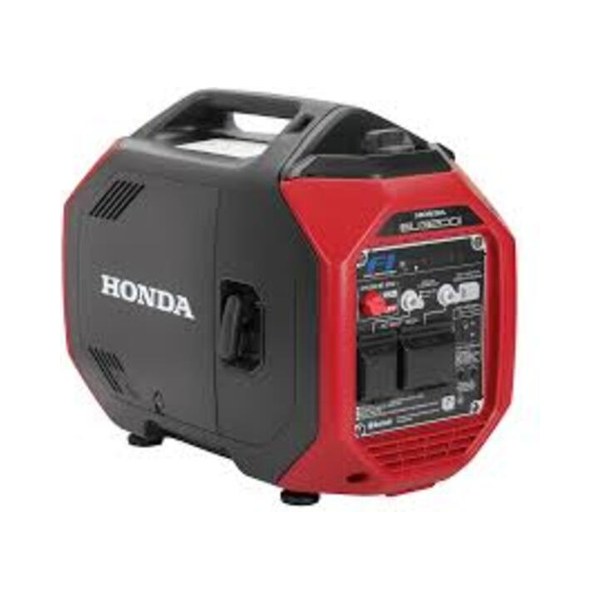
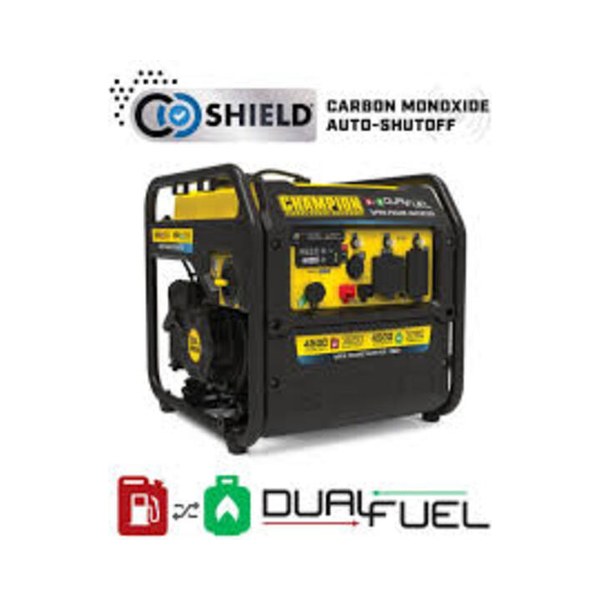
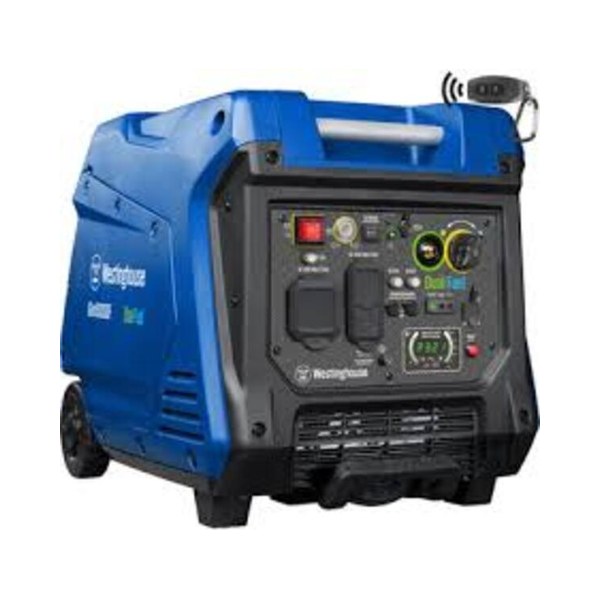
A portable generator suits long outages and heavy loads. Here are four models from our list.
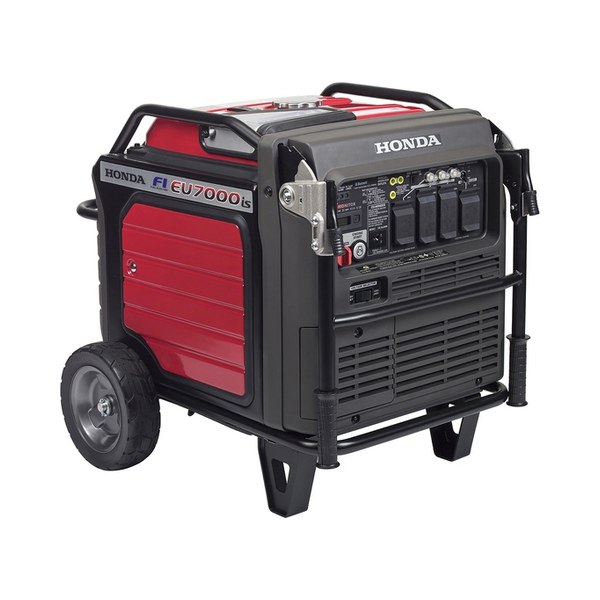
Against our example, the Honda EU3200i is short on the peak, at 3,200 W against 4,100 W. The Champion 201321, the Westinghouse iGen5000DF and the Honda EU7000iS cover it. The dual fuel models lose about 10% on propane. The Champion 201321 lists 3,285 W running on propane, and the iGen5000DF lists 3,500 W, so both still cover the 2,500 W running load.
Runtime depends on the load. Honda lists 3.3 hours at rated load and 8.6 hours at a quarter load for the EU3200i, and 6.4 hours and 16.0 hours for the EU7000iS. The Champion 201321 lists 22 hours on gasoline at a quarter load, and the iGen5000DF lists 18 hours on gasoline at 25% load.
Our portable generator for home backup guide goes through sizes and connections, and our guide to the best portable generators compares more models. For the types, see our genset vs inverter comparison and our small generators guide.
Route 2: battery power stations and solar generators
A battery unit has no engine, so it makes no exhaust and no engine noise. It stops when the battery is empty. To find runtime, divide the usable watt-hours by your load. A power station loses some energy converting battery power to household AC, and we count on about 85% of rated capacity as a planning rule. That is our rule of thumb, not a manufacturer spec.
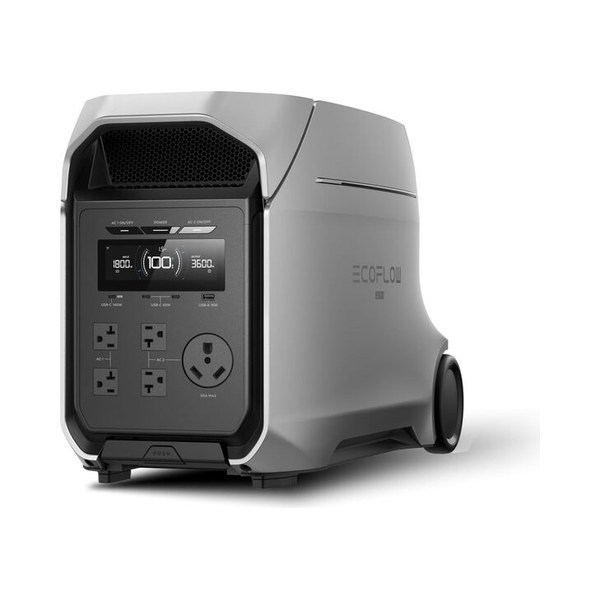
Here are four units from our list, compared with the 2,130 Wh a day from our example's must-run loads.
So even the largest portable unit covers about two days of this load without sun. Panels extend that. A 200 W panel in four hours of strong sun makes at most 800 Wh, and after losses we plan on about 75%, or 600 Wh. For 2,130 Wh a day, that points to about four 200 W panels. Our solar generator for home guide walks through the table, and our guide to the best solar generators compares more units.
Some open points on the pages. The EcoFlow weight and warranty are still to be confirmed, and its surge figure appears on one page only. The Anker 6,000 W figure is a combined 120/240 V total, with 120 V outlets at 2,400 W maximum. The Jackery Explorer 5000 Plus lists a 5-year warranty and weighs 134.5 lb, so it stays in one place.
A worked example: a three-day outage
Say a storm cuts power for three days. You want the refrigerator, the freezer and a few small loads on, plus the sump pump. Here are two plans, using the example numbers above.
Plan A: a dual fuel inverter generator. The Westinghouse iGen5000DF lists 3,500 W running on propane and 5,000 W starting on gasoline, so it covers the 2,500 W load and, on gasoline, the 4,100 W peak. Start it with nothing plugged in, then add the largest motor first, then the rest. It lists 18 hours on gasoline at 25% load, but the page gives runtimes only at set loads and no tank size in our data, so we cannot promise three days on one tank. Plan on refueling, and store fuel in approved cans, outside living areas.
Plan B: a large battery with panels. The Jackery Explorer 5000 Plus gives about 4,284 usable Wh, or about two days at 2,130 Wh a day. Four 200 W panels add about 2,400 Wh on good sun days by our rule, which nearly covers a full day of use. So in three days with some sun, the unit could last, and in three cloudy days, it would run out on the third day.
Plan A depends on fuel, and plan B depends on weather. Neither is the best home emergency generator for every house. That is why many homes keep both, and why the answer depends on your loads and your climate.
Route 3: an installed home battery
An installed battery ties into your wiring. Aurora Solar says a typical home battery is about 10 to 15 kWh, and that most units keep about 10% to 20% in reserve, so a 13.5 kWh battery may deliver roughly 11 to 12 kWh. Solar.com adds that you should size by usable capacity, not by the nameplate.
For our 2,130 Wh a day, a 13.5 kWh battery delivering 11 to 12 kWh would last about five days. That is a lot more than a portable unit. It also needs a licensed installer and local permits. Our home battery backup guide explains how to size one, and our solar battery backup guide shows how panels and batteries work together.
However, rooftop panels alone do not help in an outage. Aurora Solar says a grid-tied system stops delivering electricity to your home when the grid goes down, to protect line workers. So a home with rooftop solar still needs a battery or a portable setup.
Do-it-yourself battery banks
You can build a battery bank, but the risks are real, and they include fire. Our DIY solar battery bank guide explains the parts and the wiring rules, and our off-grid solar system guide shows how the pieces fit together. So for most people, a ready-made unit is the safer way.
Noise and neighbors
A generator runs for hours, so noise matters. The pages list these figures for the units in our table.
The makers test noise in different ways, so treat the gaps as a hint. A battery unit has no engine noise at all.
Safety comes first
The main risks of backup power are carbon monoxide, backfeed and fuel. Follow these rules.
- Use gas generators outside only. The CPSC says at least 20 feet from doors, windows and vents, and never in a home or garage, even with doors and windows open.
- Install carbon monoxide alarms. Use battery-operated ones in your home.
- Never plug a generator into a wall outlet. FLASH says so, and the Missouri PSC says a direct connection can backfeed onto utility lines.
- Use a transfer switch to power your home wiring, installed by a licensed electrical contractor.
- Keep it dry. The Missouri PSC says a generator should not run in rain or snow, so use a shed, an overhang or a portable shelter with the exhaust outdoors.
- Refuel safely. Add fuel only after the generator is off and has cooled, and never to a running unit.
- Test it monthly. The Missouri PSC suggests starting a generator at least once a month and running it for a few minutes.
Also, some units list a carbon monoxide shutdown. The Honda models list CO-MINDER, and the Champion 201321 lists CO Shield. The Westinghouse iGen5000DF lists no CO sensor in its spec table. A shutdown helps, but it does not replace placing the unit outside.
Fuel and maintenance
Dual fuel gives you a choice during an outage, when gas stations may be closed or have long lines. The cost is lower output on propane. Gasoline is easy to find but goes stale, and the Missouri PSC advises fresh gasoline and a stabilizer if the generator will sit for long periods. Also keep the battery of an electric-start unit charged. For a power station, follow the manual for storage, because the pages we checked give no care schedule.
Which route for which home
- A small apartment or a condo: a battery unit, because engines cannot run indoors. Our apartment backup guide covers the limits.
- A house with a fridge and a pump: a dual fuel inverter generator of about 3,900 W or more, with a transfer switch, or a large battery with panels.
- A house that needs several days of coverage: a gas unit with stored fuel, a large battery plus panels or both.
- A house that wants whole-home backup: talk to a licensed installer about an installed battery or another permanent option. Our list does not cover those.
- A home office or a router only: a small battery unit or a UPS, not a generator.
Prepare before the storm
- Test the equipment. Run the generator, and charge the battery unit.
- Store fuel safely. Use approved cans, outside living areas.
- Label your cords and outlets. Know what plugs in where.
- Write your load list. Keep it with the generator.
- Buy alarms. Install battery-operated carbon monoxide alarms.
- Check the manual. Follow the maker's advice for placement and storage.
Mistakes to avoid
- Sizing on running watts alone. The largest motor's surge sets the peak.
- Running a generator indoors. The CPSC says never to, even with the door open.
- Plugging it into a wall outlet. This can backfeed the grid.
- Sizing a battery by the label. Use usable capacity and the 85% rule.
- Expecting panels to run a whole house. A portable setup covers a short list of loads.
- Forgetting propane. Output drops by about 10% on dual fuel units.
- Skipping the test. An unused generator may not start when you need it.
Checklist before you buy
- Loads. Write the running watts, starting watts and daily watt-hours.
- Outage length. Pick the route that fits.
- Output and surge. Cover your largest motor.
- Place. Check where it will sit, and the noise and weight.
- Connection. Plan a transfer switch or direct cords.
- Warranty. Read the terms, and note where a page leaves them to be confirmed.
- Current price. Check the retailer page, because we list none.
The bottom line
The best home emergency generator, in short, starts with your own loads. Add up your running watts, your peak and your daily watt-hours, then pick the route that covers your outage length. A dual fuel inverter generator suits long storms, a battery unit suits short outages and small spaces, and an installed battery suits wider backup. Put gas units outdoors, buy carbon monoxide alarms and never plug a generator into a wall outlet.
Prices and availability change often, so check the retailer page before you decide.