A battery bank is a group of batteries wired together so they work as one bigger battery. In a solar system, it stores what the panels make by day so you can use it at night. You can build one yourself, but it takes careful sizing and careful wiring, because the risks include fire and explosion. In the worked example below, loads of about 2,130 Wh a day need a bank of roughly 2,500 Wh, which is about 208 Ah at 12 V or about 52 Ah at 48 V. This guide explains the parts, the sizing math, the wiring rules and when a ready-made unit is the better choice.
We used a wiring guide from a battery equipment maker, a state energy office page and official product pages. We did not build or test any bank, so every figure comes from those sources or from simple math you can repeat. This is not an installation manual.
What a solar battery bank is made of
A solar energy battery system has four main parts. The South Carolina Energy Office lists the same basics for an off-grid system: panels, a charge controller to prevent overcharging the battery, batteries and an inverter for household power.
- Solar panels make the energy. Our 200 watt solar panel guide explains how much one makes.
- A charge controller manages how the battery fills.
- The battery bank stores the energy.
- An inverter turns the battery's direct current into household alternating current.
Besides these, fuses, cables, a shunt for monitoring and a way to disconnect the bank complete the setup. Our off-grid solar system guide shows how the parts fit together.
Start with your daily watt-hours
Sizing starts with your daily energy use, not with the batteries. Here is the example from our solar battery backup guide. The numbers are made up, so swap in your own.
Next, choose the number of days you want to cover without sun. Solar.com explains the method: multiply the daily load by the days of autonomy. One day of 2,130 Wh needs about 2.1 kWh of usable energy.
From watt-hours to amp-hours
Battery banks are often labeled in amp-hours (Ah) at a given voltage. To convert, divide watt-hours by volts. We add a loss margin, because an inverter wastes some energy. We count on about 85%, which is our rule of thumb, not a manufacturer spec. So 2,130 Wh divided by 0.85 is about 2,500 Wh.
These are usable amp-hours. Check the battery maker's figure for how much of the label you can use. Solar.com gives an example of a 13 kWh battery with 12 kWh usable, so size by the usable number. Our home battery backup guide explains this in more detail.
Why voltage matters
A higher bank voltage means less current for the same watts. For example, a 1,000 W load pulls about 83 A at 12 V but about 21 A at 48 V. Victron says higher system voltage reduces current and allows thinner cables. That is why larger banks often use 24 V or 48 V.
Victron also gives a rule of thumb for cable size. For cables up to 5 m, divide the current by 3 to get the cross-section in mm². At 83 A, that gives about 28 mm². Aim for a voltage drop below 2.5%. Treat this as a starting point, and check your manufacturer's tables, because undersized wiring can cause a fire.
Series and parallel in plain words
Batteries can be joined in two ways.
- In series: the voltages add, and the capacity stays the same.
- In parallel: the capacity adds, and the voltage stays the same.
- In series and parallel: both change.
Two 12 V, 100 Ah batteries in series make 24 V and 100 Ah. The same two in parallel make 12 V and 200 Ah. Victron describes these effects in its battery bank chapter.
Wiring rules that matter
The Victron guide stresses several rules, and they apply to any bank.
- Keep paths equal. The most common mistake is to connect all batteries in parallel and take the load from one side. The battery nearest the connection then carries more current and "will fail prematurely." Use busbars or connect so each battery has equal cable length.
- Limit parallel strings. For 12 V lead-acid banks, Victron says the maximum is around three or four parallel strings, because imbalance becomes hard to control.
- Fully charge each battery first. Do this before you connect batteries in series or parallel.
- Fuse the bank. Each supply and consumer needs its own fuse in the positive cable, plus a main battery fuse. For lithium systems, Victron says at least one fuse in the DC line must have an interrupt rating equal to or greater than the maximum prospective short circuit current.
- Do not load the midpoint. Victron says not to connect loads to the midpoint of a battery bank.
- Place the shunt in the negative cable. It goes last before the bank.
However, the Victron page gives no rule for mixing batteries of different ages, sizes or chemistries. So we advise against mixing unless the maker says it is fine.
Safety warnings
Victron states these plainly.
- Do not short-circuit batteries, because this can cause fire or explosion.
- Battery charging can create explosive gases.
- Undersized wiring or bad electrical contact can cause a fire.
- Battery terminals are not insulated, so use insulated tools and remove metal jewelry.
- Tighten connections to the manufacturer's torque, not beyond it.
For these reasons, a bank needs good ventilation, protection against short circuits and a safe place away from living areas. If any of this is unfamiliar, hire a licensed electrician.
DIY bank or ready-made power station?
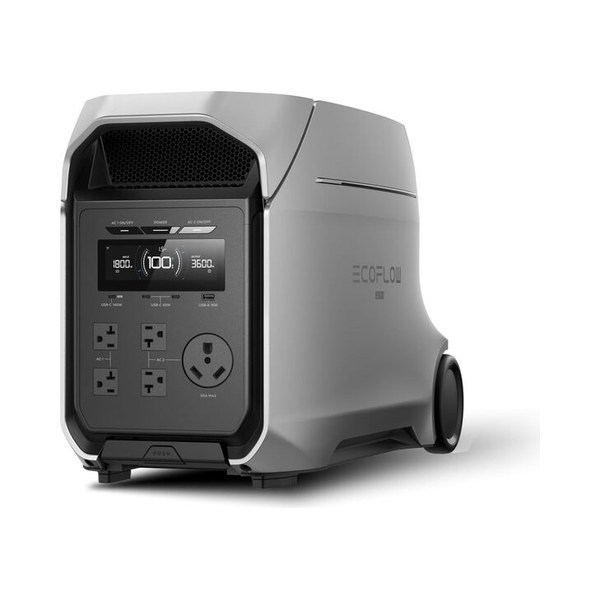
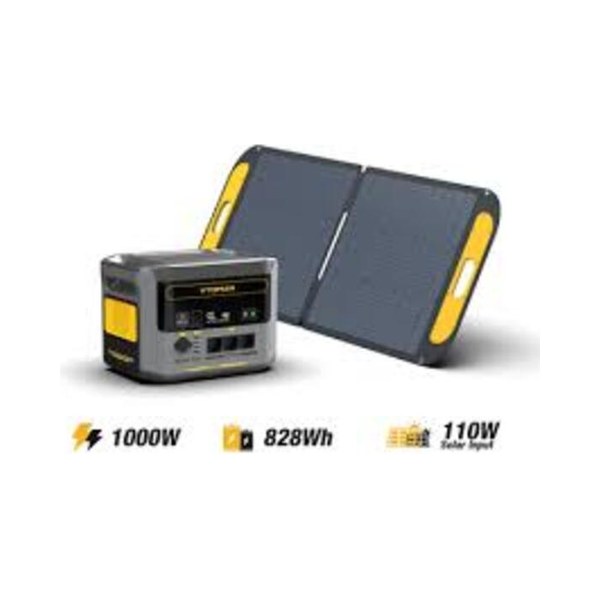
A ready-made power station puts the battery, charge controller and inverter in one case, with the wiring done and protections built in. Several units are expandable. The EcoFlow DELTA 3 Ultra Plus lists 3,072 Wh and expansion from 3 to 11 kWh. The Vtoman FlashSpeed 1500 lists 1,548 Wh and expansion to 3,096 Wh, and the FlashSpeed 1000 lists 828 Wh and expansion to 2,376 Wh. Vtoman's pages mention both a 2-year warranty and 5-year after-sales service, so read the terms. EcoFlow's warranty is still to be confirmed, because two of its pages conflict.
So you should choose a DIY bank only if you have the skills and want a size no unit offers. For most people, a ready-made unit covers the job with less risk. Our solar generator for home guide compares those options.
Charging the bank
A solar charge controller protects the battery from overcharging. Also, match it to your panels and to the battery chemistry. Our solar panel connectors guide explains the plugs you will meet. As a planning rule, a 200 W panel in four hours of strong sun makes at most 800 Wh, and after losses we plan on about 75%, or 600 Wh. For 2,130 Wh a day, that means about four 200 W panels.
What to check before you build
- Daily watt-hours. Add up your loads first.
- Usable capacity. Size by it, not by the label.
- Voltage. Pick 12, 24 or 48 V to keep currents manageable.
- Fuses and cables. Size them to the current and the maker's tables.
- Ventilation and location. Keep the bank away from living areas.
- Local rules. Ask your local authority whether permits or inspections apply.
Common mistakes
- Sizing by the label. Usable capacity is lower.
- Wiring all batteries from one side. The nearest battery wears out first.
- Skipping fuses. A short circuit can start a fire.
- Using thin cable. It heats up and drops voltage.
- Mixing old and new batteries. The weakest one drags the bank down.
- Building beyond your skills. Hire a licensed electrician when in doubt.
The bottom line
A battery bank stores your solar energy, and a good one starts with daily watt-hours, usable capacity and the right voltage. The wiring rules matter as much as the batteries, because mistakes can cause fire. If you are not comfortable with DC wiring, a ready-made, expandable power station is the safer way to do it yourself.