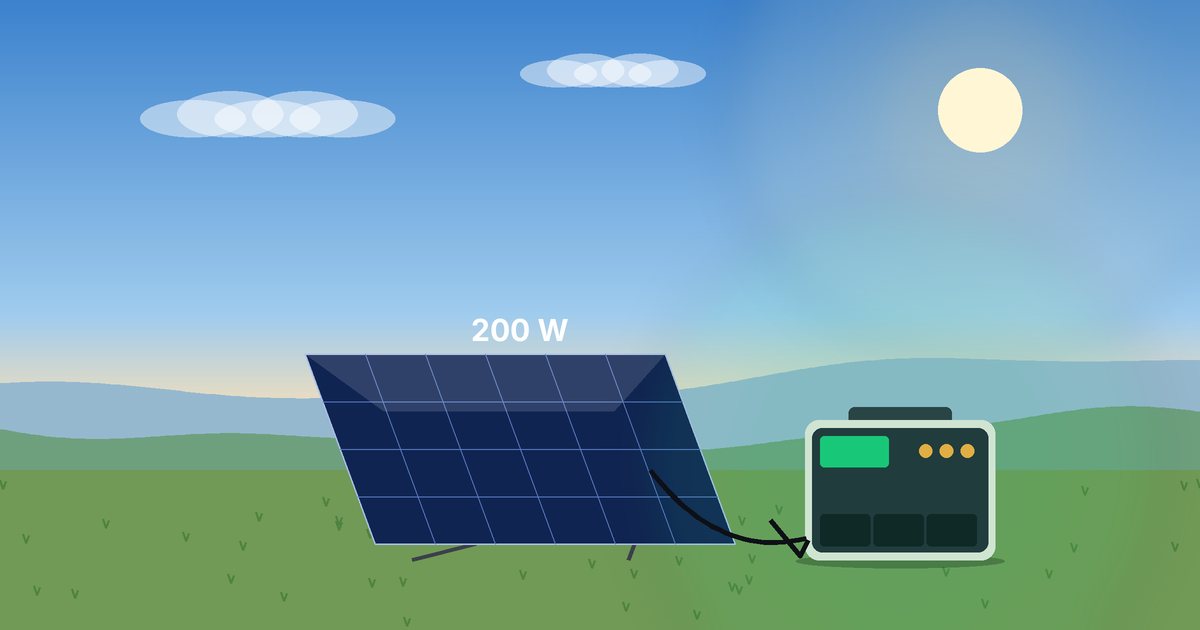
A 200 watt solar panel can make up to 200 watts in perfect sun, which in practice means about 600 watt-hours on a good summer day. That is enough to recharge a small power station, run a laptop and a few lights, or cover most of a chest freezer's daily energy. It is not enough to run a home. This guide explains what such a panel does, how it compares with a 100 watt solar panel and what to check before you buy.
We compared official product pages and manufacturer guides for this article. We did not test any panel ourselves, so every figure comes from the manufacturers or from simple math you can repeat.
What a 200 watt solar panel makes in a day
The "200 watts" on the label is the rated power under lab test conditions. Real sun, heat, haze and panel angle all lower it.
Here is a planning method with example numbers. Assume four hours of strong sun. A 200 watt solar panel then makes at most 800 watt-hours. After losses in the cables and the power station's charge controller, plan on about 75% of that, or 600 watt-hours. The 75% figure is our rule of thumb, not a manufacturer spec. Clouds, season and shade can cut it a lot.
So the same panel can make much less on a winter day or in the shade. Treat 600 Wh as a good-day estimate and not a promise.
What 600 Wh can power
Here are examples, with made-up loads you should replace with your own numbers.
- A 60 W laptop for five hours uses about 300 Wh.
- A 10 W LED light for four hours uses about 40 Wh.
- A chest freezer at about 590 Wh a day is close to the whole 600 Wh. Our freezer wattage guide shows the math.
So one panel can handle small loads comfortably. A full refrigerator, an air conditioner or a heater needs far more. Our guide to battery backup for a refrigerator shows how the daily energy of a fridge compares.
100 watt solar panel vs 200 watt: which size?
A 100W solar panel makes about half the energy of a 200W one. In the same planning example, it makes about 300 Wh on a good day. Choose by how you will use it.
- Backpacking and light camping: a 100 watt solar panel is easier to carry and often enough for phones and a small battery.
- Car camping or an RV roof: a 200W solar panel recharges a 1,000 Wh class power station in about two good days.
- Home backup: one panel helps. Most people need two or more.
You can also use two 100 W panels to reach 200 W. That adds a second cable and a second setup step. Check the power station's maximum solar input before you wire panels together, because the limit is usually a voltage and a wattage.
Panels we looked at
All details come from the manufacturers' pages, and some details were missing.
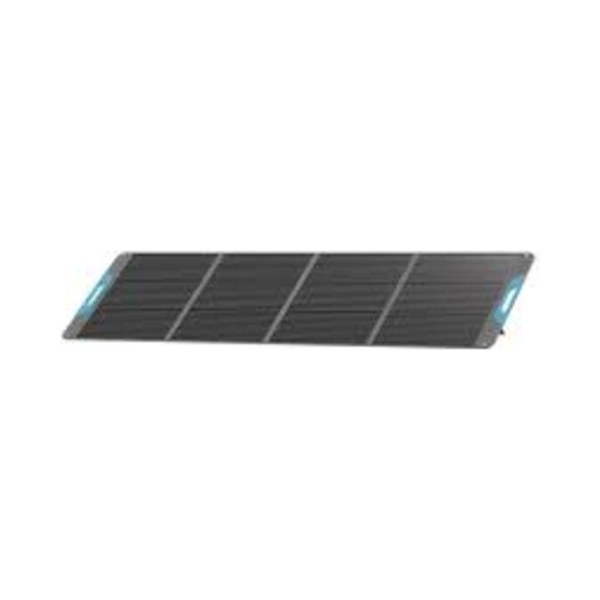
- Renogy E.Flex 200W N-Type Portable Solar Panel is rated at 200 W and weighs 13.89 lb. It folds to 23.72 by 22.99 inches and opens to 87.80 inches long. It uses N-type cells with efficiency above 25%, according to the page. The page does not state the connector type or the warranty, so confirm both before you buy.
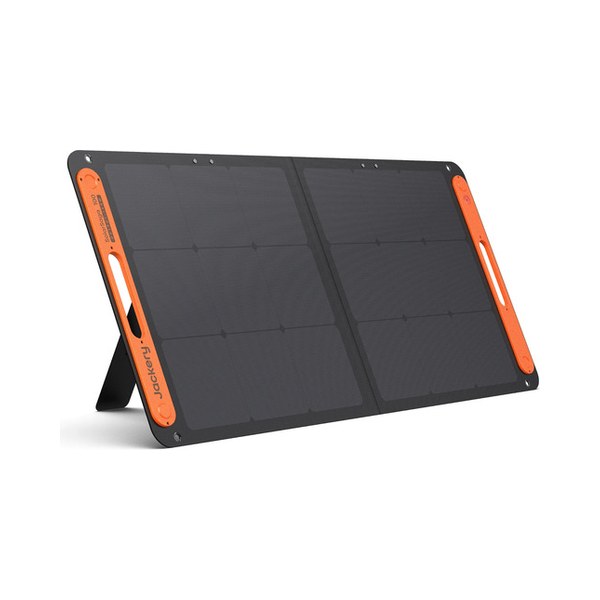
- Jackery SolarSaga 100W weighs 7.94 lb and uses a DC8020 connector with a DC8020 to DC7909 adapter. Our specs come from a Jackery blog article, not a product page, so confidence is lower.
- Jackery SolarSaga 100 Light weighs 4.5 lb and comes with a built-in cable and Anderson-to-DC8020 and DC7909 adapters. The article lists a 5-year warranty without giving terms. Confidence is lower here too.
- Jackery Solar Generator 2000 v2 is a ready-made kit. The default bundle pairs the Explorer 2000 v2 with two SolarSaga 200 W panels, though other bundles exist. The specs we have are for the power station only, not the panels.
Prices and availability change often, so check the retailer page.
Check the connector before you buy
A panel and a power station must share a connector, or you need an adapter. Mismatches are common. For example, the Renogy page does not state its connector, while the Jackery panels use DC8020 and DC7909 connectors with adapters. Our solar panel connectors guide explains the common types and why matching them matters.
A worked example: refilling a power station
Say you pair one 200 watt solar panel with a Jackery Explorer 1000 v2, which holds 1,070 Wh. On a good day, the panel adds about 600 Wh by our planning rule. So an empty battery needs a bit under two good days to refill. However, if you add a second panel, the same battery refills in about a day, because two panels make about 1,200 Wh.
Notice what that means for use. If you run the battery down each night, a single panel may not catch up on a cloudy day. For that reason, plan for the sun you will actually get, and keep a margin. The numbers above are examples, so swap in your own panel and battery.
Size and weight
A 200 watt panel is large. The Renogy panel opens to about 88 inches by 23 inches, which is wider than most backpacks and taller than most people. It needs a clear patch of ground, a roof or a fence. A rigid roof panel is a different product from a portable folding one, so decide where it will live.
Weight matters too. At 13.89 lb, the Renogy panel is easy for one person to move. A 100 watt panel at 4.5 lb is easier to pack.
How to place a panel
Sun hits the panel best when it points at the sun and nothing shades it. Even a small shadow on one corner can cut the output of the whole panel. Move the panel through the day if you can, and keep cables out of foot traffic.
Pairing a panel with a power station
A solar panel does not work alone. It needs a power station or a charge controller with a battery. The power station's solar input has limits, so a bigger panel than the input allows will not charge faster. Look up the maximum input watts and voltage on your power station's page, and keep your panel within them.
Mistakes to avoid
- Trusting the label. Real output runs below the rated watts.
- Ignoring shade. One shadow can cut output sharply.
- Skipping the connector check. An adapter that does not fit leaves you with a panel you cannot use.
- Buying too small. Add up your daily watt-hours first.
The bottom line
A 200 watt solar panel makes about 600 Wh on a good day, enough for small devices and a small share of a freezer's needs. Pick a 100 watt panel for portability, or two for more power. Check the connector and the power station's input limits before you buy.