Solar battery backup means solar panels that charge a battery, so you have power when the grid is down. First, the panels make energy during the day. Then the battery stores it for the night and for cloudy hours. Rooftop panels alone do not keep your lights on in an outage, so you need a battery or a portable setup. In the worked example below, must-run loads of about 2,130 Wh a day need roughly four 200 watt panels and a battery near 2,500 Wh. This guide shows how to run the numbers and what options exist.
We used a solar industry guide, a state energy office page and official product pages. We did not test any system, so every figure comes from those sources or from simple math you can repeat.
Why panels alone do not keep power on
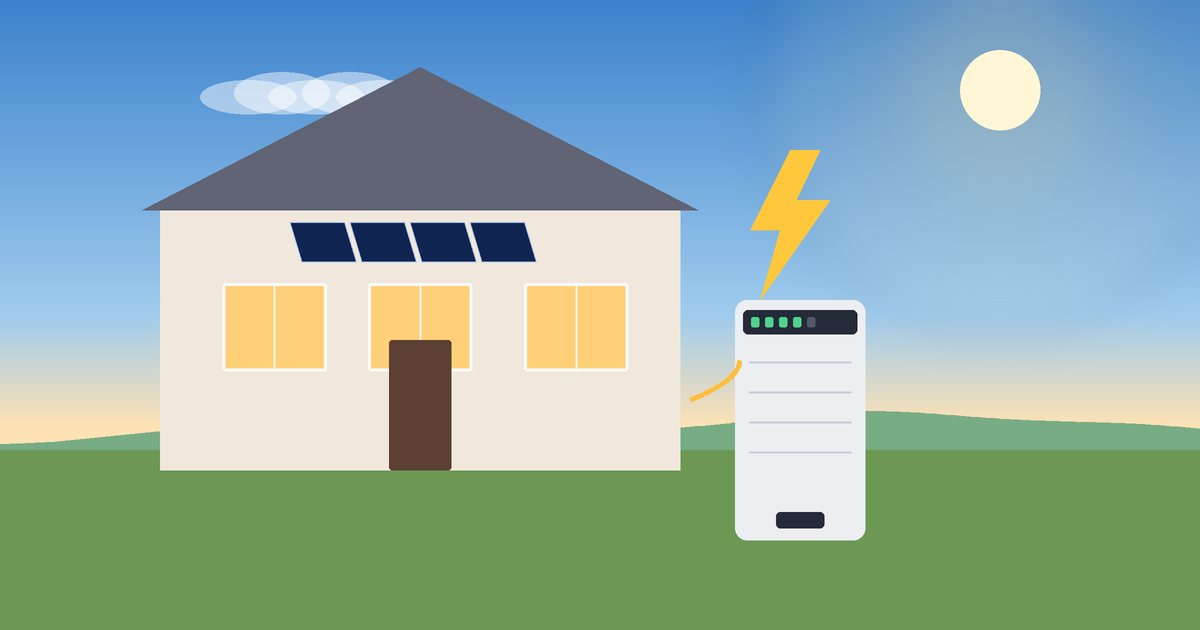
Many people assume rooftop solar works in a blackout. It usually does not. Aurora Solar says that when the grid goes down, a grid-tied system stops delivering electricity to your home and to the grid. The stated reason is to protect lineworkers from backfeed while they repair damaged lines.
So a solar battery backup setup needs a battery. The same article says a hybrid inverter can disconnect from the utility and send solar energy to the battery and your home circuits. So that is the whole-home route, and it needs a professional design.
Two ways to build solar battery backup
There are two paths.
- A home battery system is wired into your home. Aurora Solar says a typical home battery is about 10 to 15 kWh. It also says most units keep about 10% to 20% in reserve, and conversion losses mean a 13.5 kWh battery may deliver roughly 11 to 12 kWh. Because it ties into your wiring, this path needs a licensed installer and local permits.
- A portable setup pairs a power station with portable panels. You plug your must-run devices into the power station. It is simpler and costs less to start. However, it holds far less energy.
This guide focuses on the portable path, with a short look at the home path for comparison.
Start with your must-run loads
Everything depends on your daily watt-hours. List the appliances you must keep on and estimate each. Here is an example with made-up numbers, so swap in your own.
The 215 kWh figure comes from ENERGY STAR, which gives it for a certified chest freezer. The other numbers are examples. Our guides to battery backup for a refrigerator and freezer wattage explain how to find the real figures.
Size the panels
Panels never make their rated watts all day. A 200 W panel in four hours of strong sun makes at most 800 Wh. After losses, plan on about 75% of that, or 600 Wh. That 75% is our rule of thumb, not a manufacturer spec.
Divide your daily use by 600. For 2,130 Wh, that is about 3.6, so plan on four 200 W panels, or 800 W in total. Clouds, season and shade can cut the result, so a margin helps. Our 200 watt solar panel guide explains the method.
Types of portable solar panels
When you shop for the best portable solar panels, you will see a few differences.
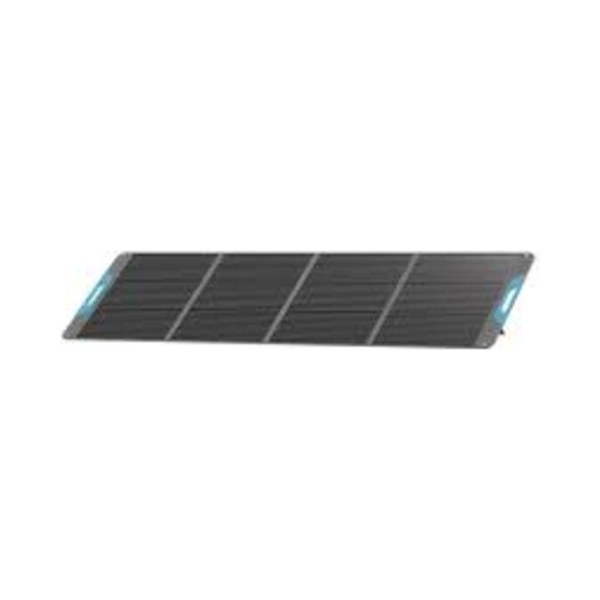
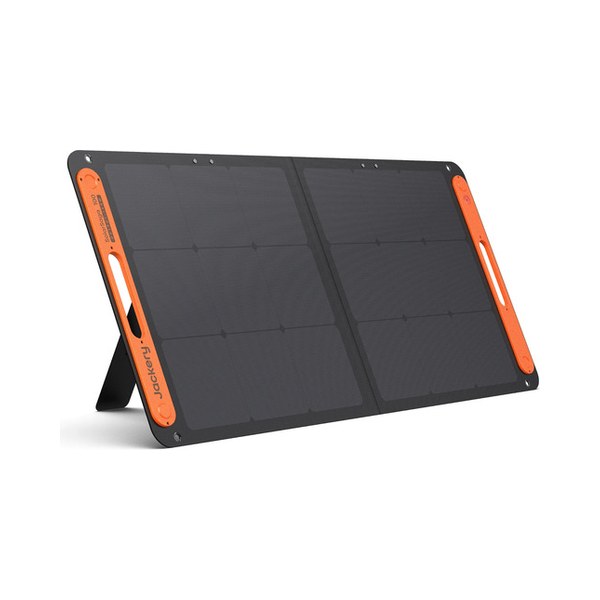
- Cell type. The Renogy E.Flex 200W uses N-type cells, with efficiency above 25% according to its page. The Jackery SolarSaga 100W uses monocrystalline cells, according to a Jackery blog article.
- Size and weight. The Renogy 200 W panel weighs 13.89 lb and opens to about 88 inches long. The Jackery SolarSaga 100W weighs 7.94 lb.
- Connector. The Jackery 100W lists a DC8020 connector with an adapter. The Renogy page does not state its connector. Check this before you buy, because it decides whether the panel fits your power station.
Our solar panel connectors guide explains how to match plugs. Note that the Jackery 100W specs come from a blog article, not a product page, so confidence is lower.
Size the battery
The battery covers the hours with no sun. Many people plan for one day. A power station loses some energy converting battery power to household AC, so we divide by about 0.85. For 2,130 Wh, that is about 2,506 Wh.
Here is how two units from our list compare.
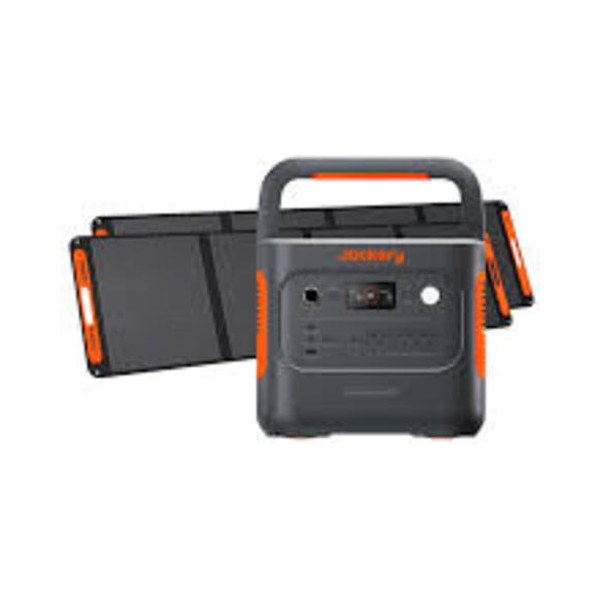
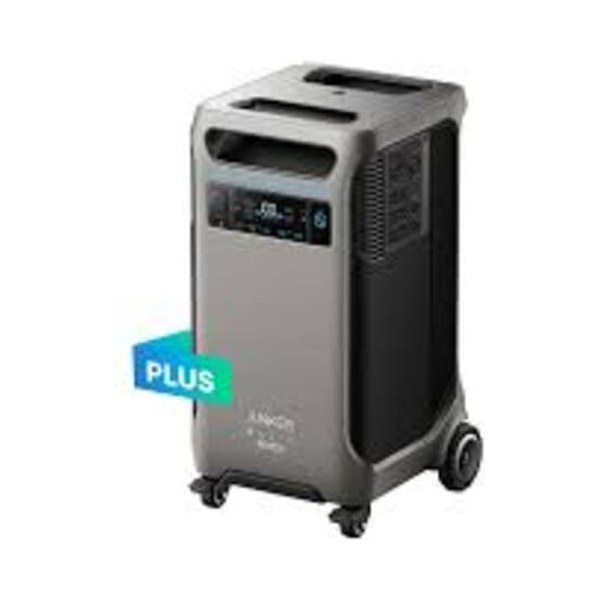
The Jackery kit's default bundle includes two SolarSaga 200 W panels, and the specs on its page describe the power station only. The Anker lists 6,000 W as a combined 120/240 V total, with 120 V outlets at 2,400 W maximum, and it weighs 136.7 lb, so it stays in one place.
What a kit delivers in our example
Take the Jackery kit. It holds 2,042 Wh, so about 1,735 usable Wh. Two 200 W panels make about 1,200 Wh on a good day. Our example loads use about 2,130 Wh a day. So the battery drains by about 930 Wh a day, and it lasts about 1.9 days before it is empty. That is on good sun days. Cloudy days shorten it.
A lighter load stretches it. Cutting the freezer, for example, drops the need to about 1,540 Wh a day, so the battery drains by only about 340 Wh a day. Choosing what to keep on matters as much as the equipment.
For comparison, a 13.5 kWh home battery, delivering about 11 to 12 kWh by Aurora Solar's figures, would cover 2,130 Wh a day for about five days. Aurora Solar's own example uses a load of about 2.4 kWh a day and says a 13.5 kWh battery could run around five days.
What a home battery system adds
A home battery works with a hybrid inverter, and the pair can run your home circuits when the grid is down. That is more convenient, because you do not plug devices in one by one. However, it costs more and needs an installer. Because the work touches your home wiring, local rules and permits apply. So a home system suits owners who want whole-circuit backup. A portable kit suits renters, small budgets and short outages.
How many days of backup do you want?
The answer sets your battery size. For one day of 2,130 Wh, you need about 2,500 Wh of battery. For two days without any sun, double that to about 5,000 Wh. Panels shorten the gap, because they refill the battery on good days. For example, 800 W of panels adds about 2,400 Wh on a good day by our planning rule, which nearly covers one full day of use.
So you can trade panels for battery. More panels mean less battery for the same days. The right mix depends on how sunny your area is, how much roof or yard you have and how much weight you can handle.
Generator and solar power together
Solar alone struggles through long cloudy stretches. The South Carolina Energy Office says generators and other fuel sources are sometimes used as backup power. A generator can top up the battery when the sun fails. Remember the safety rule: portable gas generators run outdoors only, away from doors, windows and vents. Our solar vs gas generator comparison shows how the two fit together.
What about plug in solar panels?
Plug in solar panels that feed a wall outlet are a different product. They are built to shut off when the grid goes down, so they do not provide backup power. Our plug in solar guide explains the laws and safety rules.
Costs: what to expect
We list no prices, because they change often and we have no verified figures. Instead, here is what drives cost. The battery capacity you need is the biggest factor, followed by the panel wattage and the inverter size. A home battery system also adds installation and permits. A portable setup avoids those, but it holds less energy. Compare current retailer prices for the sizes you calculated.
Checklist before you buy
- Write your loads. Use the labels, not guesses.
- Pick your days. Decide how many days without sun you want to cover.
- Size the panels. Divide daily watt-hours by about 600 per 200 W panel.
- Size the battery. Divide by about 0.85.
- Check the connectors. Panels and the power station must match.
Mistakes to avoid
- Assuming rooftop solar works in a blackout. Check whether your system has a battery and the right inverter.
- Sizing for a perfect day. Plan for clouds.
- Skipping the connector check. Panels and power stations must match.
- Forgetting conversion losses. Divide your need by about 0.85.
- Guessing your loads. Read the labels.
The bottom line
Solar battery backup is panels plus a battery plus the right inverter. Add up your daily watt-hours, divide by about 600 to size the panels and divide by about 0.85 to size the battery. A portable kit covers a couple of days of key loads, while a home battery covers more but needs an installer. Start with your own loads, and keep the design simple.