Plug in solar means a small set of panels that connects to a standard wall outlet through a microinverter, with no permanent installation. The idea is new in the United States, and the rules are changing state by state. This guide explains how it works, what the laws and safety standards look like as of October 2026 and how it differs from portable solar kits that charge a battery. Check your own state and your lease before you buy.
We did not test any system. Every claim below comes from the sources we list. This topic changes fast, so confirm the details before you act, and treat this page as a starting point and not legal advice.
What plug in solar is
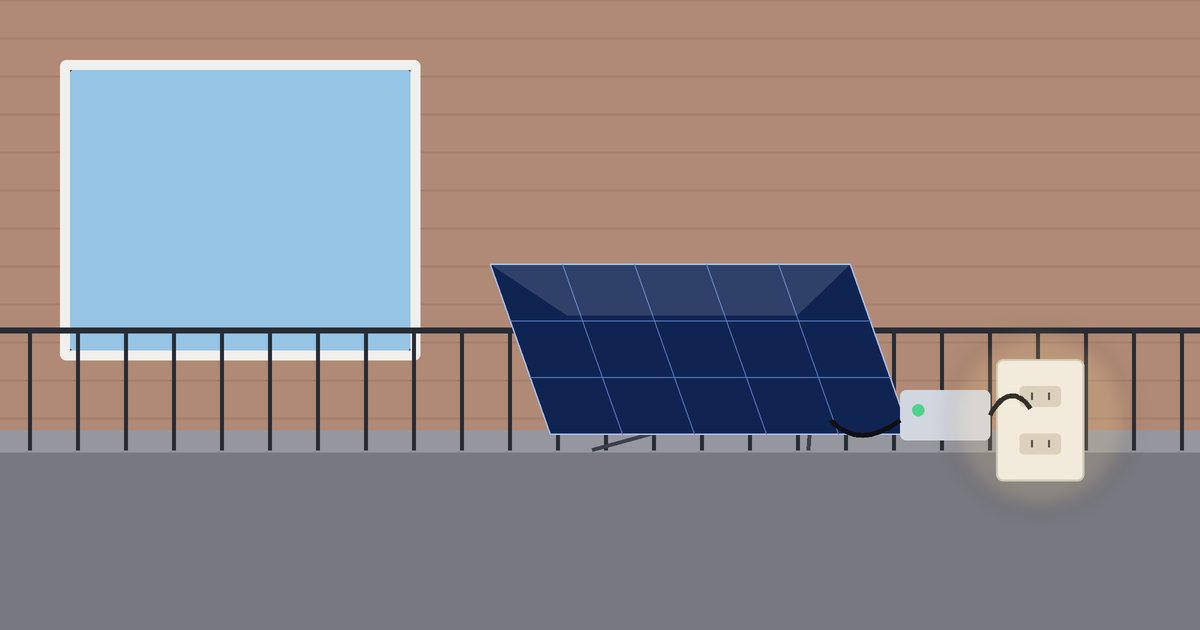
Plug in solar, also called balcony solar, uses one to three lightweight panels. You attach them to a railing, a patio or a fence. A microinverter turns the panels' power into household power. The kit plugs into a standard 120 V outlet, so the electricity feeds your home directly. Solar.com describes it as needing no permanent construction, and the kit can move with you.
MIT Technology Review says typical systems cover about 20 square feet and make up to 800 watts. Most state laws cap the system at 1,200 watts, according to Solar.com, and Colorado allows up to 1,920 watts.
Is plug in solar legal where you live?
It depends on your state, and the answer is changing. In every source we checked, eight states appear as having passed laws: Utah, Virginia, Colorado, Vermont, New Hampshire, Maine, Maryland and Connecticut. Some sources list more states, including New Jersey, California and New York, and the counts differ between sources.
Effective dates also vary. Solar.com says several laws take effect in 2027, including Virginia, New Jersey and California. So a state may have a law that you cannot use yet. Look up the current status for your state, and read the law's effective date.
Landlords and homeowners associations add another layer. Solar.com warns that the laws mainly stop utilities from blocking plug in solar, and they do not all stop landlords or HOAs from banning it. Check your lease first.
Safety: why outlets are the sticking point
A normal wall outlet is built to send power into a home, not to receive power from it. Fire Engineering says the main concern is that outlets in U.S. homes are not designed to carry power in two directions. Pushing power back into a circuit can bypass protection and overload household wiring.
MIT Technology Review adds two points. A breaker may not respond to extra power from a panel. Many ground fault circuit interrupters may also fail to work when power flows back into an outlet. Plug blades can stay energized briefly after you unplug, and longer if the panel is in sunlight.
The UL 3700 standard
A new standard, UL 3700, was written for plug in solar. Solar.com says it was published in December 2025, and certification began in January 2026. Certified kits must cut power in less than a second when you unplug them. They also need overload protection, grid outage protection and ground-fault protection.
Certified products are still few. Solar.com says the first, a Hoymiles model, was certified in July 2026, with others following. Always look for the certification before you buy. Some reports describe extra requirements, such as a special outlet, so ask an electrician if your wiring needs changes.
How much does a kit make?
Here is a planning example with made-up numbers. A 400 W kit in four hours of strong sun makes at most 1,600 Wh. After losses, plan on about 75% of that, or 1,200 Wh. That is our rule of thumb, not a manufacturer figure. A refrigerator that averages 46 W, an example, uses about 1,100 Wh a day. So such a kit could cover about a day of fridge energy on a good day. Clouds and shade change the result.
What happens in an outage?
Plug in kits are built to shut off when the grid goes down. Solar.com says certified kits include grid outage protection. That means a plug in kit will not keep your lights on in a blackout. A portable kit with a battery can.
What plug in solar can save
Solar.com lists an average cost of $600 to $1,500, a payback of three to six years and 1,000 to 1,400 kWh a year in sunny areas. Those are estimates from a company that sells solar, and real savings depend on your local power rates and sunlight. MIT Technology Review gives no savings figure.
Plug in solar vs portable solar kits
People often mix up two different products.
- Plug in solar feeds the grid through a wall outlet, and it is covered by the laws above.
- A portable solar station is a panel that charges a battery. It does not connect to your wall outlet, so these laws and the backfeed concerns do not apply in the same way.
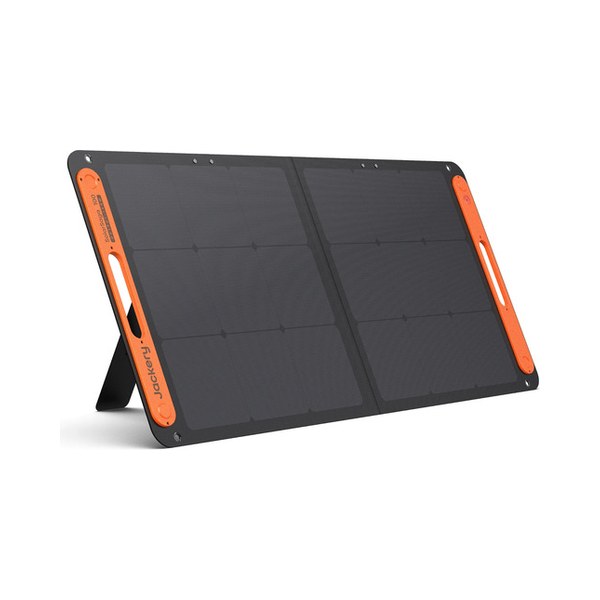
A portable kit works in a power outage and in a campground, because it runs on a battery. For example, the Jackery Solar Generator 2000 v2 bundles a 2,042 Wh power station with two SolarSaga 200 W panels by default. The Renogy E.Flex 200W panel weighs 13.89 lb and charges a power station, though its page does not state the connector type. Our 200 watt solar panel guide explains what such a panel makes, and our solar panel connectors guide explains how to match plugs.
Here is a quick rule. If you want to cut your power bill, you are looking at a plug in kit. If you want backup power or a camping setup, you are looking at a portable kit.
Where the panels go
A kit needs sun, a safe mount and a short cable run to an outlet. A railing facing south or west gets more sun than one that faces north in the northern hemisphere, though shade from buildings and trees matters just as much. Secure the panels well, because wind can move them. Keep cables out of walkways, and keep the plug dry.
Questions to ask your landlord
If you rent, ask three things before you order. Does the lease allow panels on a railing? Is there a rule about outlets on balconies? Who is responsible if the panel falls? Get the answers in writing.
What to check before you buy
- State law. Confirm your state allows it and that the law is in effect.
- Certification. Look for UL 3700 certification.
- Permission. Read your lease or HOA rules.
- Wiring. Ask an electrician about your outlet and circuit.
- Your utility. Some utilities ask you to tell them what you plug in.
The bottom line
This kind of solar is a promising way to cut a power bill, but the rules and the safety standards are still taking shape. Check your state's law, buy only certified kits and ask your landlord first. If you want power during an outage or on a trip, a portable solar kit that charges a battery is the simpler choice.