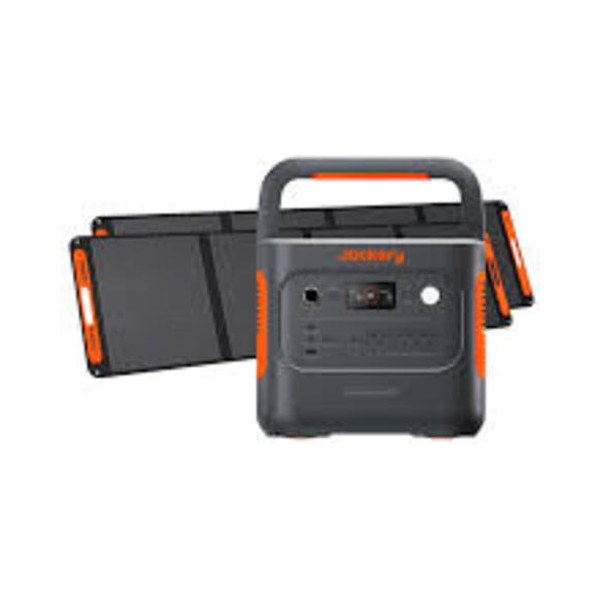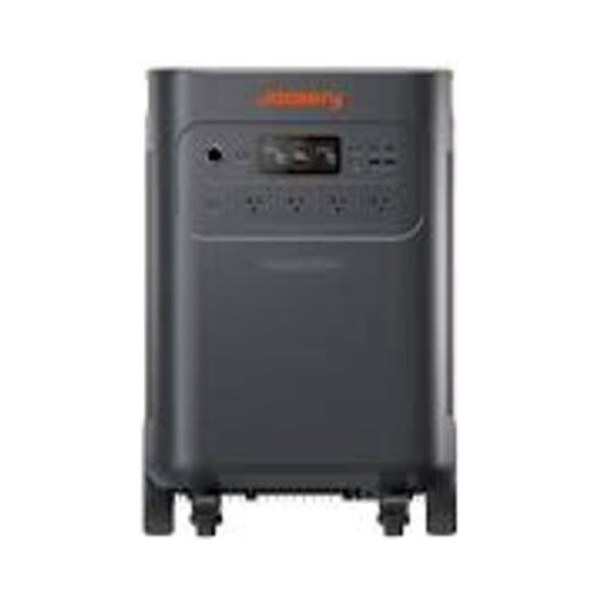
A Jackery solar generator is a kit: a Jackery Explorer power station bundled with SolarSaga solar panels. The right one depends on how much energy you need and how much weight you can carry. This guide compares six models from the official spec pages, from a 300 W unit for phones and laptops to a 7,200 W unit that weighs 134.5 lb. We did not test any of them, and we do not use buyer reviews, so every figure comes from Jackery's pages or from simple math you can repeat.
Jackery solar generator models at a glance
| Model | Capacity | Output (rated / surge) | Weight | Warranty |
|---|---|---|---|---|
| Explorer 300 v2 | 288 Wh | 300 / 600 W | 8.16 lb | 3+2 years |
| Explorer 1000 v2 | 1,070 Wh | 1,500 / 3,000 W | 23.8 lb | 3+2 years |
| Explorer 1000 Plus | 1,264 Wh | 2,000 / 4,000 W | To be confirmed | 3+2 years |
| Explorer 2000 v2 | 2,042 Wh | 2,200 / 4,400 W | 39.5 lb | 3+2 years |
| Explorer 5000 Plus | 5,040 Wh | 7,200 / 14,400 W | 134.5 lb | 5 years |
The Solar Generator 2000 v2 uses the same station as the Explorer 2000 v2, so its station specs match. All six use LiFePO4 batteries. The 1000 Plus weight is left as "to be confirmed" because its page lists both 32 lb and 24 lb. We chose not to guess.
Several pages showed some options as sold out or "notify me" when we checked. Prices and availability change often, so check the retailer page before you decide.
What "solar generator" means at Jackery
The name covers two things. The Explorer is the battery on its own. A Jackery Solar Generator is the battery plus panels. For the 2000 v2, the default bundle includes two SolarSaga 200 W panels, and Jackery sells other bundles. The 5000 Plus page recommends a bundle with two SolarSaga 500 X panels. The specs on those pages describe the station, not the panels.
Without panels, a Jackery power station recharges from a wall outlet or a car port. So the kit is the right pick when you want to recharge from the sun. Our 200 watt solar panel guide explains how much energy a panel makes in a day.
Jackery 300: pocket-size power
The Explorer 300 v2 holds 288 Wh and puts out 300 W. At 8.16 lb, you can carry it in a bag. Its rated output is 300 W, so it cannot run larger appliances. It suits a phone, a laptop and a camping light.
Here is the planning math. We count on about 85% of rated capacity after conversion losses, which is our rule of thumb and not a Jackery spec. For the 300 v2, 288 Wh times 0.85 gives about 245 usable Wh. A 60 W laptop, as an example, would run about four hours.
Note one conflict on the page. The text mentions dual 300 W AC outputs, while the spec table lists one AC output. Confirm the outlet count before you buy.
Jackery Explorer 1000 v2 and the 1000 Plus
Most people ask about the Jackery 1000 class. Two models compete.
- Explorer 1000 v2: 1,070 Wh, 1,500 W rated, 3,000 W surge, 23.8 lb. Three AC outlets. Its 1,500 W output limits it to one or two mid-size appliances at a time.
- Explorer 1000 Plus: 1,264 Wh, 2,000 W rated, 4,000 W surge. Three AC outlets. The page lists the add-on Battery Pack 1000 Plus as discontinued, so do not plan on expanding it.
The Plus has more capacity and more output. The v2 has a clear weight. If you carry it often, the confirmed 23.8 lb of the v2 is easier to plan around.
For a refrigerator that averages 46 W, an example number, the 1000 v2's 910 usable Wh runs it about 20 hours. The 1000 Plus's 1,074 usable Wh runs it about 23 hours. Our guide to battery backup for a refrigerator explains how to find your own fridge's number.
Jackery Explorer 2000 v2 and the Solar Generator 2000 v2
The Explorer 2000 v2 holds 2,042 Wh and outputs 2,200 W, with a 4,400 W surge. It weighs 39.5 lb, so it is heavy to carry far. It suits longer outages and a refrigerator plus a few devices.
With the same example fridge, the 2000 v2's 1,735 usable Wh gives about 37 hours. The Solar Generator 2000 v2 adds panels. With two 200 W panels, our planning rule gives about 1,200 Wh on a good sun day, which is 600 Wh per panel. So a drained 2000 v2 would refill in about a day and three-quarters. Clouds and shade change that, so treat it as a rough guide.
A small air conditioner is possible for a short run. See our guide to portable AC watts for the math.
Jackery Explorer 5000 Plus
The 5000 Plus is a different class. It holds 5,040 Wh and lists up to 7,200 W of AC output with a 14,400 W surge. Its outlets include four 120 V 20 A outlets and one 120/240 V 30 A outlet, so it can power 240 V gear. It comes with a 5-year warranty on the page we checked.
At 134.5 lb, it is not portable in practice. Think of it as a fixed home-backup unit that you roll to a spot and leave. With our example fridge, 4,284 usable Wh would run it about 93 hours. In other words, it can carry a fridge for several days, if nothing else draws power.
Which Jackery fits you?
Here is a quick guide, so you can match a model to your own list of loads.
- Phones, a laptop and a light: the Explorer 300 v2.
- A fridge for a night, plus camping: the Explorer 1000 v2, or the 1000 Plus if you want more capacity.
- A longer outage or a few devices at once: the Explorer 2000 v2, or the Solar Generator 2000 v2 if you want solar included.
- Heavy loads and 120/240 V: the Explorer 5000 Plus.
Because the lineup changes, the best habit is to check the product page on the day you buy. Specs, bundles and stock can change, so use our numbers as a starting point.
Check these before you buy
- Surge rating. Compare it to the startup surge of your biggest motor.
- Connectors. Check that your panels match the power station's solar input. Our solar panel connectors guide explains how.
- Weight. You may carry it. A 39.5 lb or 134.5 lb unit stays put.
- Warranty. Most pages list "3+2 years," and we did not confirm what the extra two years require. Read the terms, because they can depend on registration.
The bottom line
A Jackery solar generator comes in sizes from 288 Wh to 5,040 Wh, so match the model to your load and your back. The 1000 class covers a night for a fridge. The 2000 v2 stretches toward a day and a half. The 5000 Plus handles a heavy home load. Check the weight conflicts and outlet counts on the pages before you order.