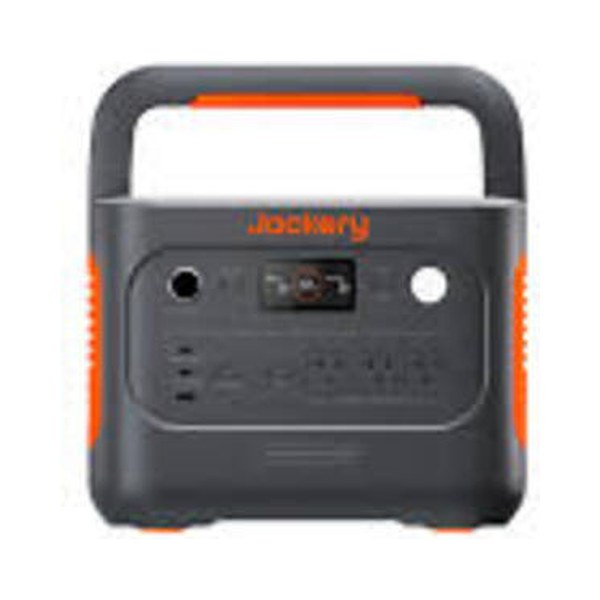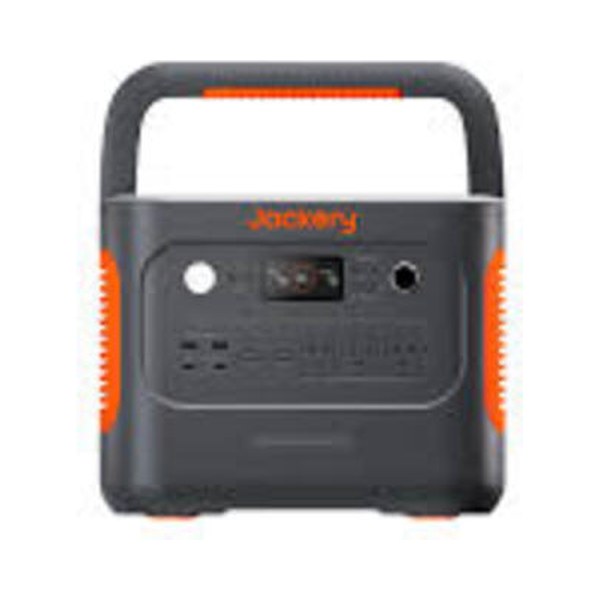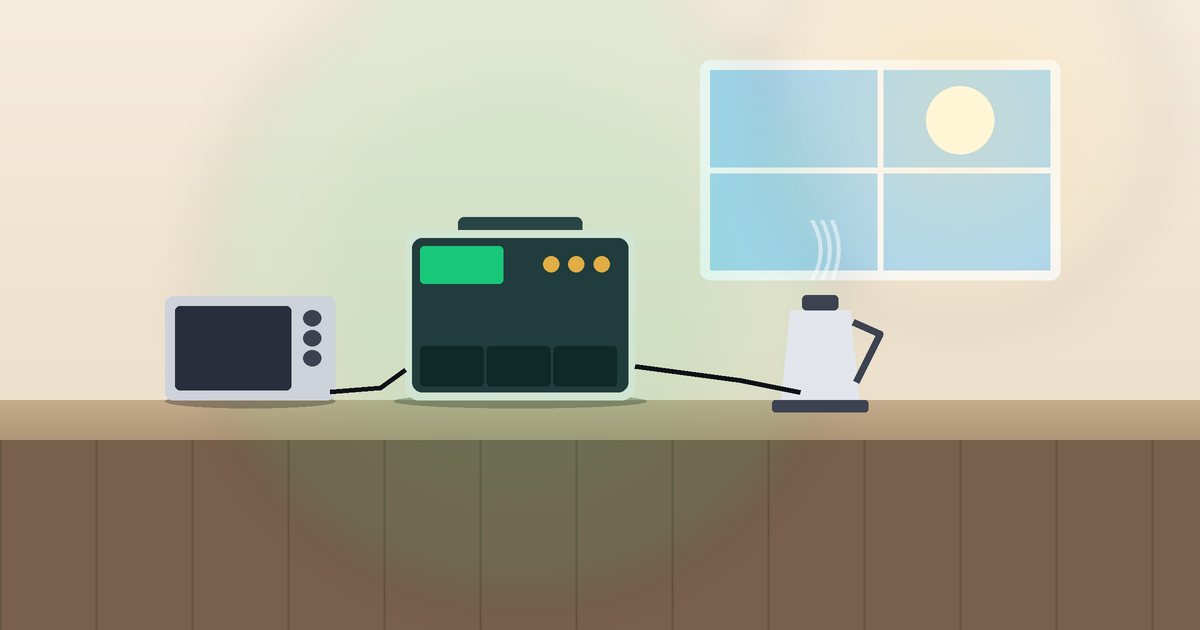
A portable power station 1000w class unit holds about 1,000 Wh of energy and delivers roughly 1,500 to 2,000 W at once. That is enough to run a refrigerator for most of a day, or a laptop and router for much longer, but only about an hour for a 1,000 W appliance. In this guide we compare five models from our product list, show how to work out runtime and explain which one fits which use.
We used official product pages only. We did not test any unit, so every figure comes from the manufacturers or from simple math you can repeat.
What a portable power station 1000w means
Two numbers define a power station: capacity in watt-hours and output in watts. A 1000w portable power station usually means the output, while a 1kwh battery means the capacity. However, the units below combine both, with 1,024 to 1,264 Wh and 1,500 to 2,000 W rated output.
Some people search for a 1000 watt generator or a 1500 watt generator and end up here. A gas generator of that size runs as long as you add fuel, while a power station stops when the battery is empty. Our small generators guide covers the gas side, and our explainer on portable power stations covers the battery side.
Five models compared
| Model | Capacity | Output (rated / surge) | Weight | Battery |
|---|---|---|---|---|
| Jackery Explorer 1000 v2 | 1,070 Wh | 1,500 / 3,000 W | 23.8 lb | LiFePO4 |
| Jackery Explorer 1000 Plus | 1,264 Wh | 2,000 / 4,000 W | To be confirmed | LiFePO4 |
| Anker SOLIX C1000 Gen 2 | 1,024 Wh | 2,000 / 3,000 W | 24.9 lb | To be confirmed |
| EcoFlow DELTA 3 Plus | 1,024 Wh | 1,800 / 3,600 W | 27.6 lb | LFP |
| Bluetti AC180 | 1,152 Wh | 1,800 / 2,700 W | 35.27 lb | LiFePO4 |
The Jackery 1000 Plus page gives two weights, 32 lb and 24 lb, so we leave it open. Also, the Anker page leaves the battery chemistry to be confirmed and lists no warranty term. The Bluetti page gives 35.27 lb in its spec table and 37 lb in its description, and we use the table. EcoFlow also states an X-Boost mode of 2,200 W on its page.
How long does each unit run?
To find runtime, divide the usable watt-hours by the watts you draw. A power station loses some energy converting battery power to household AC, and we count on about 85% of rated capacity as a planning rule. That is our rule of thumb, not a manufacturer spec.
Here are examples with made-up loads, so swap in your own numbers.
| Model | Usable energy | Fridge, 46 W average | Laptop, 60 W | A 1,000 W appliance |
|---|---|---|---|---|
| Jackery Explorer 1000 v2 | About 910 Wh | About 20 h | About 15 h | About 55 min |
| Jackery Explorer 1000 Plus | About 1,074 Wh | About 23 h | About 18 h | About 64 min |
| Anker SOLIX C1000 Gen 2 | About 870 Wh | About 19 h | About 14.5 h | About 52 min |
| EcoFlow DELTA 3 Plus | About 870 Wh | About 19 h | About 14.5 h | About 52 min |
| Bluetti AC180 | About 979 Wh | About 21 h | About 16 h | About 59 min |
Real runs come out shorter, so cut the result by about a quarter as a margin. Also, a refrigerator cycles on and off, so its average draw is a guess. Our battery backup for refrigerator guide shows the fridge math in more detail.
Rated output and surge
Rated output is what a unit can deliver continuously. The surge rating covers a short burst, such as a compressor starting. For example, the Jackery Explorer 1000 v2 lists 1,500 W, so it can run a 1,000 W appliance but not a 1,500 W heater plus anything else. In contrast, the others list 1,800 W or 2,000 W, which leaves more room.
First, check your biggest motor. Our generator sizing guide shows how to count the largest surge.
What the ports look like
The pages list the following ports.
- Jackery Explorer 1000 v2: 3 AC outlets, two USB-C (30 W and 100 W max), one USB-A at 18 W and a 12 V car port.
- Jackery Explorer 1000 Plus: 3 AC outlets, two USB-C at 100 W, two USB-A at 18 W and a car port.
- Anker SOLIX C1000 Gen 2: 3 AC outlets, two USB-C (one up to 140 W), one USB-A at 12 W and a car socket. The page advertises 10 ports, but the listed ports do not add up to 10.
- EcoFlow DELTA 3 Plus: 6 AC outlets, two USB-C up to 140 W, two USB-A up to 36 W, a car and DC port and two DC5521 ports.
- Bluetti AC180: 4 AC outlets, one USB-C at 100 W, two USB-A, a car outlet and a 15 W wireless pad.
So the EcoFlow has the most AC outlets, and the Bluetti has the only wireless pad. All outlets share one rated output, so your combined load must stay under it.
Which one for which use
- A night for a fridge and a router: any of the five units covers it by our math.
- A longer outage: pick the larger capacity, the Jackery 1000 Plus at 1,264 Wh. Our solar generator for home guide shows what to expect for a home.
- Camping or a trip: weight matters. The Jackery 1000 v2 is the lightest of the five at 23.8 lb. See our camping power station guide.
- Many devices at once: the EcoFlow's six AC outlets help.
- A power tool or a kitchen appliance: check the rated output, and prefer 1,800 W or 2,000 W units.
Adding solar panels
Most of these units accept solar input, so panels can refill them. A 100 W panel in four hours of strong sun makes at most 400 Wh, and after losses we plan on about 75%, or 300 Wh. That is our rule of thumb. So at that rate, a 1,000 Wh unit takes more than three sun days from empty with one 100 W panel. Two or more panels shorten that. Next, check each unit's solar input limits and connector before you buy, and read our solar panel connectors guide. For a ready-made kit, see our Jackery solar generator guide.
What to check before you buy
- Capacity and output. Match both to your loads.
- Surge rating. Cover your largest motor.
- Weight. Plan where the unit will sit or how far you will carry it.
- Warranty. Jackery lists 3+2 years, EcoFlow and Bluetti list 5 years and the Anker page lists none. Read the terms.
- Open points on the page. Weights, chemistry and port counts are not always clear.
Common mistakes
- Buying on capacity alone. A big battery with low output cannot start a motor.
- Forgetting conversion losses. Plan on about 85% of rated capacity.
- Running a heater. A 1,500 W load empties a 1,000 Wh unit in well under an hour.
- Ignoring weight. A 35 lb unit is a lot to carry far.
- Trusting one spec line. Compare the page's table with its description.
The bottom line
A portable power station 1000w class unit covers a refrigerator, a laptop and a router for many hours, but not heavy appliances for long. Pick by output first, then capacity, then weight. Add up your own loads, and use the 85% rule to turn watt-hours into hours.