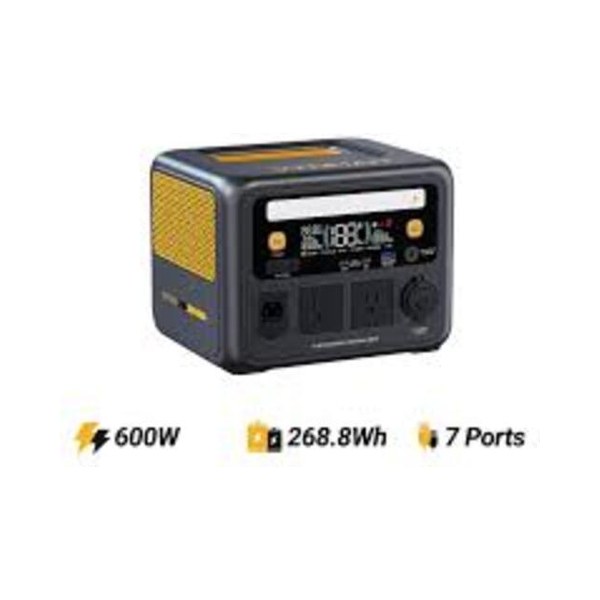
A Vtoman power station comes in five models in our list, from a 268.8 Wh unit that fits in a bag to a 1,548 Wh unit with 12 ports. This guide compares them using Vtoman's own spec pages. We did not test any of them, and we do not use buyer reviews, so every figure comes from the maker or from simple math you can repeat. We also have no spec data for Oscal or other brands, so this guide covers Vtoman only.
Vtoman power station models at a glance
| Model | Capacity | Output (rated / surge) | Weight | Expandable |
|---|---|---|---|---|
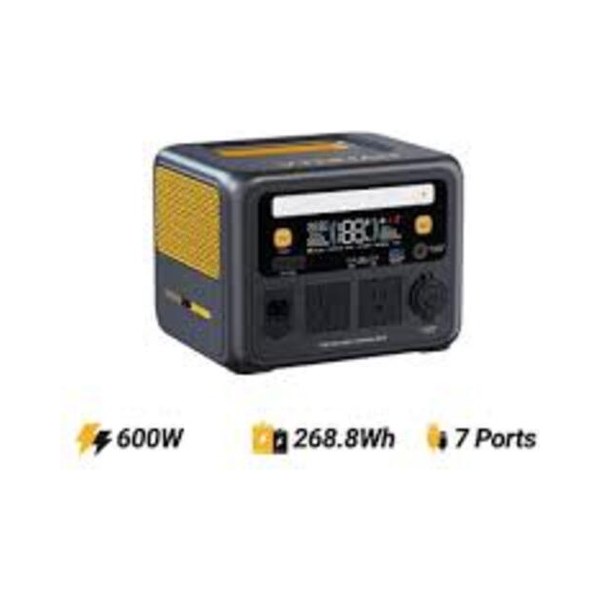
| Jump 600X | 268.8 Wh | 600 / 1,200 W | 9.92 lb | Not stated |
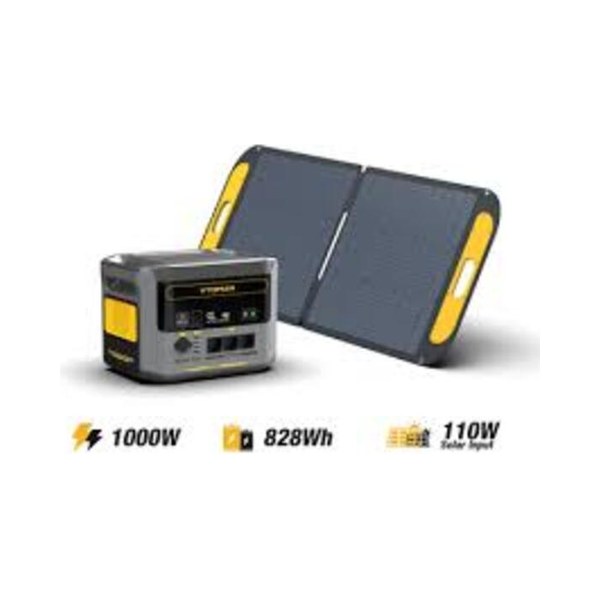
| FlashSpeed 1000 | 828 Wh | 1,000 / 2,000 W | Not stated | To 2,376 Wh |
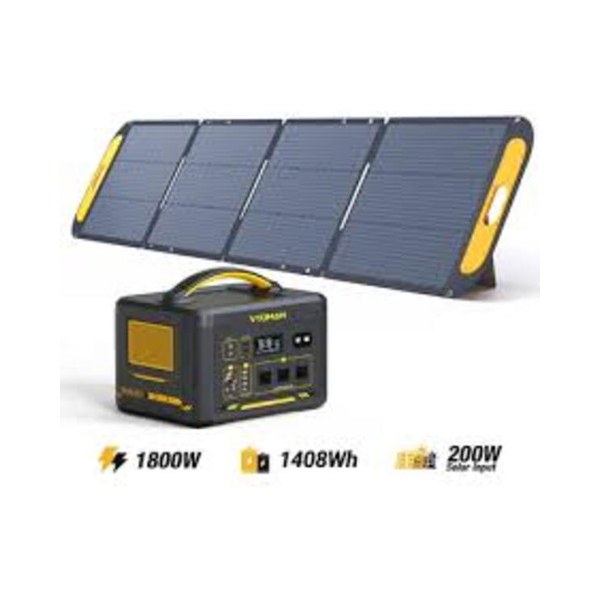
| Jump 1800 (1,408 Wh version) | 1,408 Wh | 1,800 / 3,600 W | 38.5 lb | Not stated |
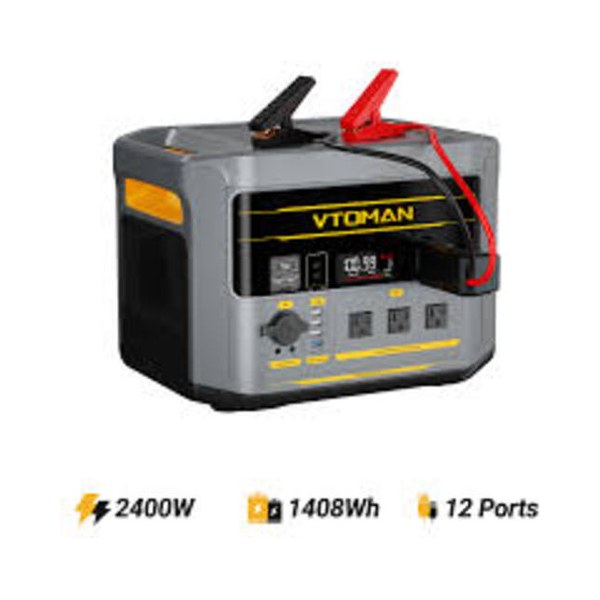
| FlashSpeed 2400 | 1,408 Wh | 2,400 / 3,200 W | 41.89 lb | Not stated |
| FlashSpeed 1500 | 1,548 Wh | 1,500 / 3,000 W | 41.4 lb | To 3,096 Wh |
All five use LiFePO4 batteries. Several figures come with conflicts on the pages, and we note them below instead of guessing. Prices and availability change often, so check the retailer page before you decide.
How we compared them
We used only the official Vtoman pages. For each model, we took capacity, output, surge, weight and ports from the spec table. When the page gave two different numbers, we used the spec table and said so. When a number was missing, we left it blank instead of estimating it.
Then we ran one simple calculation for each: usable watt-hours, which is capacity times 0.85, divided by a load. That gives you a rough runtime you can repeat with your own load.
Ports and outlets
Port counts are a strength of this brand. Four of the five models list 12 ports, and each of those has three AC outlets. The Jump 600X lists seven ports and only one AC outlet.
So if you plan to run several devices at once, the larger models are easier to use. However, three AC outlets share one rated output. Check that your combined load stays under the rating, and check the surge for any motors.
Jump 600X: small and light
The Jump 600X holds 268.8 Wh and outputs 600 W. It weighs 9.92 lb. It has seven ports, but only one AC outlet, which is its main limit. It suits phones, a laptop and a camping light.
We count on about 85% of rated capacity after conversion losses, which is our rule of thumb and not a Vtoman spec. That gives about 228 usable Wh. As an example, a 60 W laptop would run about 3.8 hours.
FlashSpeed 1000: many ports, light loads
The FlashSpeed 1000 holds 828 Wh and outputs 1,000 W, with a 2,000 W surge. It lists 12 ports, including three AC outlets. The page does not state its weight, so we cannot compare it with the others. It says the unit expands to 2,376 Wh, which is a useful option if you want to grow the system.
The warranty wording conflicts on the page, with both a 2-year and a 5-year mention. Confirm it before you buy.
FlashSpeed 1500: the largest battery here
The FlashSpeed 1500 holds 1,548 Wh and outputs 1,500 W with a 3,000 W surge. It has 12 ports, including three AC outlets and two 100 W USB-C ports. It weighs 41.4 lb on one part of the page and 41.5 lb on another. The page says it expands to 3,096 Wh.
For a refrigerator that averages 46 W, an example number, 1,548 Wh times 0.85 gives about 1,316 usable Wh. That runs the fridge about 28 hours. Our guide to battery backup for a refrigerator explains how to find your own fridge's number.
Jump 1800 and FlashSpeed 2400: the mid-size pair
Both of these hold 1,408 Wh, but they differ in output.
- Jump 1800 (1,408 Wh version): 1,800 W rated, 3,600 W surge, 38.5 lb. It lists 12 ports, including three AC outlets. The page cites both 1,408 Wh and 1,548 Wh for capacity. We used the spec table value of 1,408 Wh.
- FlashSpeed 2400: 2,400 W rated, 3,200 W surge, 41.89 lb. The page lists three AC outlets and nine other ports. Its warranty is unclear, because the spec table says 12+12 months while other text differs.
The FlashSpeed 2400 has a mismatch. Its 2,400 W output is high, but the battery is only 1,408 Wh. At full load, 1,408 Wh times 0.85 gives about 1,197 usable Wh. Divide by 2,400 W and you get about half an hour. So it handles a high-power appliance for a short time, but it does not run one for long.
How they compare with other 1,000 Wh class units
Weight is a fair way to compare. The Jackery Explorer 1000 v2 holds 1,070 Wh, outputs 1,500 W and weighs 23.8 lb. The Vtoman FlashSpeed 1500 holds 1,548 Wh, outputs 1,500 W and weighs 41.4 lb. So the Vtoman offers more energy, and the Jackery is lighter. Which matters more depends on how far you carry it. Our Jackery comparison covers that brand in detail.
What the pages leave out
A few details were missing or unclear on the pages we checked. The FlashSpeed 1000 page does not state a weight. The warranty wording conflicts on several pages. The Jump 1800 page cites two capacities. We did not guess at any of these. Ask the seller to confirm them before you buy, and keep the confirmation.
Surge versus battery size
Two numbers decide whether a power station suits an appliance: the surge rating and the battery. The surge rating decides whether the unit can start a motor. The battery decides how long it keeps running afterward. A unit can pass the first test and still fail the second, as the FlashSpeed 2400 shows. So check both before you buy, and use your appliance's label for the real numbers.
Which Vtoman fits you?
- Phones and a laptop: the Jump 600X.
- Light loads and camping, with room to expand: the FlashSpeed 1000.
- A fridge overnight or a few devices: the FlashSpeed 1500.
- High power for short bursts: the FlashSpeed 2400.
- Mid-size backup with several ports: the Jump 1800.
Check these before you buy
- Surge rating. Compare it to the startup surge of your biggest motor.
- Weight. The FlashSpeed 1000 page gives no weight, so ask the seller.
- Warranty. The pages we checked conflict, so confirm the terms.
- Expansion. The FlashSpeed 1000 and 1500 pages mention expansion. Confirm the exact add-on and its price.
The bottom line
A Vtoman power station offers many ports, and some models expand. The pages we checked leave out some weights and conflict on warranties, so confirm those before you order. Match the model to your load: the FlashSpeed 1500 for a fridge, the FlashSpeed 2400 for short bursts of power and the Jump 600X for small devices.